


Under the Skin: Frictionless Alien
John Lynch
Jonathan Glazer’s 2013 film, Under the Skin, is a quite remarkable film, dense in detail and uncanny imagery that is still unsettling today[1]. It is the subject of the video-essay Under the Skin: Frictionless Alien. The video essay is designed and constructed as a stand-alone work that navigates through the source film to develop certain lines of thinking it inspires. This text, therefore, sits alongside the video essay not as a step-by-step point of reference but as a means to ground some of those speculations.
Jonathan Glazer is an English filmmaker who has emerged since 2000 as having one of the most unique voices in British cinema with an output that has been described as Kubrickian in its depth and breadth of pre-production development. Under the Skin was Glazer’s third film after a successful career in the 1990s making music videos and commercials. The film is a loose adaptation of the 2000 novel by Michel Faber yet is distinctive and often perplexing in its cinematic approach that translates only few ideas from the source material. Arguably, Glazer’s film is a work that gets close to what could be called ‘film-thinking’, pushing the boundaries of what this artform can do whilst never resolving into a singular stylistic trope[2].

As an example of a cinematic sensory encounter, an attempt to show rather than describe the experience of being in a body, an embodiment, it links us to an-other reality, one that can potentially activate new thoughts. There is a clear sense that the range of images and techniques used in the film emerge from the long, ten-year process of development that Glazer undertook before deploying them as a precise expression of an idea. Indeed, as you approach the limits of the possibilities of the cinematic image things necessarily begin to break down, become confusing, unclear, disconcerting. No doubt it is easy at that point to judge, to say how it fails. Yet, I would argue that a ‘failure’ of this quality in cinema is superior to those films that ‘work’, as in being more recognizable, coherent, resolved.
What, then, is the idea that sparks the experimental process we see on screen? For Glazer after that period of incubation and distillation from the source novel: to film via the detached perception of the alien. An alien transported to earth to be clothed in the skin of a human victim and who can then pass. A character played by Scarlett Johansson, the archetypal Hollywood, A-List, Star. Then, in sharp contrast, shooting predominantly in the Scottish working-class city of Glasgow. The alien is never named but her job is to locate and seduce single, unattached men whom she can eventually process into a kind of meat glop, presumably a delicacy, for transportation back to the home planet.
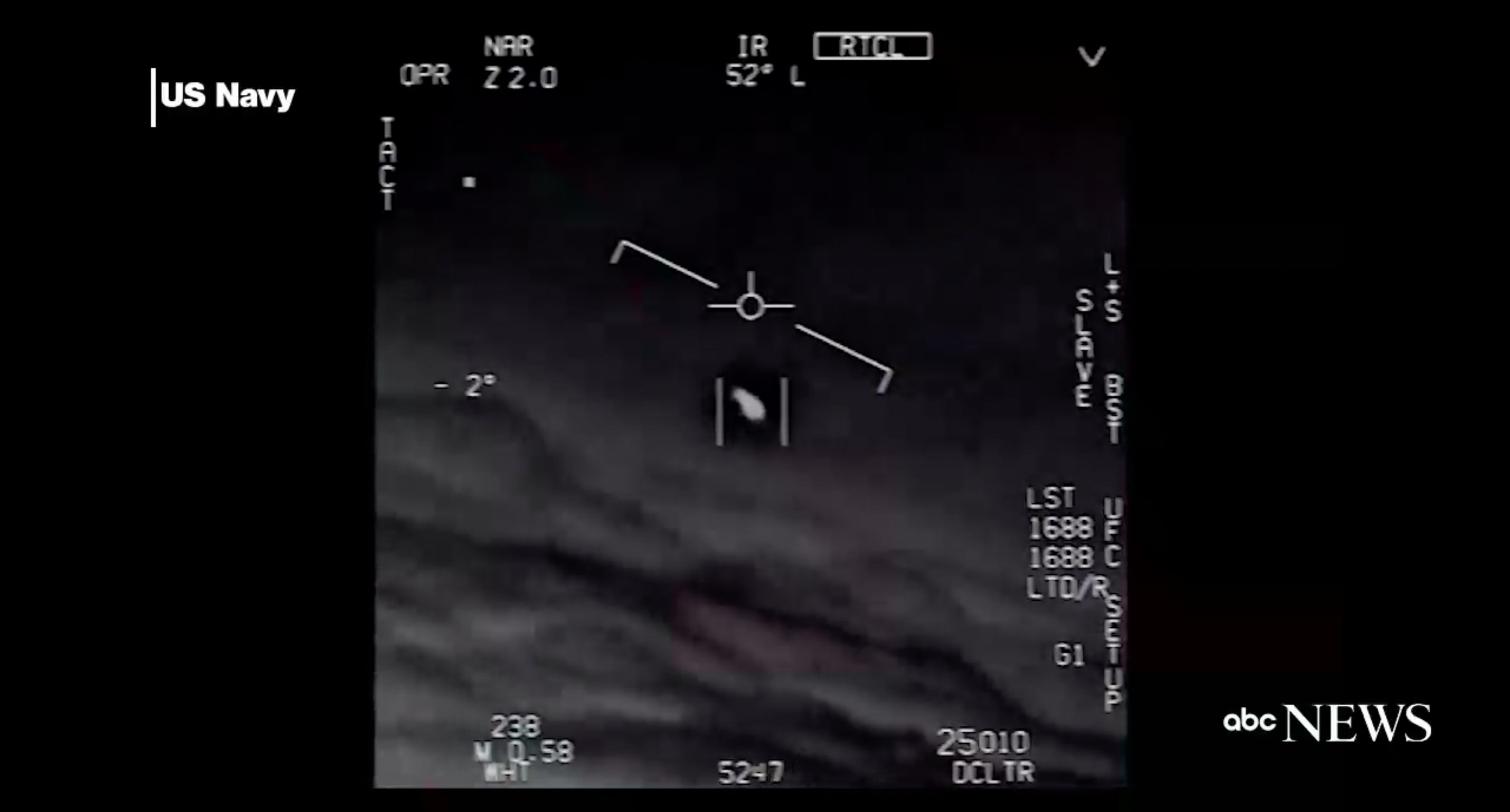
Many today believe that alien visitation is simply a fact, these beings perhaps travelling in spacecraft composed of a frictionless material that defies known physics[3]. Yet, if they are already here, one can ask: when did they arrive? The video essay suggests that it could be in 1982 when we began the wholesale shift from analogue to digital in consumer culture via the CD player, thus connecting the abstractions of technologies with the loss of an intrinsically friction-based human experience. The conceit here is that a CD player reads digital data by a laser as opposed to a vinyl record that operates as a system of varying grooves tracked physically by a stylus before being amplified and transmitted as sound waves. By conceptualising the digital in this way as suggestively alien as opposed to human, we can trace the shift in culture that ensues.
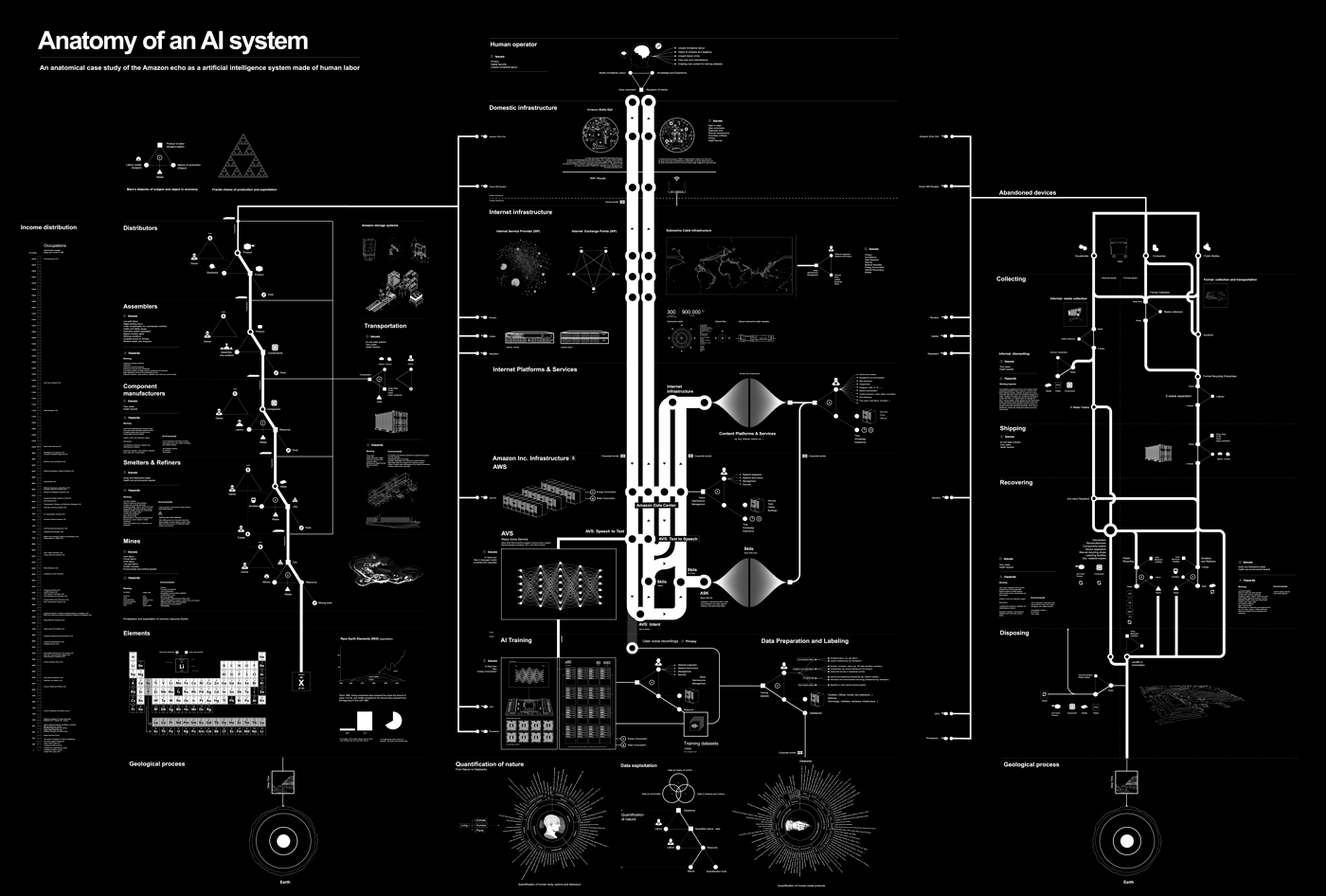
The digital wasn’t imposed upon us, we welcomed it, willingly bringing it into our domestic spaces and supplanting the imperfections and variegations of the analogue, something continued today via AI-driven Homepods and Alexa’s. Ultimately, it will devour us. Or, rather, it already has begun to. Whilst the user experience may be frictionless, the vast extractive and destructive ecological operations that underpins it is far from impactless, as we can see in this graphic designed by Crawford and Joler[4]. The dense, absolute black background the authors choose with which to contrast the pathways and infrastructures of extraction, labour and algorithmic processing at work in just a single device, mirrors that used by Glazer in the film.
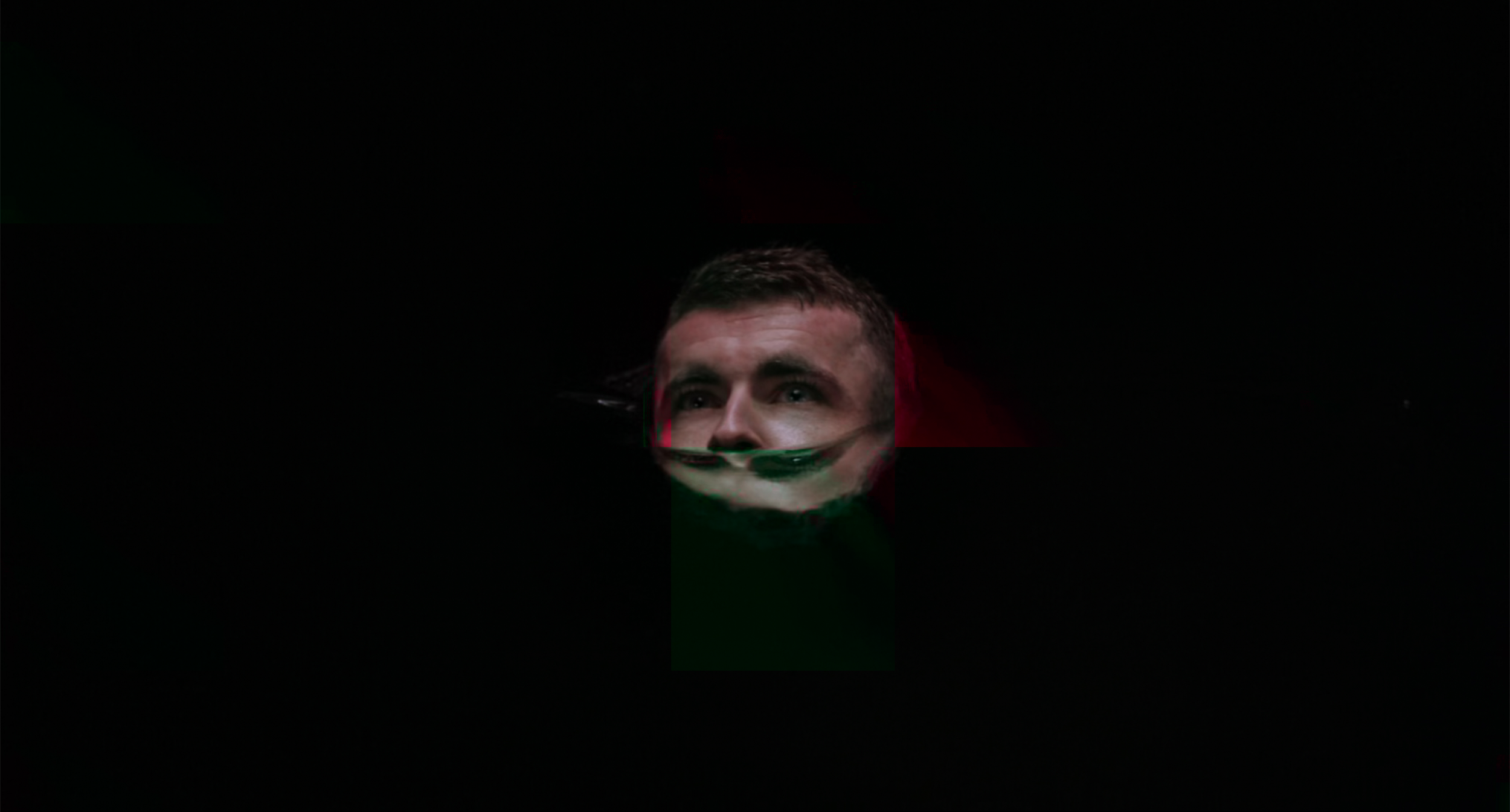
Yet, we must avoid a form of inverse fetishization as though analogue is in itself more authentic as a form of technology. The late Bernard Stiegler formulated an insightful and productive thinking for the inherent technic-formation of the general condition of the human as one that was essentially pharmacological[5]. This tradition seeks to accommodate something of the awareness of the cures and poisons of technological perception. Yet the question remains as to whether the transition to digital marks a point of self-destruction[6].
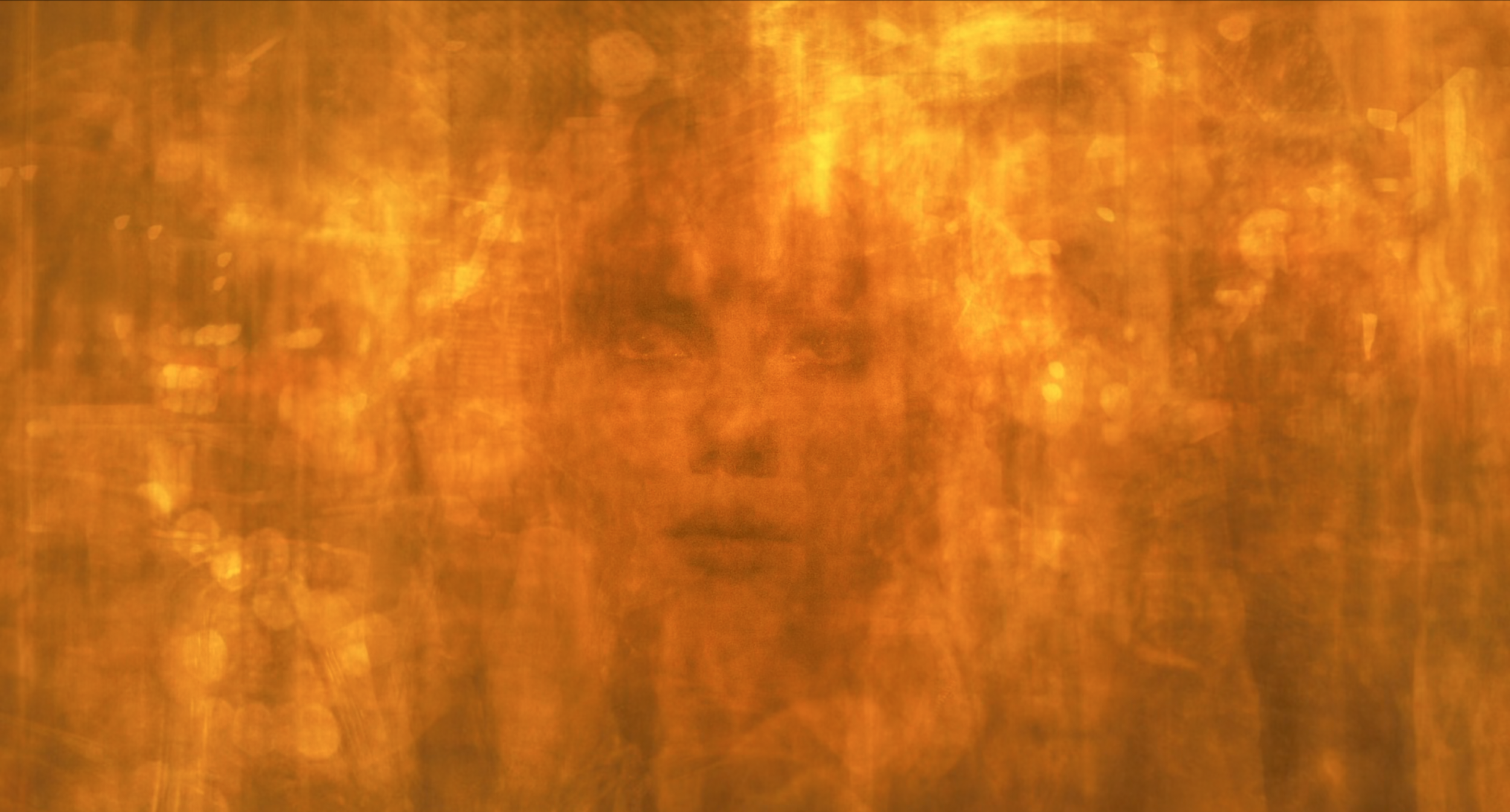
The pharmacology of the frictionless operates through a black-box mechanism that make any notion of tracing environmental or social costs impossible and hence any sense of care is effectively annihilated. This break in the nature of twenty-first media severs any possible connection between user and producer where frictionlessness is now the dominant cultural logic[7].
The peril inherent in the notion of the alien among us is not just that they can pass as human but that the ontological essence of the human is jeopardized. We are forced to ask ‘what makes us who we are?’ The anxiety is that if they do come, we will be seduced. But, as described above, we have already been seduced. By the digital, by the device, by speed. Seduced and bewitched as the doomed men in Under the Skin. Bewitched as affected by or as if by witchcraft or magic. Marx talks of fetishism as a kind of magic quality endowed with a will and soul of its own[8]. Beauty, it is no revelation to say, is fetishized, yet today it is the smooth that has become the singular most defining quality that is considered desirable[9].

Fred Moten observes that to work today means being asked to do so without thinking, to feel without emotion, to move without friction[10]. Friction is the force generated when different surfaces come into contact. Without friction there is no walking, driving, or writing. It is caused by microscopic imperfections and irregularities on the surface of objects that get entangled as they come into contact. It seems that entanglement is a problem for the alien-digital. Human speech itself is a result of friction, something the alien in the film has to learn[11]. Once assembled, the alien in Under the Skin immerses herself in human culture before taking the wheel of her seduction-abduction machine. From here on, it is the male victims who are ultimately immersed in the alien viscous fluid that processes them.
Smoothness has become the central motif of digital capitalism and if this is taken to its extreme it becomes devoid of any human qualities. These qualities are considered a hindrance, they interrupt, slow down, interfere with the smooth functioning of capital and its dream of unmediated exchange. The philosopher Byung-Chul Han pointedly articulates the shift to the smooth and the digital as seeking to dispense with any notion of the other or alien that disrupts its mirrored surface[12]. Yet , as we see in the film, it is precisely a trip, a catching of her foot, that begins an unravelling of this mission. Now passers-by hands reach out to help her to stand and they brush against the fur of her coat, just as she felt the textures of the clothing that would disguise her. This leads to an encounter with a human subject, a male, who very definitely cannot pass, who hides and walks only in shadows at night. It is her invitation for him to touch her face that triggers a switch in her subjectivity. The anthropologist Anna Tsing titles her book Friction and describes certain sites of interconnection inherent to globalisation as places that can generate culture, where this is defined as awkward points of friction[13]. Glazer designs this scene precisely as one of awkward exchange.
In my video-essay Under the Skin: Frictionless Alien (2025) I sought, not to somehow extract an idea hidden within the work but to consider it as a starting point for something else, to respond to it as an atmosphere for thought, as a particular way of engaging with cinema. In this way, the video-essay works with the film to build another line of thinking, around the concept of friction, as described above. Rather than a tracing of the film, it is a reconfiguration of certain scenes, with the addition of some found-video inserts and philosophical references that map this line of reflection. A folding-in of the alien and an un-folding of the human.
dreamtigerfilms 2025

[1] Under the Skin, Jonathan Glazer, Film 4, 2013.
[2] Deleuze, G. Cinema 2: The Time-Image, London: Athlone Press, 1989.
[3] Loeb, A. and Kirkpatrick, S.M. ‘Physical Constraints on Unidentified Aerial Phenomena’, https://lweb.cfa.harvard.edu/~loeb/LK1.pdf
[4] Crawford, K. and Joler, V. “Anatomy of an AI System: The Amazon Echo as an Anatomical Map of Human Labor, Data and Planetary Resources,” AI Now Institute and Share Lab, (September 7, 2018) https://anatomyof.ai/.
[5] Stiegler, B.What Makes Life Worth Living: On Pharmacology (trans. Daniel Ross). Cambridge: Polity Press. 2013.
[6] Fisher, M. Capitalist Realism: Is there No Alternative, Zero Books, 2009.
[7] Kemper, J. ‘The Environment and Frictionless Technology: For a New Conceptualization of the Pharmakon and the Twenty-First-Century User’, Media Theory Vol. 6I No. 2 I 55-76, 2022.
[8] Marx, K. Capital: A Critique of Political Economy, Volume I, London: Lawrence & Wishart. 1954.
[9] Rasch, M. ‘Friction and the aesthetics of the smooth: Ethics in times of dataism’, 11 May 2020. Downloaded from eurozine.com (https://www.eurozine.com/friction-and-the-aesthetics-of-the-smooth/)
[10] Harney, S and Moten, F. The Undercommons: Fugitive Planning & Black Study, Minor Compositions 2013.
[11] Serres, M. The Five Senses: A Philosophy of Mingled Bodies, Continuum, 2008 (1985).
[12] Han, B-C. Saving Beauty, Polity, 2018.
[13] Tsing, A.L. Friction: An Ethnography of Global Connection, Princeton University Press, 2005.