Power Ekroth
Reflecting on the generation of curators I looked up to when I was starting out, they all seemed streamlined and well put-together. In my imagination they were armed with theoretical frameworks that guarded their curatorial integrity and provided fuel for one exhibition after another. This is how they came across anyway. Recently, a younger curator told me she had reached a point where she started looking back at her work to understand what it meant and how it might be written into a history.
Listening to her, I realized I had never done that myself. I never thought I needed to, but more importantly, I quickly realized that I couldn’t. I did not begin with a strategy that was later refined. The work took shape as I moved through situations, responding to what was possible and what was not. It has been built intuitively and always in relation to forces outside me: economy, politics, and cultural policy. There is also the simple fact that rent is due every month, regardless of whether one's practice forms a coherent narrative.
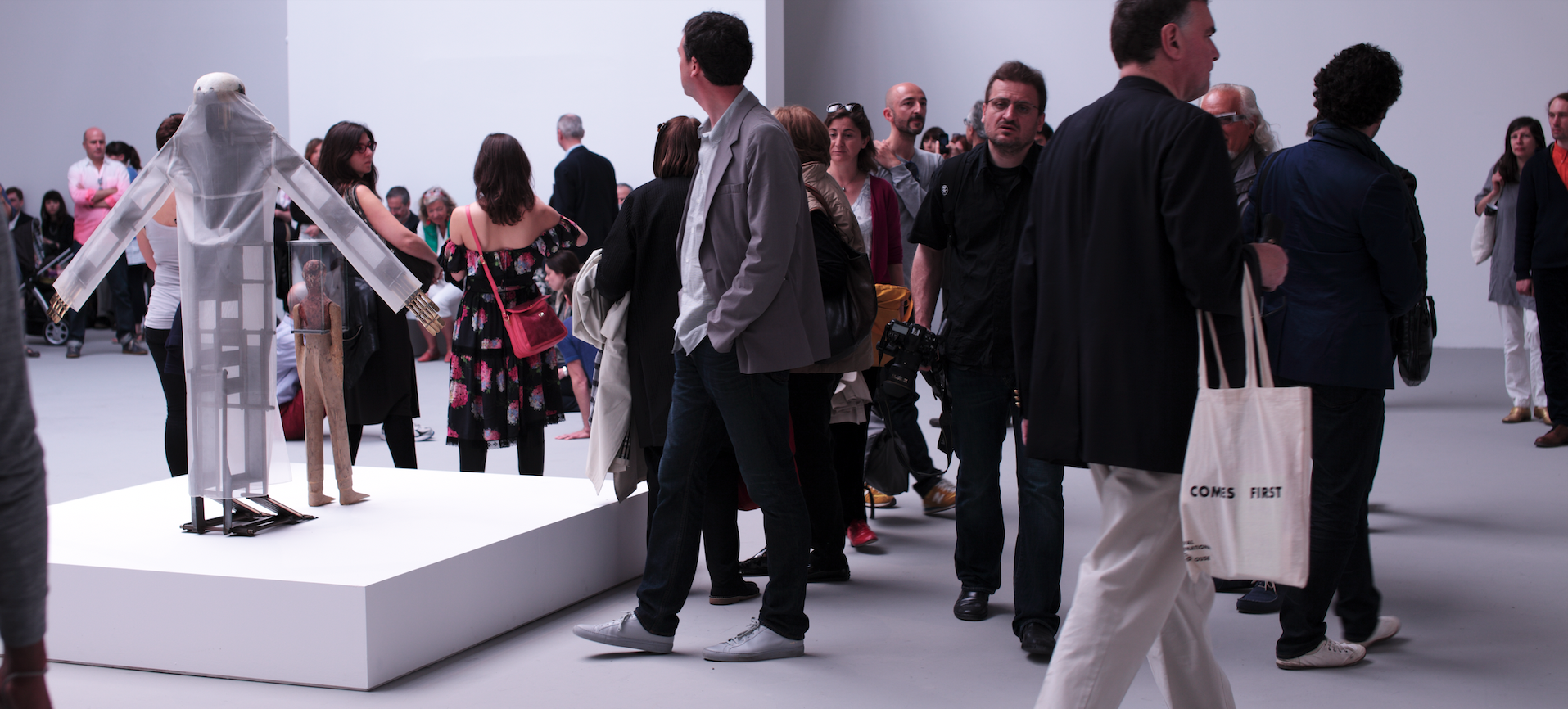
Photo: Juan-Pedro Fabra Guemberena
What appears as a lack of coherence is in fact a mismatch with how curatorial work is usually described. Curatorial frameworks could be made to fit, but what about the many forms of work that could not easily be described as “curated”? Work such as establishing networks for artists at risk, developing residency structures, building platforms for writing and exchange, or initiating educational programs are forms of organizing and sustaining artistic practice that remain essential, yet are rarely recognized as curatorial in a stricter sense.
The current model of curating relies on forms of labor that are increasingly externalized, underfunded, and rendered invisible. Much of this work takes place outside what is recognized as curating at all. Was my own lack of “streamline” always about being closer to survival than strategy? Was the lack of “streamline” always about being closer to survival than strategy? It also made me wonder if I was more a reactive dilettante than a curator. But necessity is not the absence of theory; it produces its own forms of knowledge, shaped through practice rather than preceding it.
The word “dilettante” carries a productive duality, though in my case it was less a choice than an adaptation. Rooted in the Italian dilettare (to find pleasure in), the dilettante is driven by necessity and engagement with a specific situation rather than institutional career-mapping. Within this approach, a different understanding of curating emerges, one that does not begin with the exhibition or theoretical positioning as its primary form, but with the question of how curatorial work can take place at all.
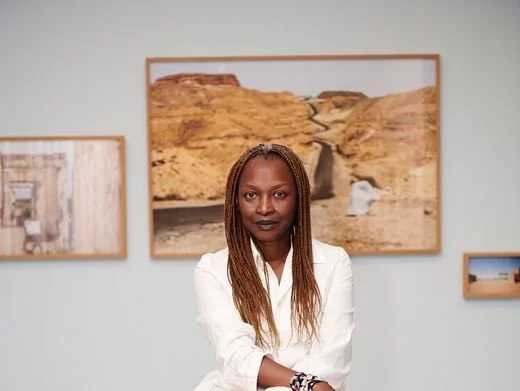
Koyo Kouoh, curator of Venice Biennial, 2026.
Photo: Mirjam Kluka
A strong example can be found in the work of the late curator Koyo Kouoh, currently in the spotlight for curating the 61st Venice Biennial. Her long-term work with RAW Material Company, through a library, a residency, and a space for exchange, has come to be recognized as a profoundly curatorial practice, even if this kind of collective institutional work was not always understood as curatorial.
During the Dakar Biennial in 2012, when Marita Muukkonen and I curated the Nordic pavilion, we wanted to open up a different way of working within the biennial structure. Rather than reinforcing national representation, the idea was to situate the artists in Dakar, where they could work site-specifically and in relation to the local context. RAW Material Company hosted several of the artists, allowing for a different kind of engagement to unfold.
At the time, neither Kouoh’s work nor ours was framed as curatorial positioning, but as a necessity, a way to insist on proximity, exchange, and the possibility of something shared. Looking back, it becomes clearer that this approach, both in Kouoh’s work and in our own, operates at the level of conditions: not only showing work, but shaping the situations in which it can exist.
The pattern is not a series of clearly defined projects, but a continuous effort to build and sustain conditions for art made over time, often across shifting contexts. What holds these processes together is a commitment to artists and to the situations in which their work can take place, even, perhaps especially, when the structures around them are unstable.
When I teach art theory, I often return to the distinction between base and superstructure. It is a simple division that helps illustrate how most practices tend to situate themselves clearly on one side or the other: either within systems of production and exchange, or within representation and discourse. Art, however, has the ability to operate within both simultaneously.
In the history of curating, we often point to the moment when Attitudes Became Form as the birth of the curator-as-author. But that narrative assumes a stable stage on which those attitudes can perform. My own practice has been inclined to look towards the base itself. It suggests a trajectory where the labor of building the conditions for art becomes the form itself.
Much of how curatorial work is historicized suggests a movement driven by ideas and carefully articulated trajectories. I have often felt a distance from this perception, not because I reject theory, but because it has rarely been a fruitful starting point for me. The art and the artists are my starting point. Art is not something to be domesticated, controlled, or made to follow a strict theoretical structure.
If I were to subscribe to a theoretical position, it would be a simple one: that art matters and has the capacity to shift how we understand the world. This reveals a form of labor that does not always present itself as curating: with time, resources, and in negotiation with people, contexts, and conditions, in order to make something possible.
Curating is often described in terms of ideas and discourse. What this leaves out is the work that makes those ideas possible in the first place. If curating is still framed through exhibitions and visibility, then much of this work remains unseen, because it does not fit the established format. Curating, as it is currently understood, depends on forms of labor it does not recognize: securing funding, building networks, managing risk, and sustaining conditions over time.
This is not abstract. It is what allows anything to take place at all.
Nothing in this kind of practice happens without relations being actively produced and maintained. They do not emerge on their own. They are the work.
This is where the “Frankenstein’s monster” of my own practice begins to make sense. Not as a lack of strategy, but as something assembled over time through necessity, movement, and responses to what is possible and what is not. It does not follow a single logic, but holds together because something has to.
What I am arguing for is not an expansion of curating, but a shift in where it is understood to begin. Not in the exhibition, nor in its interpretation, but at the level of conditions: in the work of making something possible under circumstances that are often unstable, insufficient, or hostile. Curating does not depend on a functioning art world. It operates within its gaps. It finds or builds the spaces in which something can take place, even when those spaces are temporary, partial, or contested.
This changes how we understand responsibility. It is not only about what is shown, but about the conditions under which something can be shown, and who is able to participate. It requires an insistence on freedom of expression—not as an abstract principle, but as something that must be negotiated and sustained within limited or shrinking spaces. Expression is never neutral; it takes shape in relation to others and has consequences.
If curating is to remain relevant under current conditions, we need to recognize that the work of building and maintaining these conditions is not secondary. It is the core.
Curating begins at the point where something is not yet possible but must be made so.
Double-click to edit...