

Ross McElwee
The American filmmaker Ross McElwee (b. 1947) has been making documentaries since the late 1970’s. Although he was raised in South Carolina, a fact that greatly shaped some of his concerns as a burgeoning filmmaker, McElwee can be seen as part of a rich tradition of documentary experimentation coming out of the Boston area. As a student at MIT, McElwee encountered the teaching and work of Richard Leacock and Ed Pincus, prominent practitioners of cinéma verité and diaristic filmmaking, respectively, which most certainly opened paths and instigated new ways of working. At the forefront here was the idea of the minimal crew or the sole filmmaker carrying a lightweight handheld 16mm camera, using sync-sound, and the ongoing documentation and filming of everyday life, taking advantage of the energies and frictions at play. Also, “shooting from within evolving events” and indeterminacy often functioned as narrative matrixes here. Around this time McElwee also worked as a second cameraman for D.A. Pennebaker, and joined anthropologist and ethnographic filmmaker John Marshall during the shooting of N!ai, the Story of a !Kung Woman (1980) in Namibia.
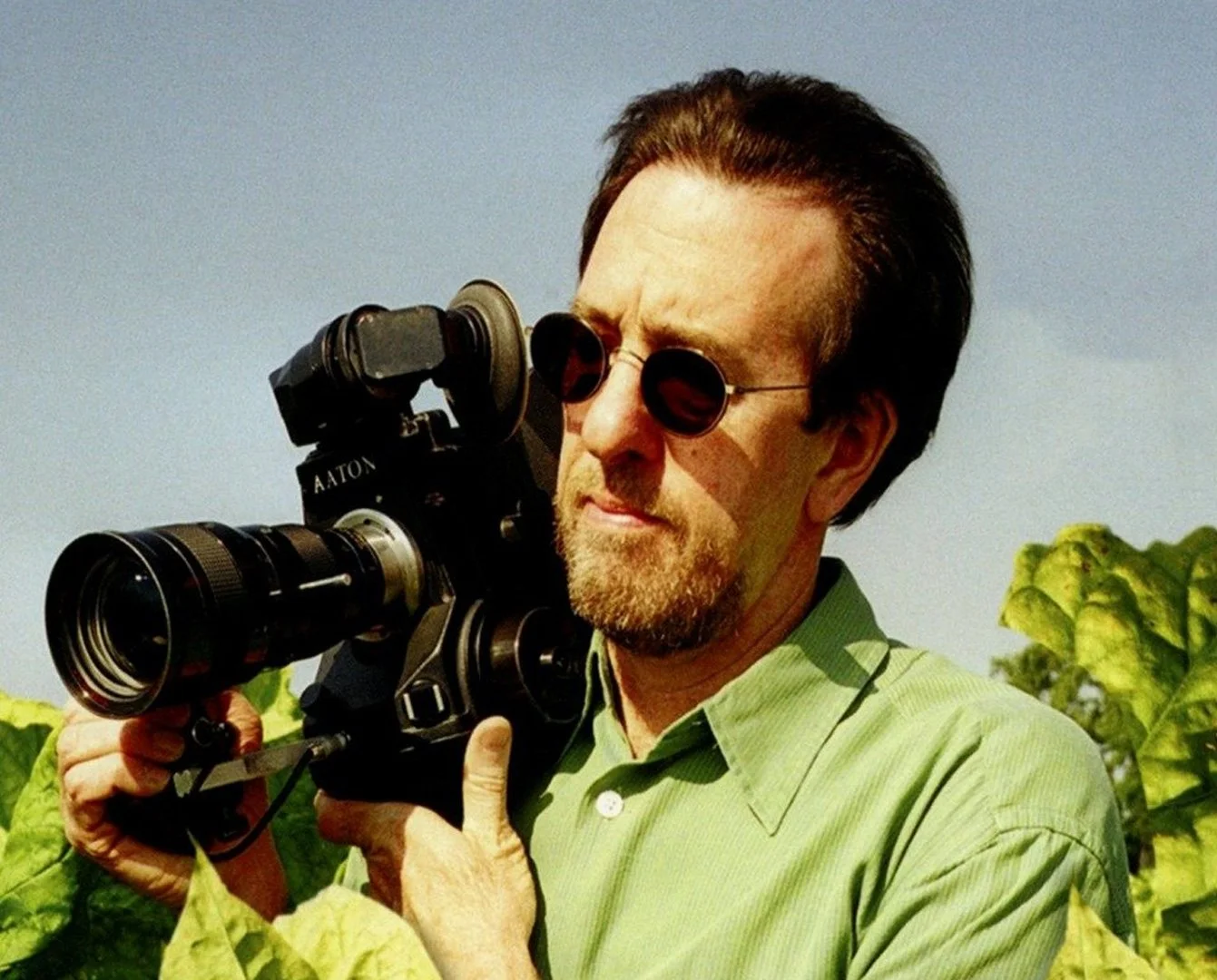
Ross McElwee
Starting with the observational Charleen (1977), about a friend and former poetry teacher, Charleen Swansea, McElwee has developed an invigorating yet fluid method oscillating between a more direct casualness and a more layered agenda, emphasizing montage, reuse of footage from previous work, and intricate essayistic narration. The latter is explored in Photographic Memory (2011), one of his foremost works, adding new and differentiating layers to this ongoing mnemotechnic machinery. Primarily focusing on family and personal life, as seen in the search for romantic love in his most well-known work Sherman's March (1986), McElwee also inserts meditations on broader societal predicaments, as in Six O'Clock News (1997), where parental anxiousness is set in relation to the news media’s coverage of disastrous local and global events.
I met up with McElwee when his latest film Remake (2025) was shown at Stockholm Film Festival, in November 2025. His wife, filmmaker Hyun Kyung Kim, also joined the conversation.
– Martin Grennberger, March 2026
Ross McElwee, Remake, 2025
Martin Grennberger: Remake (2025) had its premiere at the Venice Film Festival. I'm curious if you could say something about the process and the urge that led up to making the film? Considering the topicality, dealing with the suicide of your son Adrian, can you say something about the incubation time of the film?
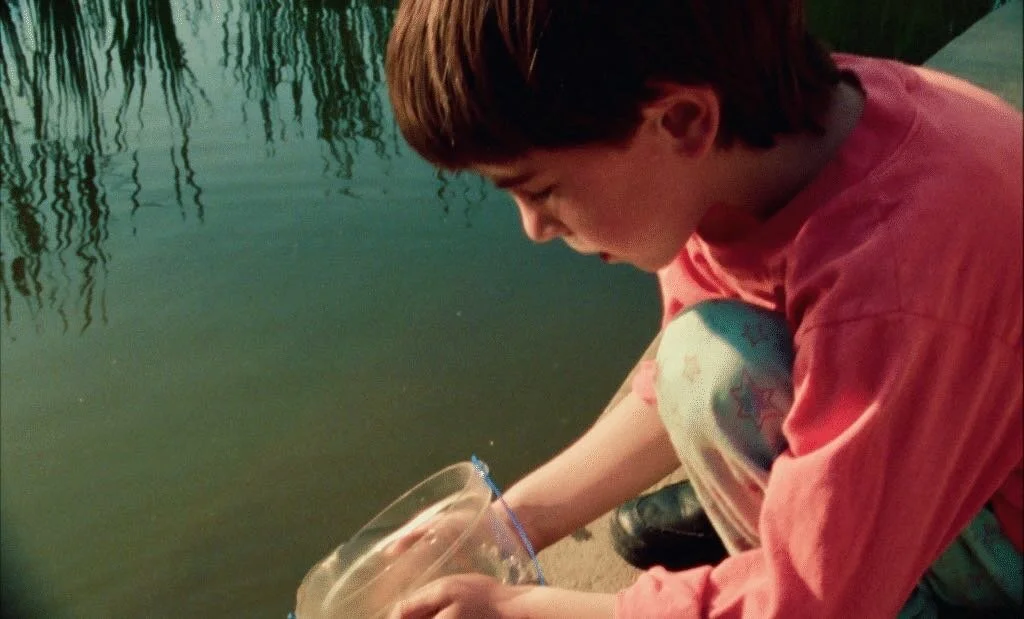
Ross McElwee: Sure. Yeah, incubation is an interesting word to use, because it did have to incubate for quite a while. And it was in 2008, I'd begun a project about the remaking of Sherman's March (1986), which is an old film of mine, and that's the film I thought I was making. For several years I worked on that. And my son, well, he was a teenager when the first shot scene of him appears, talking about remaking of Sherman's March. He's filming his father signing the contract. I thought of him as being a kind of secondary character in the film about the Hollywood remaking of a documentary of mine. And as the years went by, and I charted as best I could the progress and lack of progress of the making of the film, Adrian began having trouble with drugs and staying in school and getting kicked out of school and starting again in another school. That took more and more of my time, but I never thought of myself as making a film about that. And in fact, I avoided filming any of these things in his life that were so troubling at that point. It became too personal between us. I just felt, he's appeared in my films, but I'm not going to capitalize on his troubles for my films. That said, nothing happens with the Hollywood film for a long, long time. At a certain point, I did apply for funding from the French government to make a film that I'd always thought about in the back of my mind, making a movie about going back to Brittany in France.
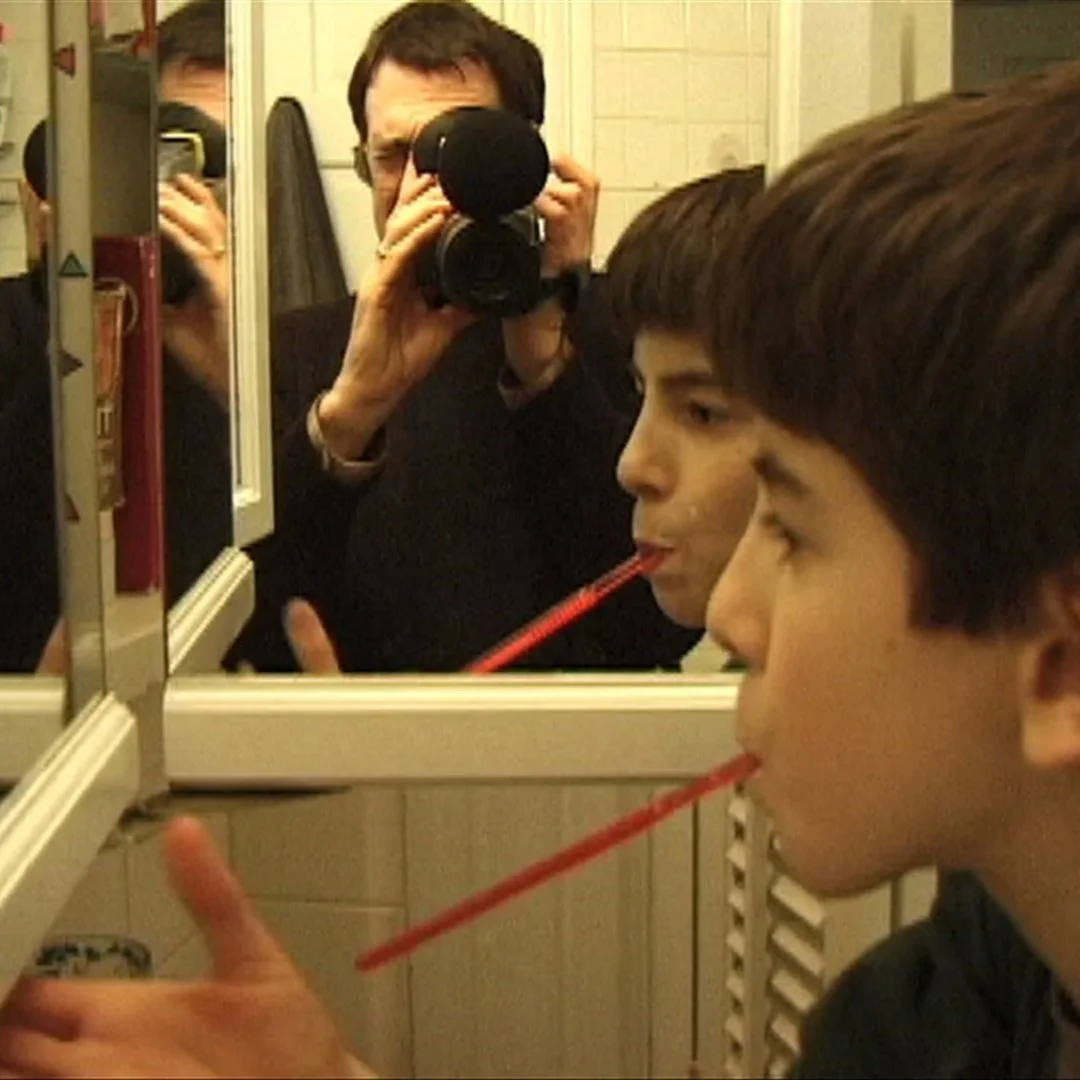
MG: This is Photographic Memory (2011).
Ross McElwee, Photographic Memory, 2011
RME: Yes, exactly. And it turned out that my son, who was still alive and well at that point, became a more significant part of that film than I imagined. Most of it was filmed in France, and he wasn't in the film in France. So, those two projects kept going forward. We finished Photographic Memory. I had a contract with Arte to make the film, but that had a deadline, a task for us. That film got done, and Adrian and I traveled with it afterwards to festivals, we went to Venice together. And then, a year after Photographic Memory was finished or so, Adrian did decide that he was moving to Colorado. And I talked to him on the phone all the time, and I went out to see him several times, but basically, I had nothing to do with his day-to-day life, as you can imagine.
And so, that's where he really began to get into trouble with drugs – opioids in particular, and heroin more specifically. And I did not film any of that, except he asked me to make an interview with him that he felt might be useful for a film he wanted to make about his day-to-day life struggles with addiction. We did that together, but everything else, I didn't know what was happening. I found out more after he died, because he left behind an archive of what he'd been through.
MG: He was accumulating a lot of material.
RME: Yes, and I didn't know that, because it was all on his camera, his hard drives, his laptop, all of which was in Colorado at the time. At some point, after he died, I felt I couldn't even look at the footage I had filmed of him as a young child, it was too painful. I didn't know how I could possibly deal with this in terms of my filmmaking, because it was so intensely depressing and tragic. I began writing a little bit. That helped. I actually paid an assistant of mine to make film grabs – still frames from the films that he had appeared in. That if I couldn't look at the footage of him, at least I could look at a photo of him taken from a film and begin mentally think about it.
MG: Were you confident somebody else was doing that? Of giving that responsibility to another person?
Ross McElwee, Time Indefinite, 1993
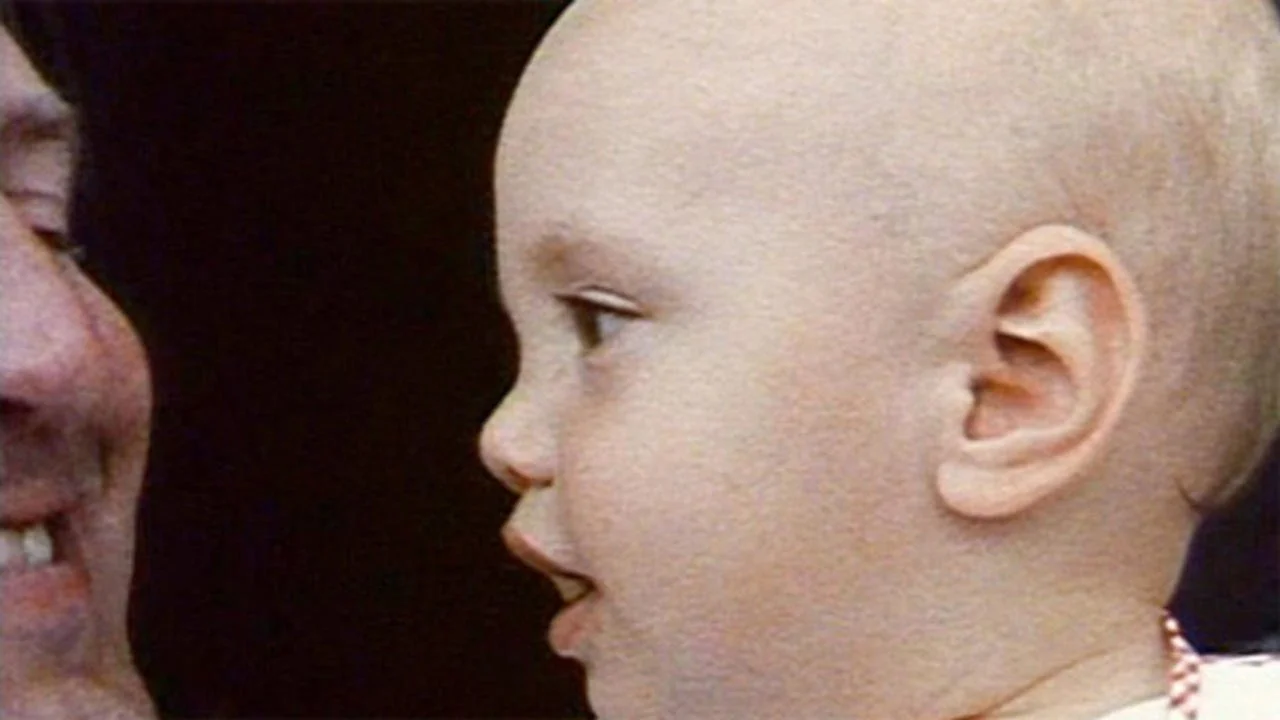
RME: I had no choice. I couldn't do it myself. It was somebody I had worked with for a long time. I told her what I wanted. I said, go to this scene, as I remember it, which is in Time Indefinite (1993) when he's a baby, and take one shot at him. We did that for all the films he appeared in. That helped me begin to be able to face what it means to make a film about him. In some way, I still had no idea how I could do it. And I began working on it. I began going back methodically through the footage I had shot of him as a child.
This is like a year later, after he died. Without me writing anything, any commentary for it, I just wanted to get a sense for the material itself, I'll just start assembling the ones I like. And the first scene I ended up cutting was the crayfishing scene. We went from there and just started putting together little moments of him as he was growing up.
Then, the sad aftermath of his death struck me. Can I make a film with just that kind of material? Because it's just sad and tragic. I remembered the whole remaking concept, the theme that we had started filming, about Hollywood's attempt to turn a documentary of mine into a fictional feature film for release in the United States.
I was thinking maybe that can be a kind of counter theme and provide a little bit of levity or humor. Because we need something else, just to relieve the darkness of what happened. And so, we just began putting it together. My wife – filmmaker Hyun Kyung Kim – helped me edit in the beginning and I put in countless hours pulling the material, playing with it and moving it around. That went on for about a year and a half. I eventually realized that I wasn't going to be able to finish this on my own. It was just too complicated.
MG: Because the material is too extensive, or hard to comprehend in its entirety? Or because of the intimate nature of the footage?
RME: I just couldn't... The montage of the sequence, the objectivity of it. Mainly the objectivity. Because everything seemed so precious to me. And so, this other professional film editor, Joe Bini, whom I had known for a while from workshops that we had done together for young filmmakers, agreed to come in and take a look at it. He became very excited about the film and thought he could come in as a kind of advisor to the project. That made a big difference. So, between me, my wife, Joe Bini and producer Mark Meatto – the four of us managed to come up with a version of the film that seemed very watchable. Partially because we allowed humor to enter when we really needed it.
Hyun Kyung Kim: If I could add, I saw the very first rough cut coming, the one Ross did on his own. It was beautiful as it was. He could have released it as a film. But there was potential to be better, as beautiful enough as it was from my perspective. We wanted to add Adrian's point of view.
MG: You incorporate footage that Adrian shot in the film. And this is a late decision in the process?
RME: In the middle, I think. It was still a little too sad and we need a third person's objectivity. So we invited Joe Bini to make it less depressing, through the input of someone who wasn't part of the immediate family.
MG: How did you locate and choose the most suitable footage from Adrian’s cameras that could make sense to what you conceived as the most pertinent material for the film?
Hyun Kyung Kim: Ross finished the rough cut from his point of view, and I looked at Adrian's footage. Ross filmed himself, because he couldn't look at it. It was too personal, too close. Too sad to look at. I looked however, and I realized Adrian was working on a film about his own addiction. He left beautiful images behind, and I thought it would be interesting to join these two perspectives – the son and father points of view. I collected some footage and showed them to him later, much later.
MG: There's a touching sequence when he proposes this idea of you becoming more commercial, saying “you know, dad, you're doing good stuff, but there's money out there waiting for you if you are a bit more adaptable”. I wanted to hear your take on that, it’s a tender moment, and, although not explicitly it still says something about your dynamics. About him respecting you, knowing that you're a respected filmmaker in a certain tradition, but coming from a younger generation, he has a different view on what film is all about. That ambiguity, I think, adds something to the emotional texture of the film. Do you see my point?
RME: I do see your point, and I think you've explained it, or you've stated it very eloquently. I think that it actually was a theme that I felt I really wanted to come through in the material, and I think it does that. We're two different generations doing what it means to have integrity as an artist. I was aware that that difference existed and that there was something poignantly humorous about it. In the film, when I'm signing the contract, and he tells me “let me try doing it my way”. there are these elegant zoom shots, which he's ignoring when I'm signing. I kind of like what he shot better than what I shot there. It was an interesting way to attack that particular moment. But I also realized that would be humorous to people – and people do laugh when they watch that.
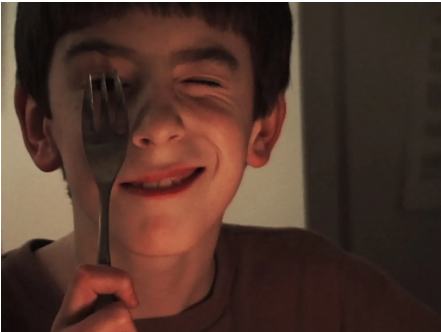
Ross McElwee, Remake, 2025
MG: I can see that. I wanted to ask you about the relationship between filmmaking and grief or the risk of a work turning into a work of mourning. I would say this is the first work of yours which is in a very matter-of-fact way dealing with this. There is grief or frustration in some of your previous work, of course, but here it is very particular. Could you say something about that relationship – your way of working cinematically in relationship to processing grief or mourning?
RME: Well, I never consciously thought that I'm doing this as a way of existing or coexisting with my grief. I'm a filmmaker and I thought this is how I deal with the next chapter of my life. How can I make another chapter of what I'm perceiving in the world without acknowledging what just happened? It's too important for me not to address in some way. But I didn't look at the act of doing all of this as therapy. I didn't look at it as a way of beginning to heal myself because I knew there was a way I could never really heal from something like this happening. The danger is that a film like this could end up being too mournful, too much of a dirge. And I think that had a lot to do with the decision to put in some humor. I didn't want the film to collapse into a period of mourning and suck the audience in with me because I think that would have backfired in a way and would have made the film less viewable.
MG: Which somehow leads us to questions of the personal and the universal. Throughout your career you’ve invested a lot in the intimacy of everyday life – the constant act of filming. I am interested in the ambiguity here, of intimacy and universality. There's always a layer of projection or being outside of yourself, even though you're talking about dear ones and humor could be one aspect of complexifying that relationship. Did you tackle that differently in this film or would you say it's been a constant in your films?
RME: That's interesting. Your last phrase resonates with me because you said both being yourself but not being yourself.
MG: You always project yourself, even though you talk about the most intimate things, right?
RME: Yeah, absolutely. You have to. You're also behind the camera and yet you're not behind the camera. You're trying to be a human being. It's like I'm filming you but I'm not filming you. I didn't have a textbook telling me how to do that kind of filmmaking. It was just something that rose up out of me. There are other people who have tried to do it, and frankly I think that their efforts for whatever reason aren't successful.
For some reason, my way of dealing with it works. It could be growing up in South Carolina, being taught how to at least behave in a humble way and not do much of yourself forward and yet wanting to put some of yourself forward. I don't know exactly what it was, but something prepared me to make this kind of film. I suspect that when I get even older, I will eventually sit down and write about that perhaps.
MG: Talking about definitions, you tend not to use diary film when talking about your work, you rather employ the word essay film. Could you say something about that?
RME: I think essay film is ultimately, a better way to describe what I do because the films are about my own life to some degree. But films being only about my own life would not be that interesting, so it’s important for me to have some broader issue or something out in the world that is also part of the filmmaking. Time Indefinite (1993) is probably an exception to that rule, in that it really is just about my family: my marriage and other issues in my life at that point. But mainly it’s about the death of my father. In that way, it's a very different kind of film from me.
MG: You mentioned earlier this tension between being behind the camera and yet you're not behind the camera. This is obvious when we see you greet people and you still insist on filming them, there is still this camera as a sort of intermediary. That's another sense of intimacy – the intimacy of filmmaking. That something is prosthetically sort of in-between us.
RME: Prosthetically is the right word, because it is like you have a prosthesis. You're still determined to be a human being and shake someone’s hand or give them a hug, yet you're not hiding the fact that you're filming. So, it mingles together – it's a different kind of intimacy.
MG: How much material in terms of duration did you end up with for Remake?
RME: Not a huge amount. Part of the reason we didn't have a huge amount of material was because I had not filmed that much of my son. I knew that the latter part of the film had to be about my son's death. What else could it be about? With a bigger camera I was able to film little moments after his death, way after his death. Me looking and filming the note in red ink that he left and his driver's license. Then intercutting with material that I had shot before of him as a child. But that was a limited amount of material to work with. It took a lot of trial and error, as Hyun mentioned.
MG: Did you test the order of the material, calibrating its succession and rhythm? Because you have a great sense of rhythm and pacing. This is important.
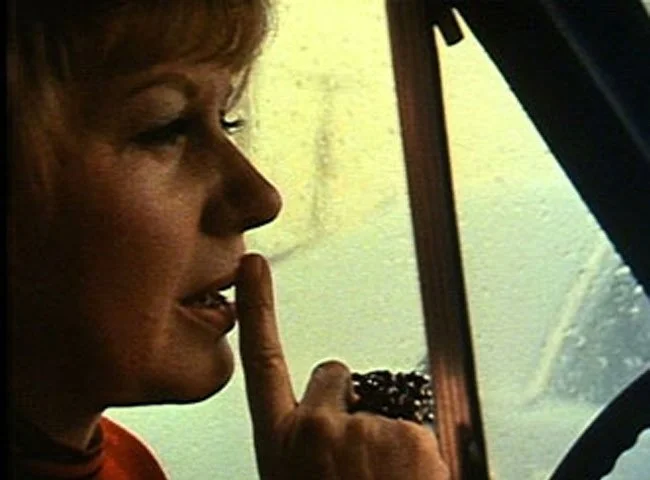
Ross McElwee, Charleen, 1977
RME: I think the original version, as Hyun pointed out, had really good pacing and rhythm to it. But she helped me understand how it could be done better. Bringing in Joe Bini really provided a kind of energy boost to the pacing of the film. The father and son's relationship through filmmaking was boosted up by him. Also, Charleen's memory part was also enhanced. He did an amazing job.
MG: There are very touching scenes when you're interviewing her. Sensing her memory loss and disorientation. Having followed her in your previous work, her sense of space and time is altered now.
RME: Filming Charleen again was an example of a scene I shot before Adrian died. It was part of my investigation of memory in the film, which I thought should be some part of the original film I was working on when it was still a Hollywood movie. The other thing that was interesting to me about the Hollywood proposal was that they would be creating a version of me as a character played by some movie star who would forever be 29 years old, groping around the South, trying to find someone to fall in love with. Meanwhile, I'm not 29 anymore. I'm watching this other version, this alter ego, who stays the same, while I'm getting older and old. Hollywood is taking more and more time to come up with a version that works.
To me it seemed much worth supporting as a theme in the film. But I also tried to remember what my life was like back then. What was I thinking? Winnie Wood, who appears in the film, I don't know if you can tell and I don't say this in the film, but she's in Sherman's March as a kind of linguist – Ph.D. person who has very formal ideas about how film and memory mimic each other.
That became something really interesting for me to explore. When I finally got to Charleen, I went to film her as I had several times before during that period, and I was shocked when she didn't remember being in Sherman's March. I mean, when I'm filming her and she says that, my camera actually makes a tiny move because I can't believe she doesn't even remember.
MG: Mnemotechnics and the function of memory has been a central area of exploration in your films, would you agree? The function of memory, the workings of subjective memory, but also cinematic memory.
RME: Yes. I mean, you're storing filmic memories, your films are there. After we're all gone, the films are hopefully there. I say that more and more – these scenes seem to become increasingly fictionalized rather than documentary. When confronting these images of my son over and over again, he risks soon becoming a fictional character.
Martin Grennberger is a writer, art critic, and film curator.