
La biennale è morta
Power Ekroth
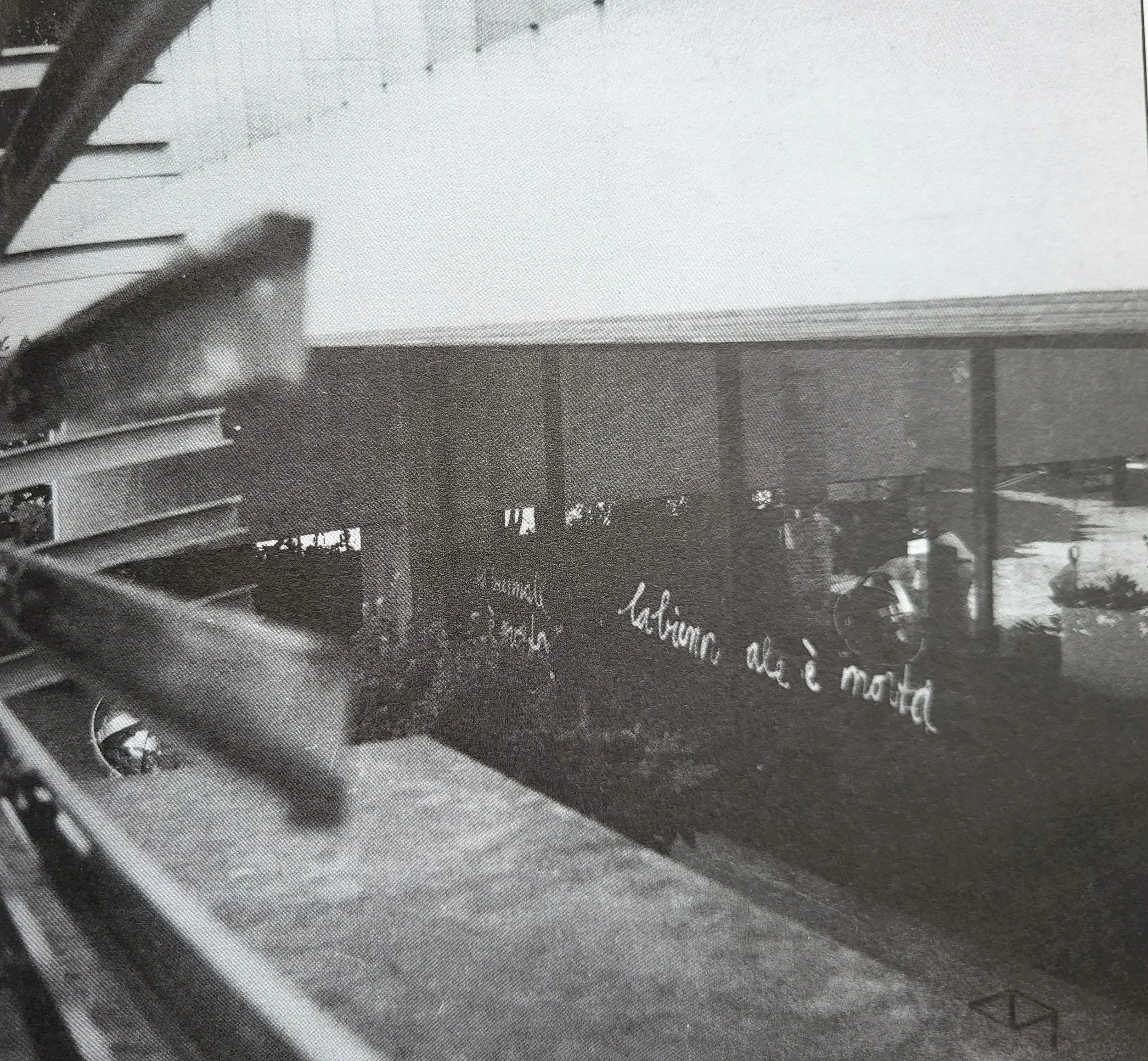
The Nordic Countries pavilion, where the Swedish section remained closed through the full exhibition period of the 34th Venice Biennial, 1968
After having seen most of the Giardini and the Arsenale, one becomes irritable and mostly wants to repress it all by having another spritz, or perhaps by slowly groaning “Tadzioooo” in longing for the youthful energy that has fled. Because the most obvious shadow to have walked along us, preview visitors through the congestion, passageways and pavilions of the Biennale is none other than death itself.
Death takes many forms. Perhaps above all through the fact that the Biennale itself rests on the increasingly obsolete idea of nation-states, alliances, and pacts. The death of the Biennale has been declared before, also from a Nordic perspective. More on that later.
The Funeral and the Columbarium
That the chief curator Koyo Kouoh died a year before the opening is, of course, latently present. Not only in works where she is depicted as a fertility goddess inside the exhibition itself, or in a street mural of her in the city, but also through séance-like performances, plaques, parties, and a general process of mourning that seems to permeate everything.
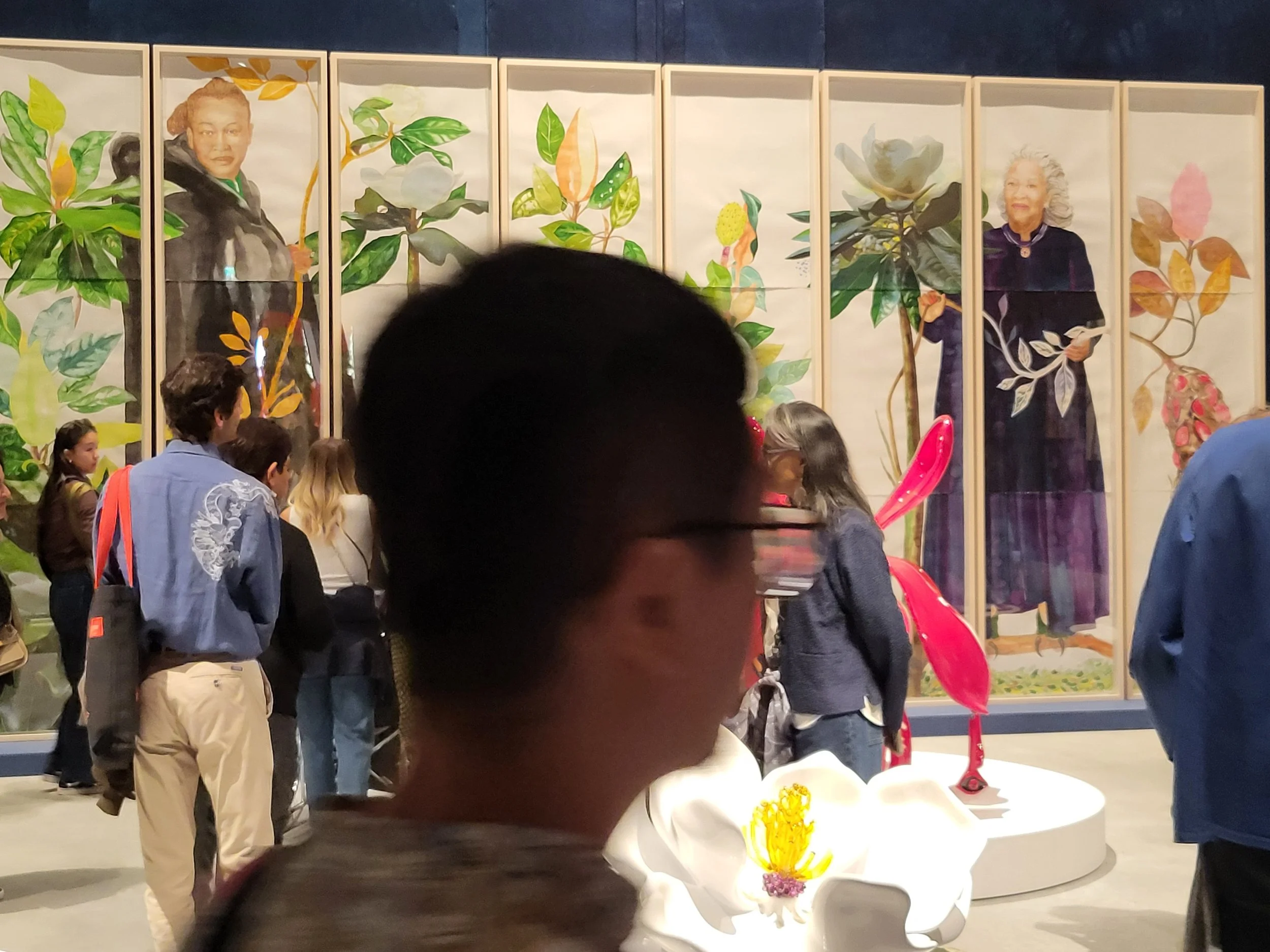
María Magdalena Campos-Pons, Anatomy of the Magnolia Tree for Koyo Kouch and Toni Morrison, 2026 on display in Giardini. Photo: Power Ekroth
Many have wanted to compare the art world to a religious world, where we gather in the museum as in a church or a mosque. If one extends that comparison, Kouoh here becomes almost canonized. Curators from all camps, and even the Biennale’s president Pietrangelo Buttafuoco, appointed by Meloni’s government, cannot praise her enough. It is not the mourning itself that grates, but how quickly it becomes ritualized and turned into institutional significance.
Kouoh, in turn, has had two “shrines” installed for two deceased artists: Issa Samb, also known as Joe Ouakam, from Dakar, and Beverly Buchanan, from the United States. Samb’s Laboratoire Agit’Art was a central node for artistic work, conversation, and collective thinking, and it is difficult not to see a resonance with Kouoh’s own RAW Material Company: both appear as places where togetherness and institutional invention flow into one another.
The word “collectivity” echoes everywhere. It does so in the shrines, in the references to Samb’s Laboratoire Agit’Art and in the general mourning process surrounding Kouoh’s absence. But it also echoes more conflictual in the Biennale’s institutional structure, where the question of which bodies, nations, and communities are allowed to appear quickly becomes impossible to separate from the question of which are kept outside.
Kouoh herself whispers from beyond the grave in her curatorial statement:
“In refusing the spectacle of horror, the time has come to listen to the minor keys, to tune in sotto voce to the whispers, to the lower frequencies; to find the oases, the islands, where the dignity of all living beings is safeguarded.”
A Biennale of this kind is, of course, never the result of one person alone. Kouoh’s curatorial team has certainly left its own traces. How the team continued to make curatorial decisions after her death is known only to those who worked on the selection: Gabe Beckhurst Feijoo, Siddhartha Mitter, Marie Hélène Pereira, Rasha Salti and Rory Tsapayi.
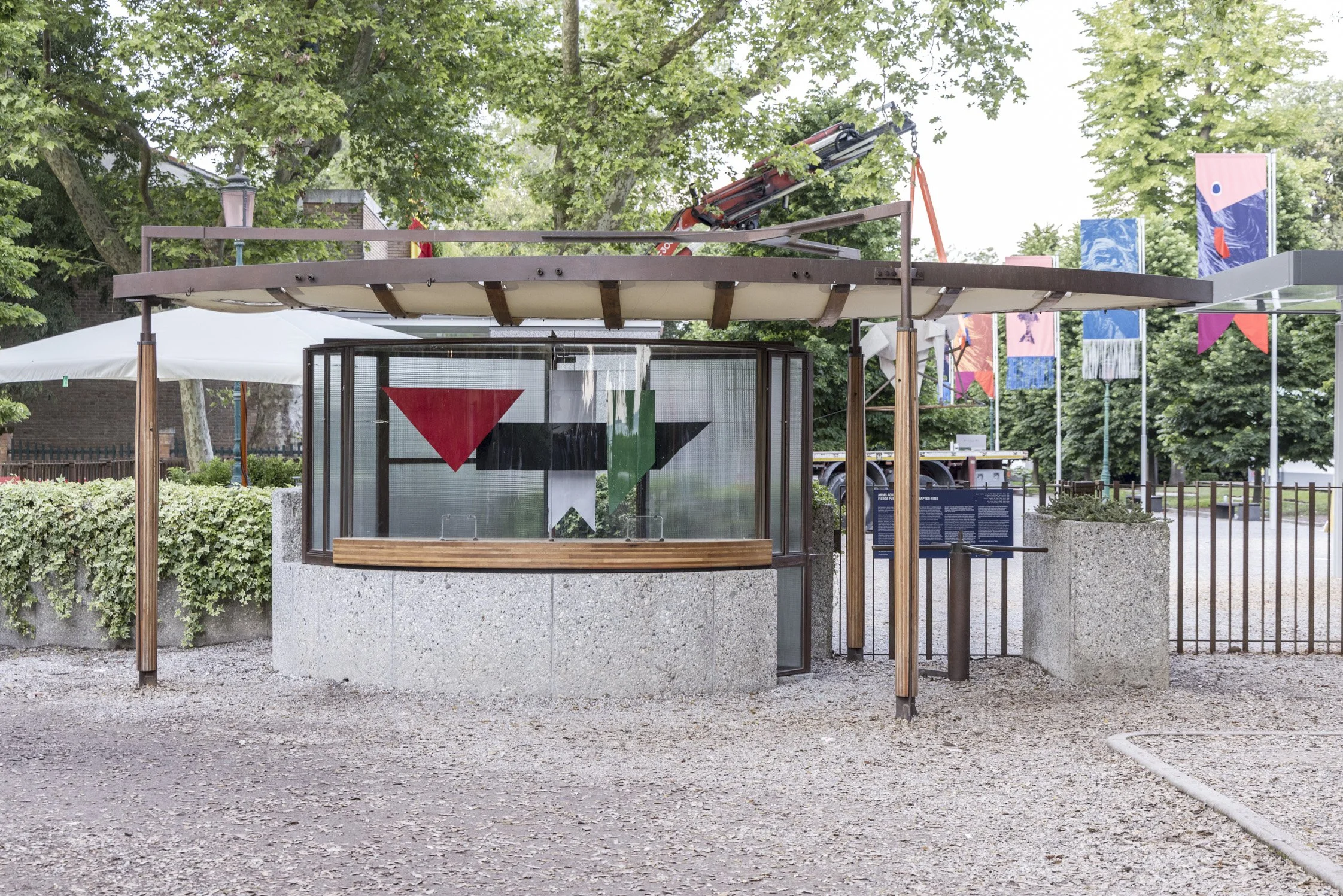
fierce pussy, we are here, 2026. Photo: Marco Zorzanello Courtesy: La Biennale di Venezia 2026
What we do know is that Kouoh had already passed away when the artist group fierce pussy was selected, and that she did not herself choose the work that greets us at the entrance to the Giardini: we are here, 2026. The work consists of a Palestinian flag in deconstructed form, installed in an abandoned ticket booth designed by Carlo Scarpa.
Palestine, recognized as a state by 157 countries, has not been among the pavilions since 1948, when it was represented in what is currently Egypt’s pavilion.
But from the mass graves in Gaza to the Giardini, the words “we are here” echo with brutal clarity.
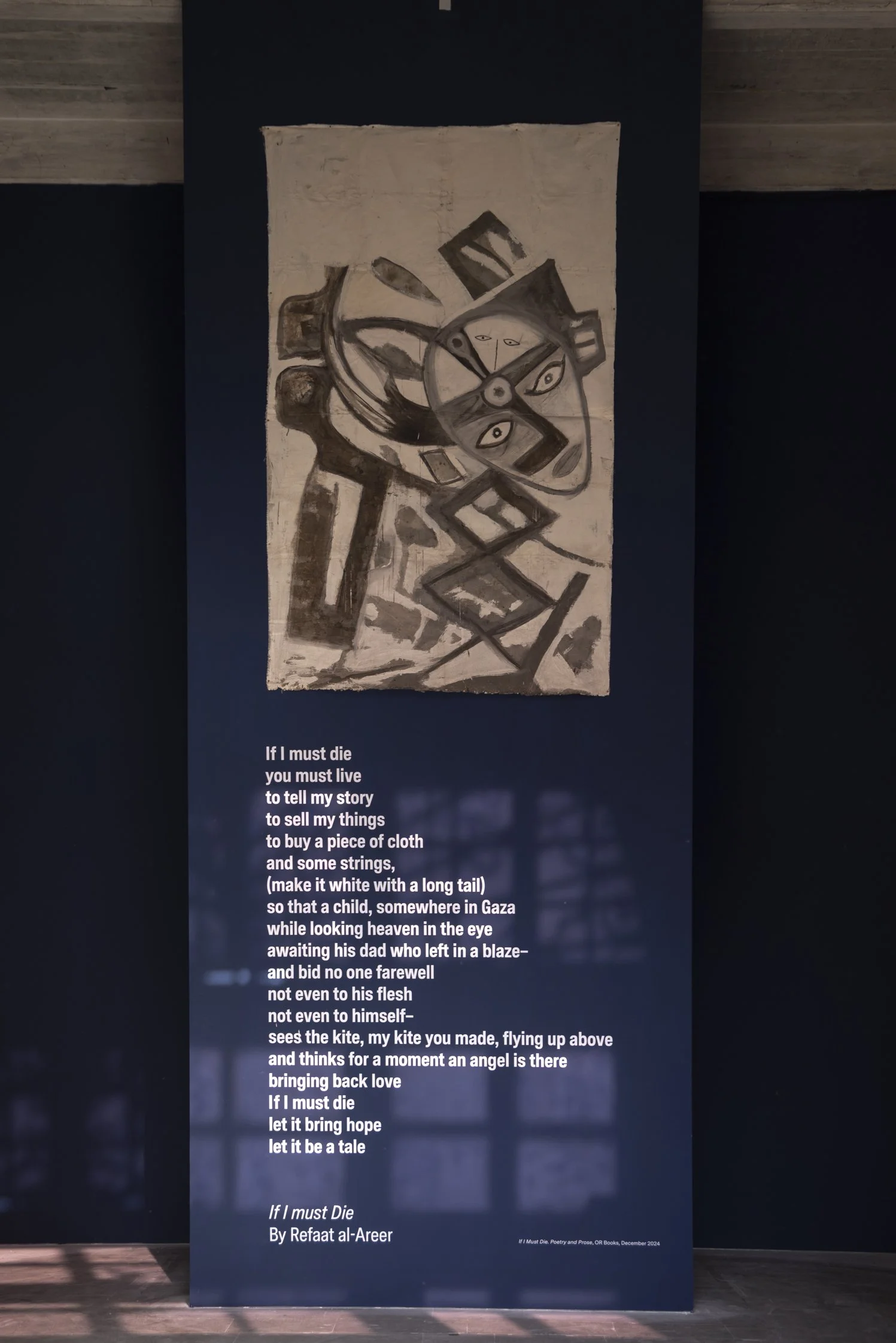
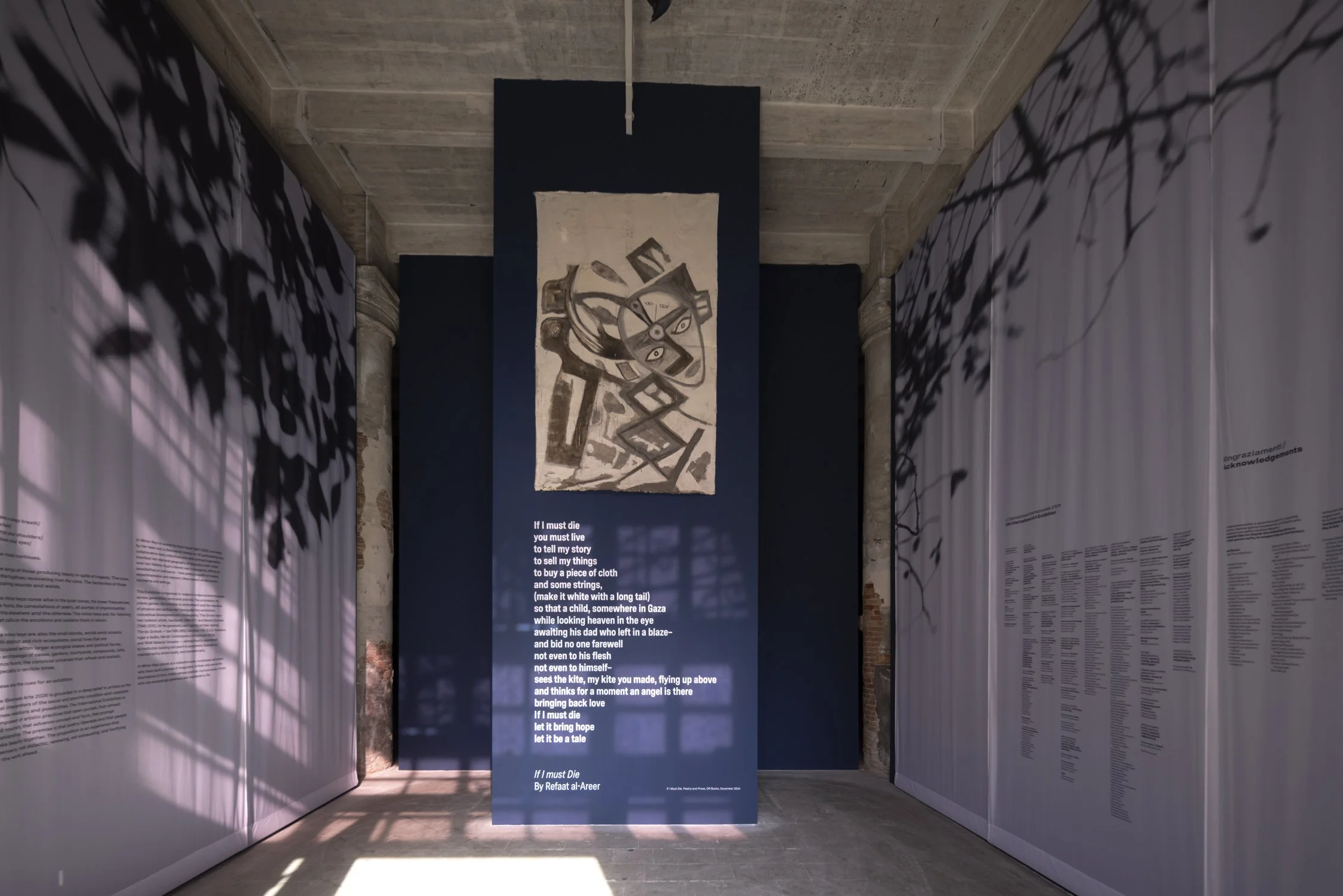
At the entrance to the Arsenale, before one has even had time to see the first artwork in the exhibition, one encounters the poem “If I Must Die” by Refaat Alareer, who was killed in an Israeli airstrike in December 2023, two weeks after writing it. (Photos: Marco Zorzanello Courtesy: La Biennale di Venezia 2026)
The main exhibitions in the Giardini and Arsenale are installed with extraordinary beauty, with indigo, midnight blue and dove-blue walls, and terracotta accents. This creates a sacral atmosphere. In all honesty, at times it feels like walking in a funeral procession through the Arsenale. The soundscape is subdued, partly because there are few video works, and the sound has been turned down. Instead, sculpture, objects, textile, and painting dominate.
The installation has been made with a steady and assured hand. But precisely for that reason, a problem also arises. The works begin to flow into one another and form a large Biennale cloud, where the edges become diffuse. What is most troubling is that they suddenly begin to appear as interior design: a columbarium for artworks. But this, too, is in keeping with the way the market and the Biennale have long worked together. The funny thing is that many critics still claim the exhibition is “depoliticized,” perhaps because they look at the outward gloss and colorfulness of the works rather than at the political and death-marked backdrops against which they actually appear.
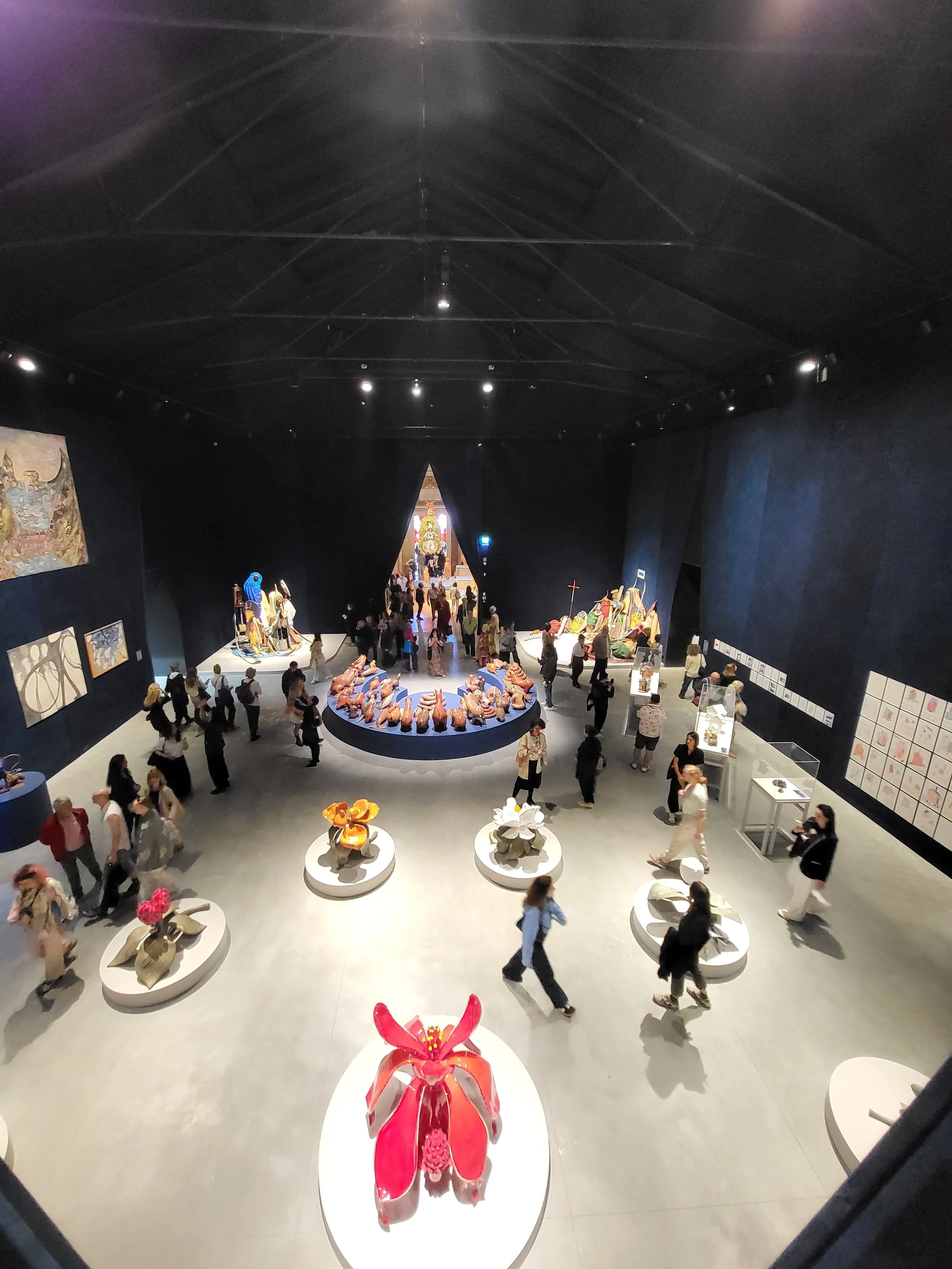
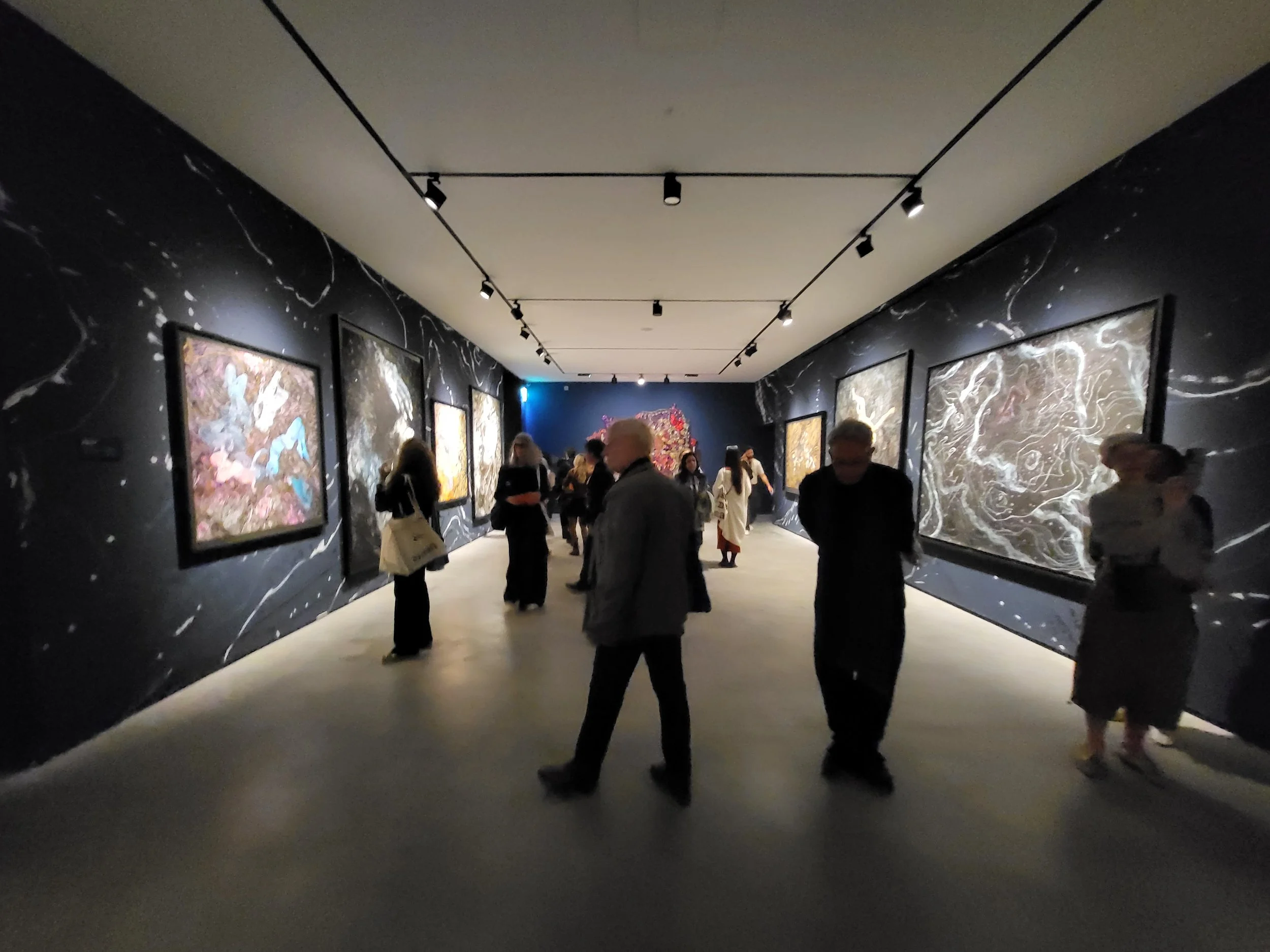
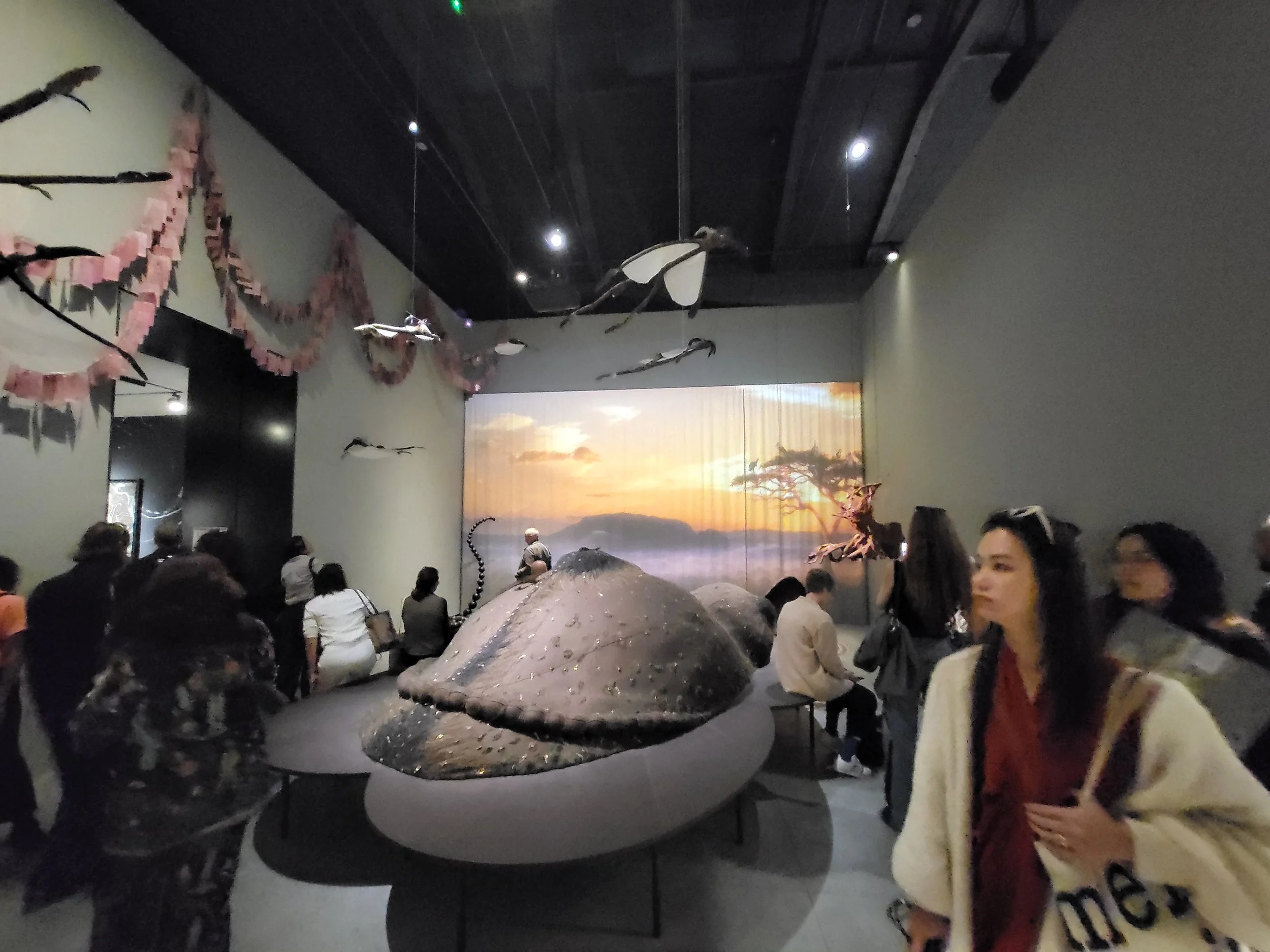
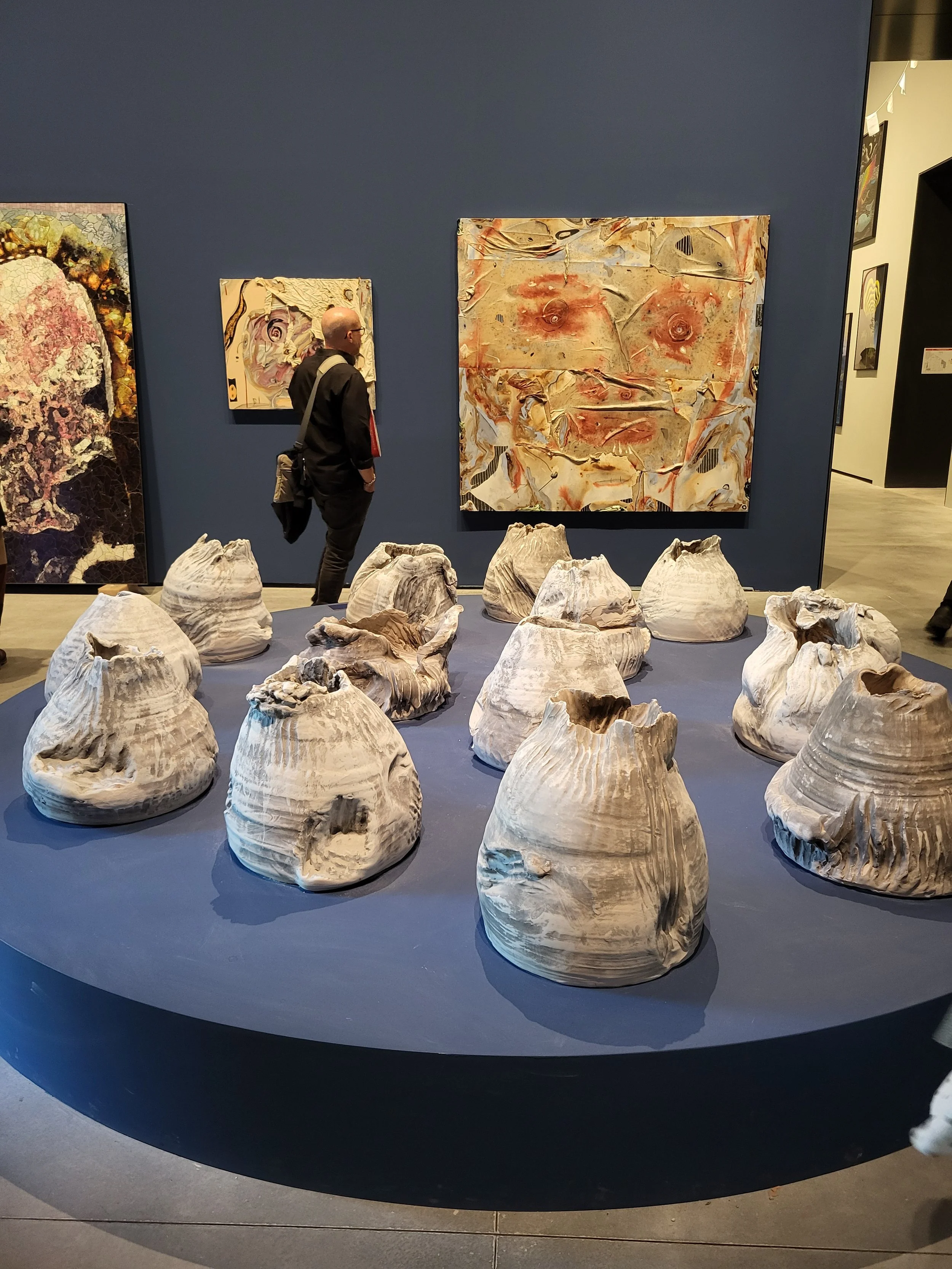
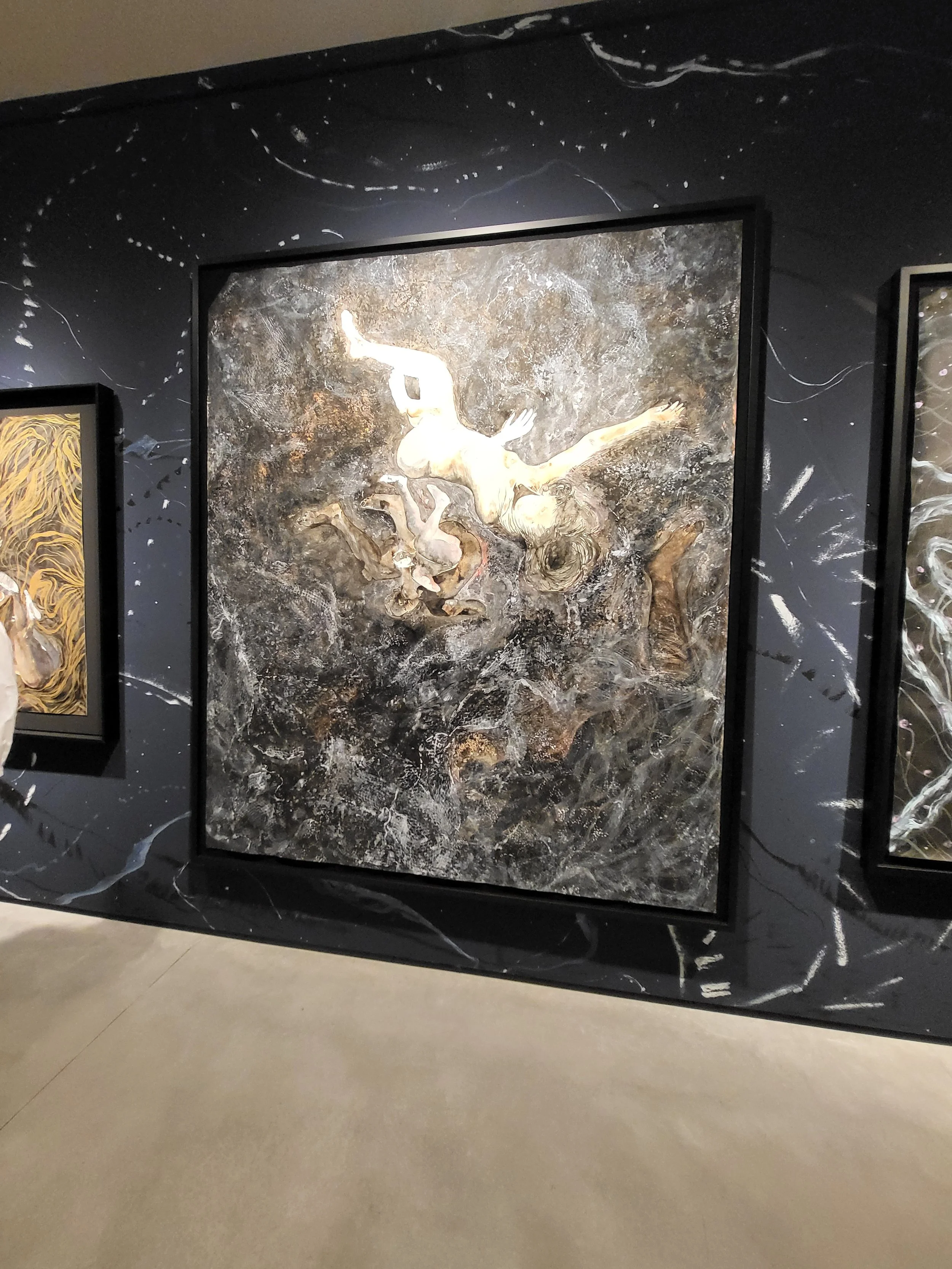
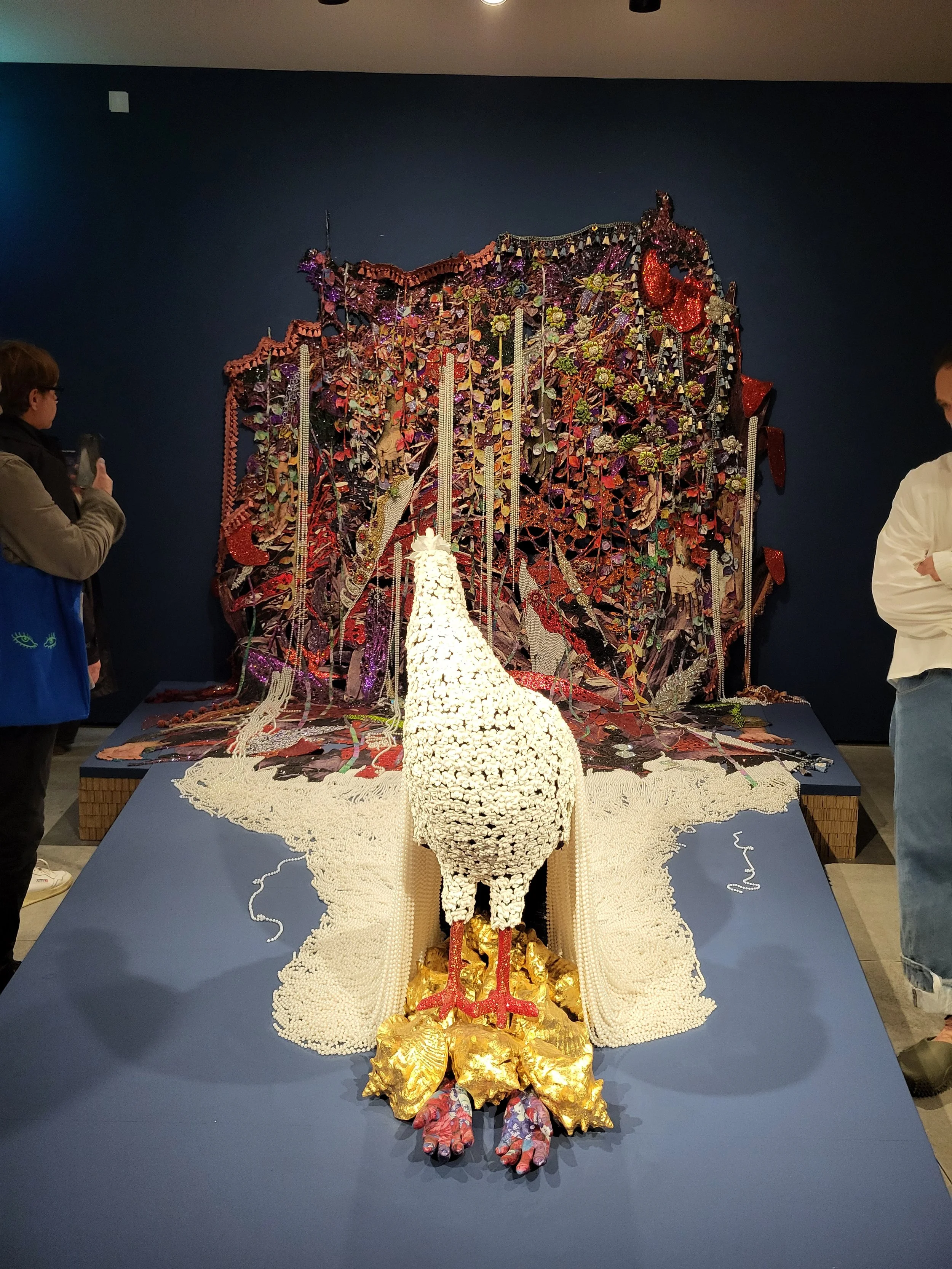
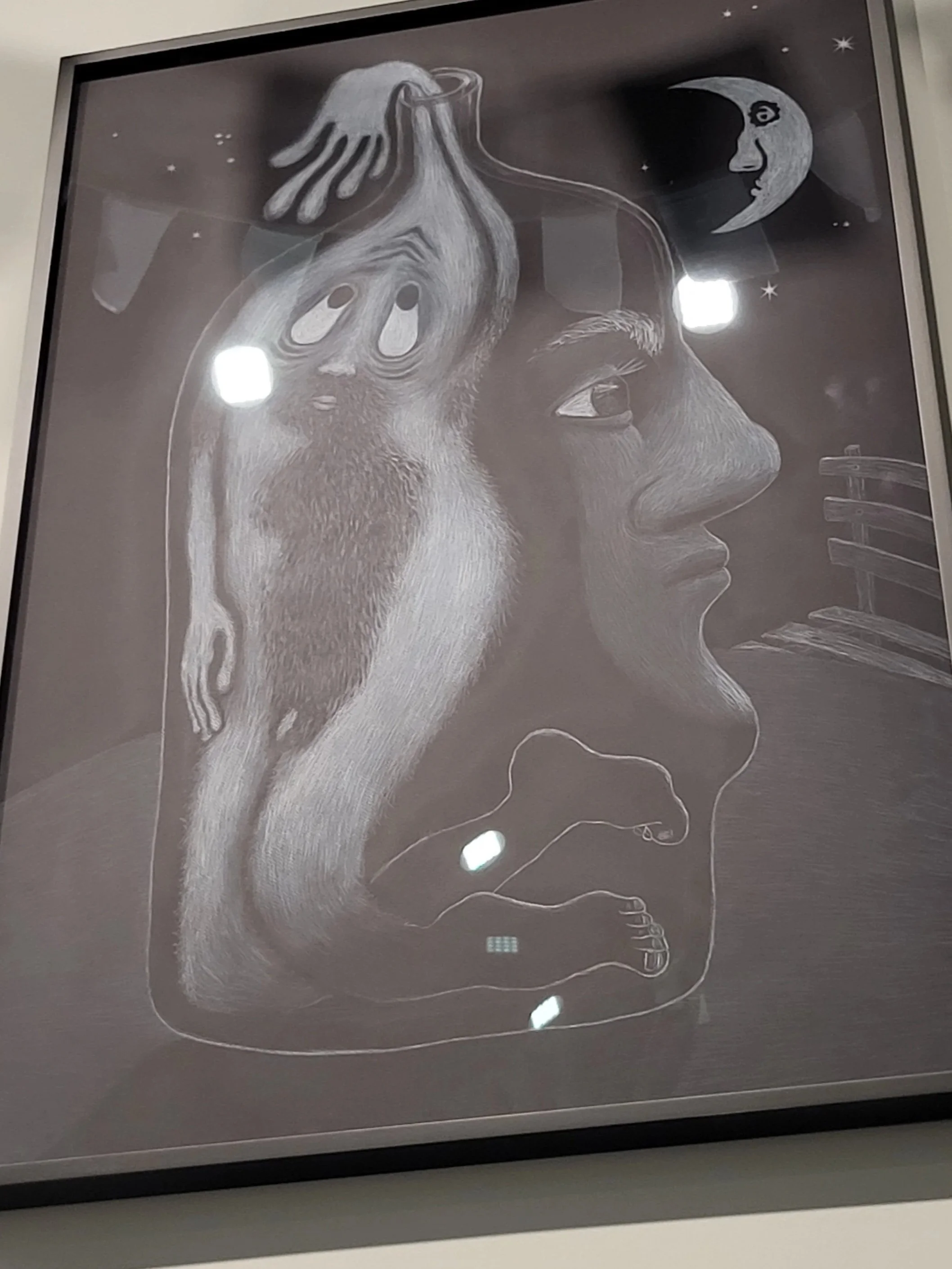
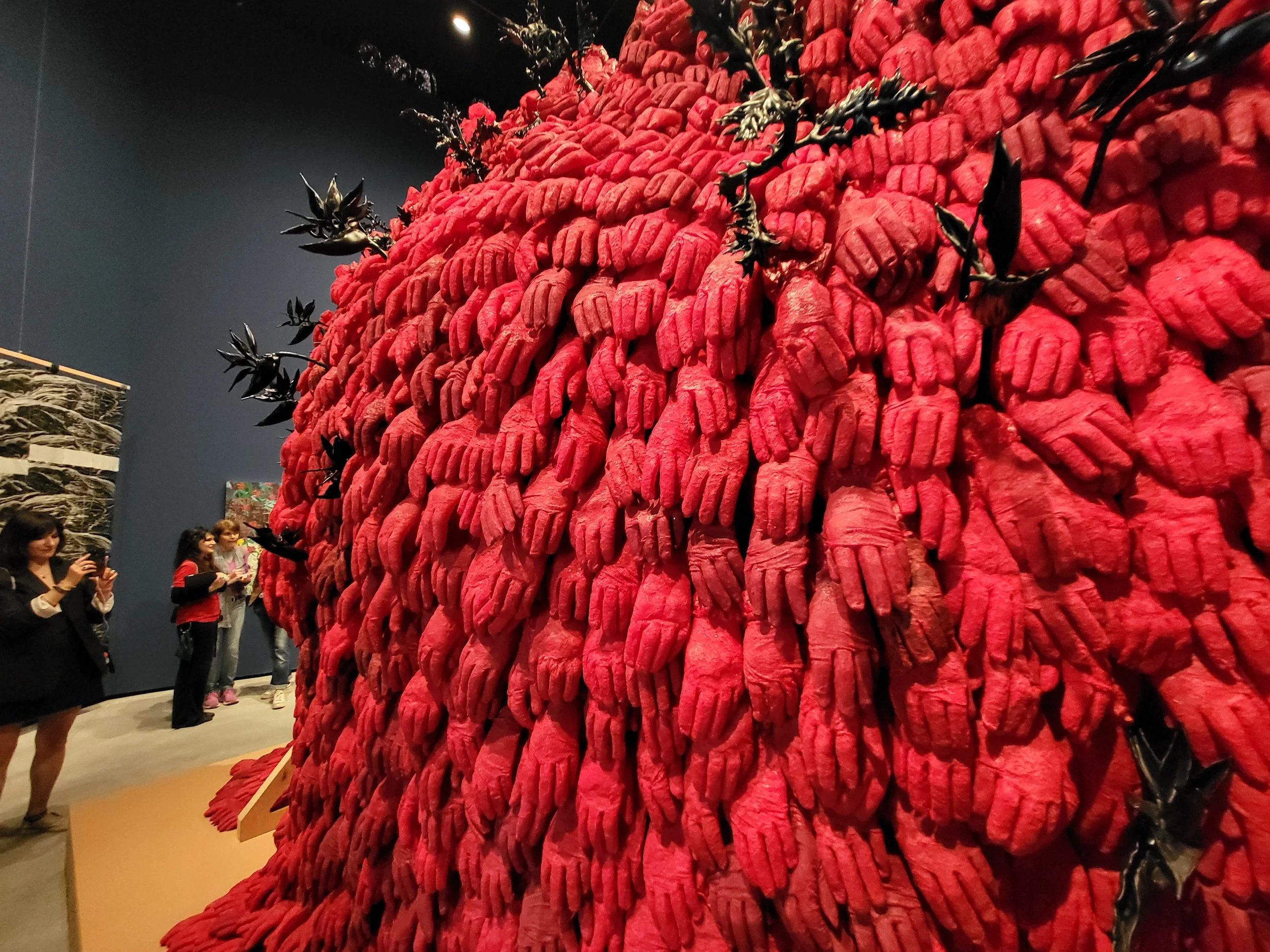
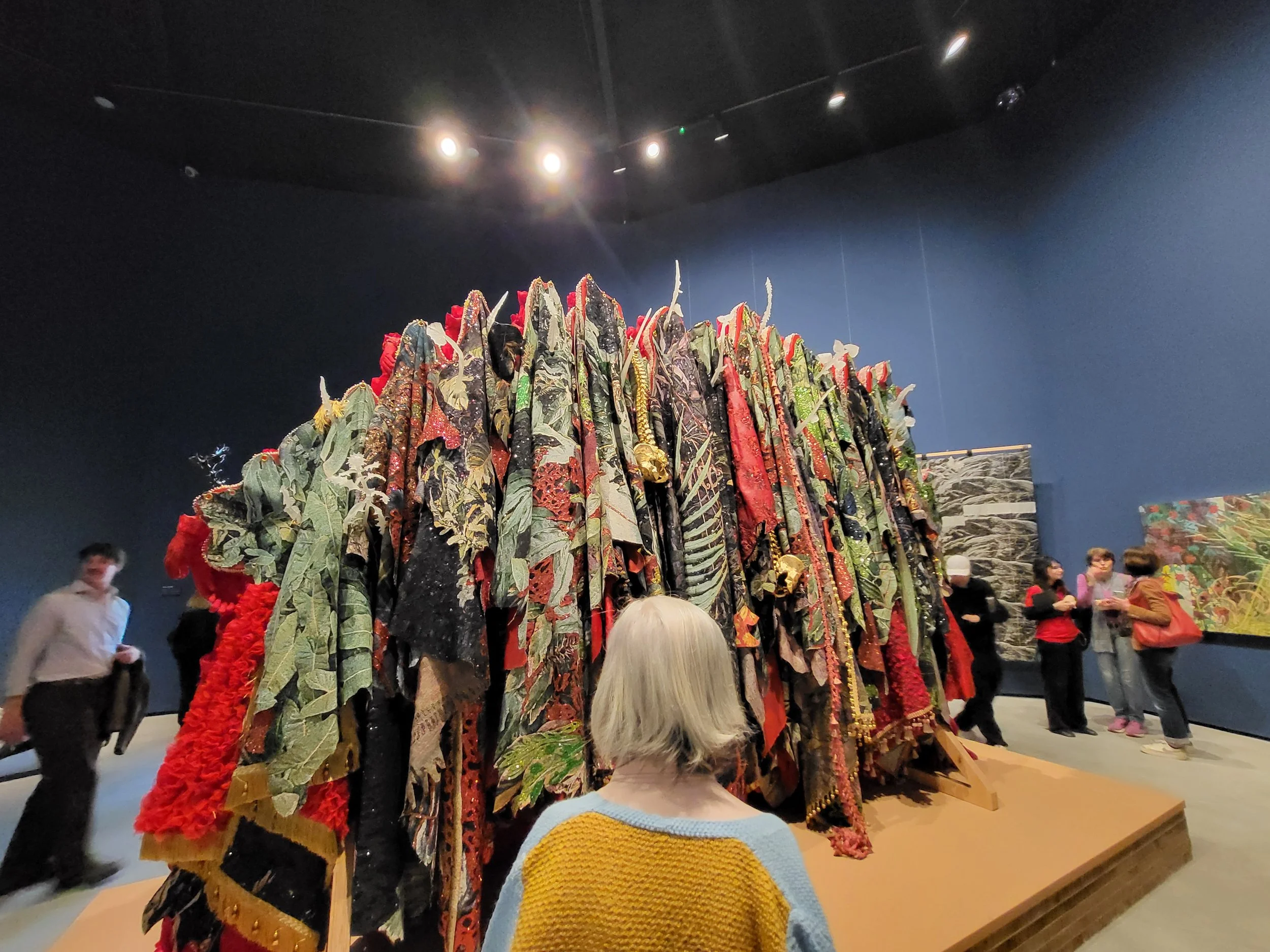
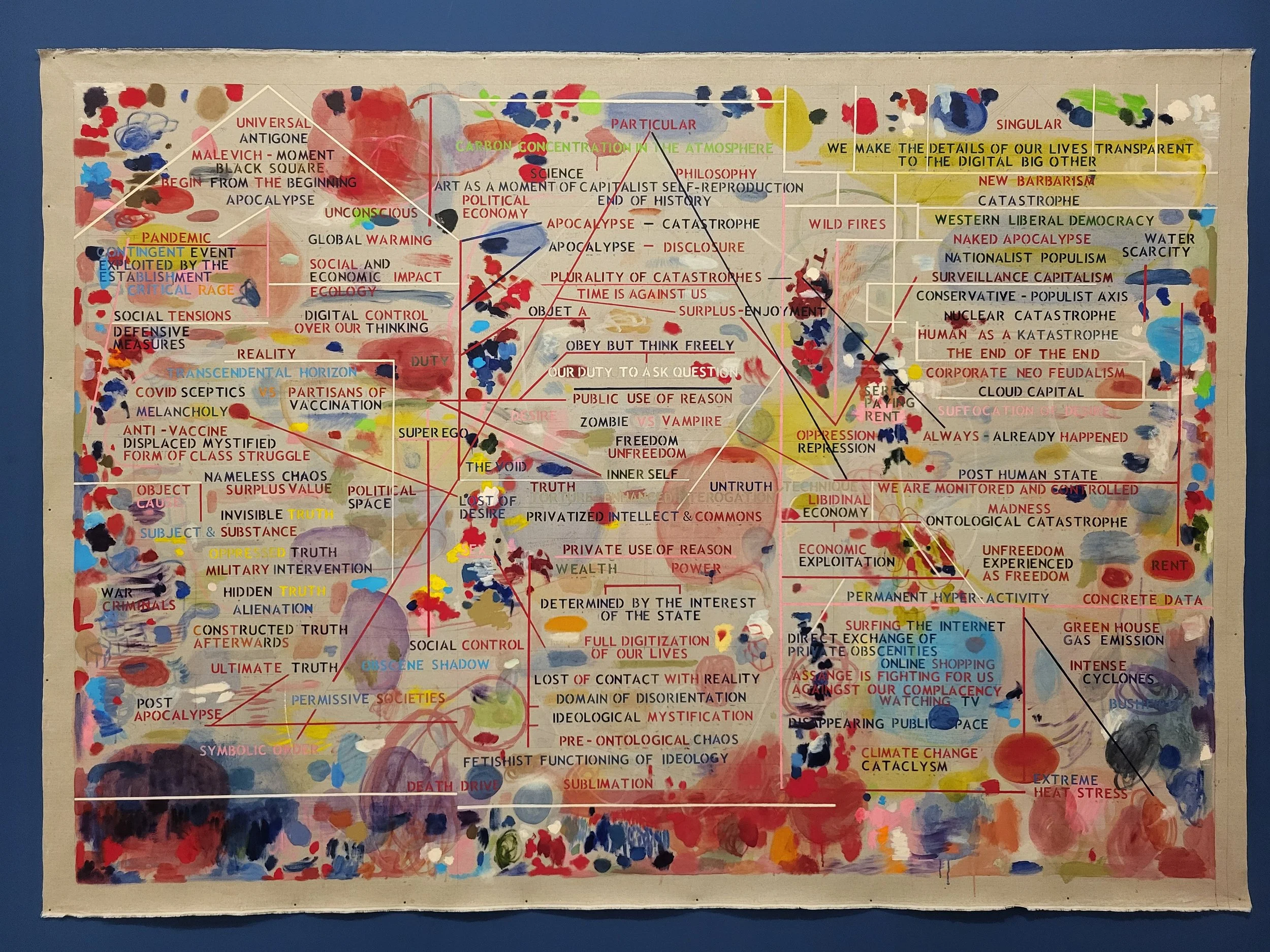
Impressions from the main pavilion in Giardini. Photos: Power Ekroth
Business as usual: the machine keeps grinding
In one sense, the opening days of 2026 were therefore business as usual, quite literally. There is still a lingering idea that the Venice Biennale stands relatively free from market forces, as though it primarily belonged to the world of ideas. But this year, as in so many other years, gallerists circulated around their artists’ works, hosted cocktails and dinners for artists, collectors, and other key figures, with free champagne, canapés, and broad smiles as lubricant. And as usual, Hans Ulrich Obrist has been triple-working and is curating no fewer than three exhibitions in Venice.
Twenty-five years ago, one could still hear the expression: “See it in Venice and buy it in Basel.” Venice opened shortly before Art Basel, and for the truly capital-strong collectors it was possible to map out a European purchasing route between biennial, islands, dinners and fair. Today the relationship between biennial and market has both changed and intensified. The market has spread out across a global calendar of fairs, private museums and collector-driven institutions, while Venice still delivers the legitimacy that can later be invoiced elsewhere. The expression could now just as well be reversed: “Buy art in Venice and see new art in Basel.”
Since then, Venice has moved the Biennale earlier, while the market has spread across a global calendar of fairs, private museums, and collector-driven institutions. Still, people continue to come to Venice. And they still come to buy art. The fair wanted the aura of ideas. The biennial wanted to pretend to be above the market, while delivering legitimacy.
Each national pavilion also tried feverishly to make “its” artists appear to be the best thing since sliced bread. Royalty, ministers, and other official potentates crowded for attention, while certain pavilions quickly became talking points with winding queues. That one does not have time to see all the pavilions is par for the course; that one does not have time to see all the collateral exhibitions likewise. The blisters also seem to appear in roughly the same places on one’s feet. One noticeable difference, however, is that the private institutions have become more numerous, larger, and more visible, and that they seem to be engaged in an internal competition over who can attract the most glamorous guests.
The Strike of Representation
And yet nothing was quite the same, at least not when compared to the status the Venice Biennale has held over the past thirty years.
For months, threads on social media have debated whether it is better to boycott the Biennale altogether, not even to travel to Venice and to let that absence, also as a tourism factor, become a protest against this year’s many different but interconnected controversies; or whether it is better to go there to protest on site.
One conflict zone concerns Russia’s return to its pavilion, albeit only during a limited part of the preview days. Another concerns the United States exhibiting a relatively unknown artist whose works look as if they were taken from a Donald Duck comic, after several other artists had publicly said that they did not want to participate, so as not to risk being read as Trump apologists. But the most polarizing issue has been Israel’s participation, not least because the presentation does not take place in its own pavilion, but in the Arsenale.
This was also one of the conflicts that led to the jury’s resignation. The jury, consisting of Solange Farkas, Zoe Butt, Elvira Dyangani Ose, Marta Kuzma, and Giovanna Zapperi, first issued a statement saying that it would not consider pavilions whose national leaders are facing accusations of crimes against humanity. A few days later, the entire jury resigned, abruptly and with reference to the same statement. This not only put this year’s Golden and Silver Lions out of play, but also directed attention to the shaky foundations of the pavilion system: the idea that artists should still represent nations, while the violence of those nations is expected to remain outside the image. What does national representation even mean in such a situation?
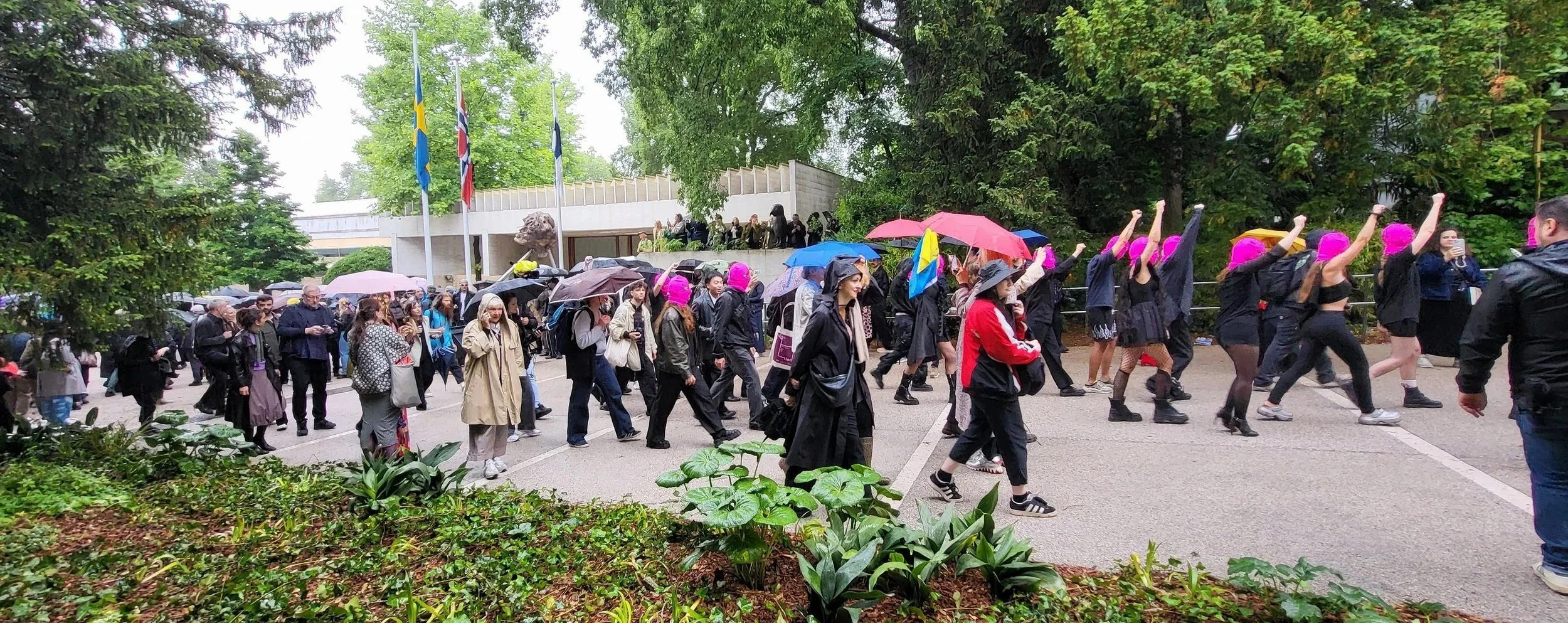
Pussy Riot and FEMEN protest walking away from the Russian Pavilion during the first press day in Giardini, 2026. Photo: Power Ekroth
Outside the Russian pavilion, Pussy Riot and FEMEN protested loudly. The European Commission has also withdrawn a grant of two million euros to the Biennale, citing Russia’s participation. The Biennale, for its part, has referred to the fact that Russia owns its pavilion and therefore has the right to participate, almost as if the pavilion functioned as a kind of diplomatic property. There is much that is strange about this: partly the Biennale’s alleged helplessness before the national logic of the pavilions, partly the EU’s decision to financially punish an entire Biennale structure — and above all the artists themselves — for the participation of a single country. If the criterion is warfare, the question immediately arises as to why the same logic is not applied to Israel and the United States.
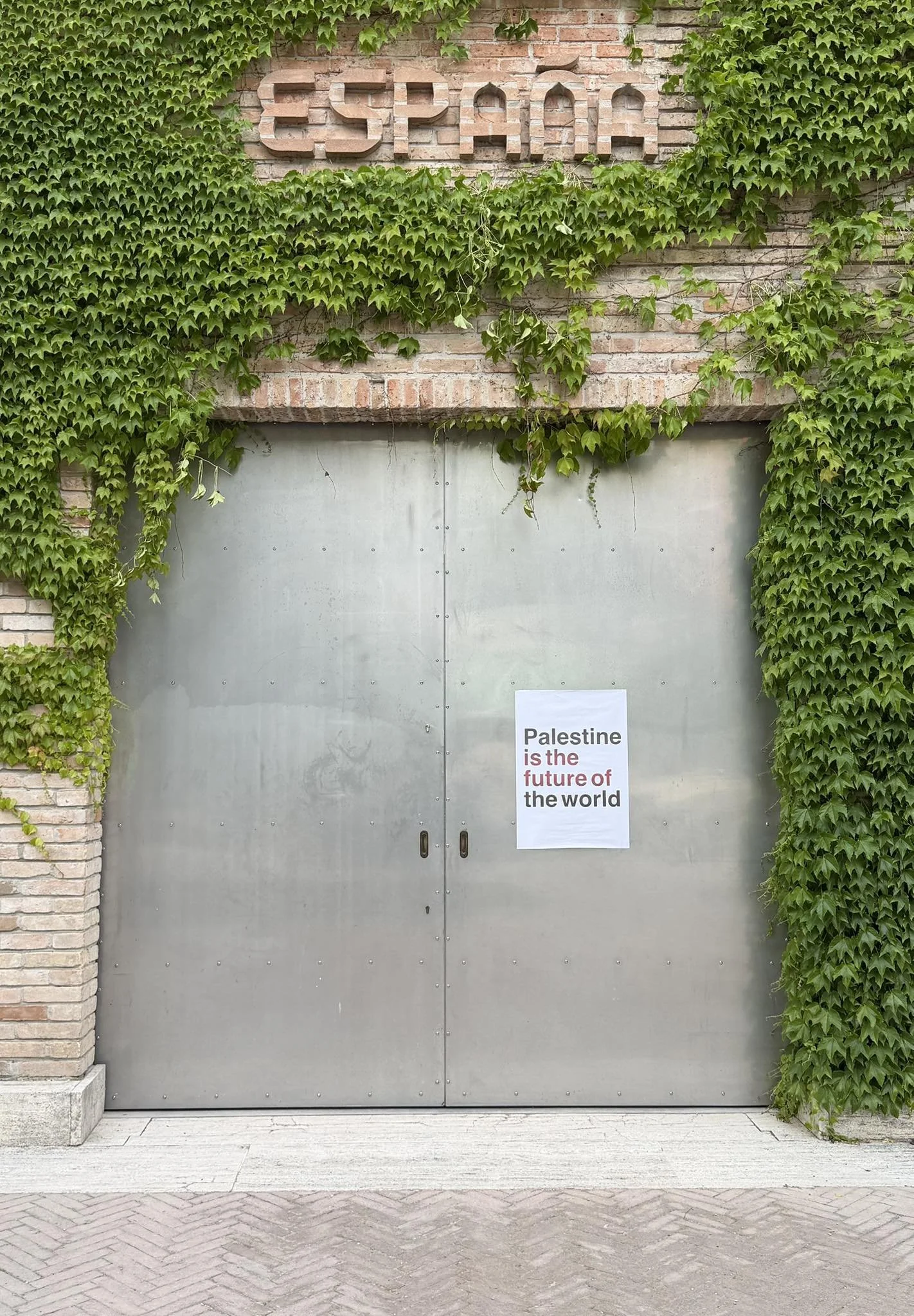
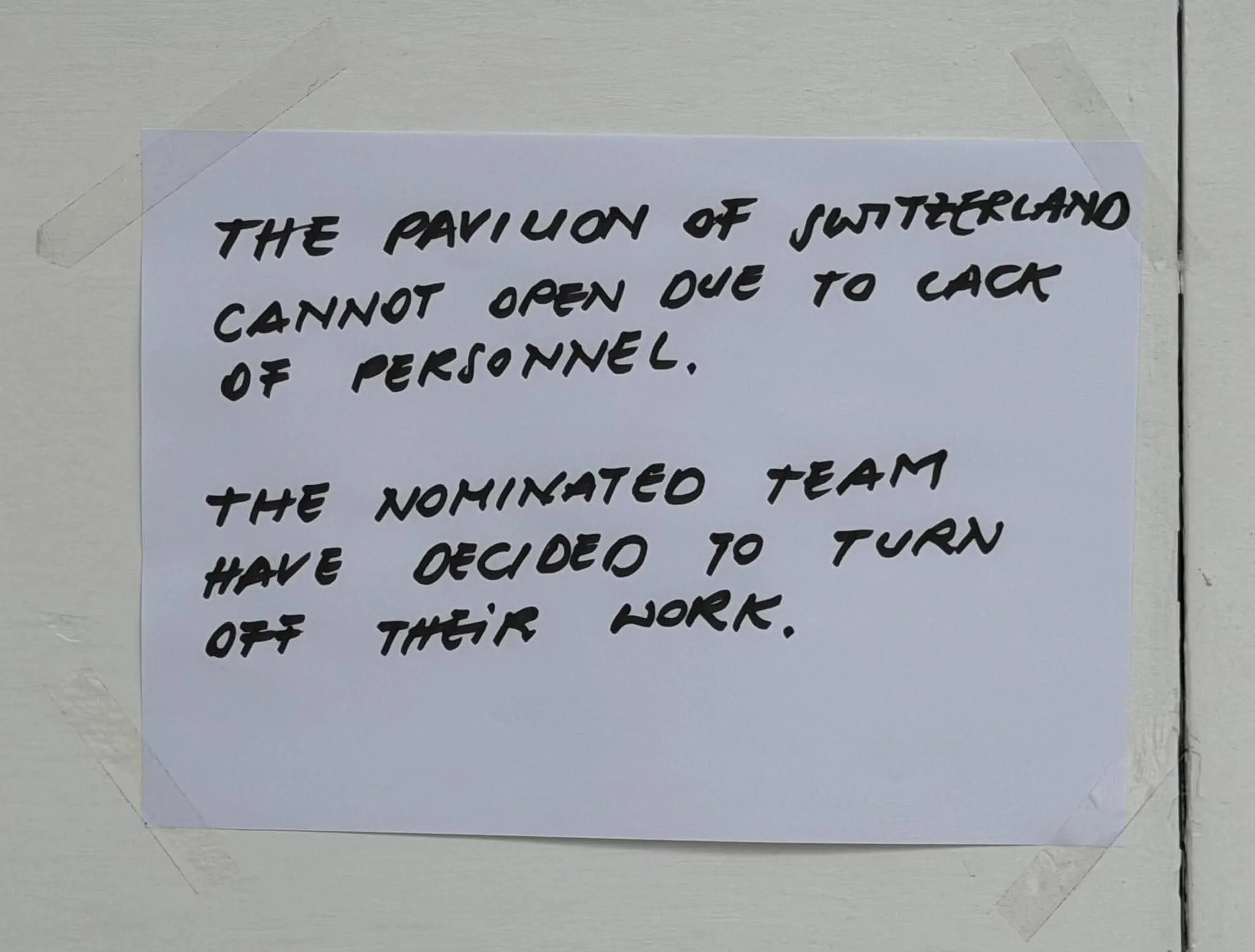
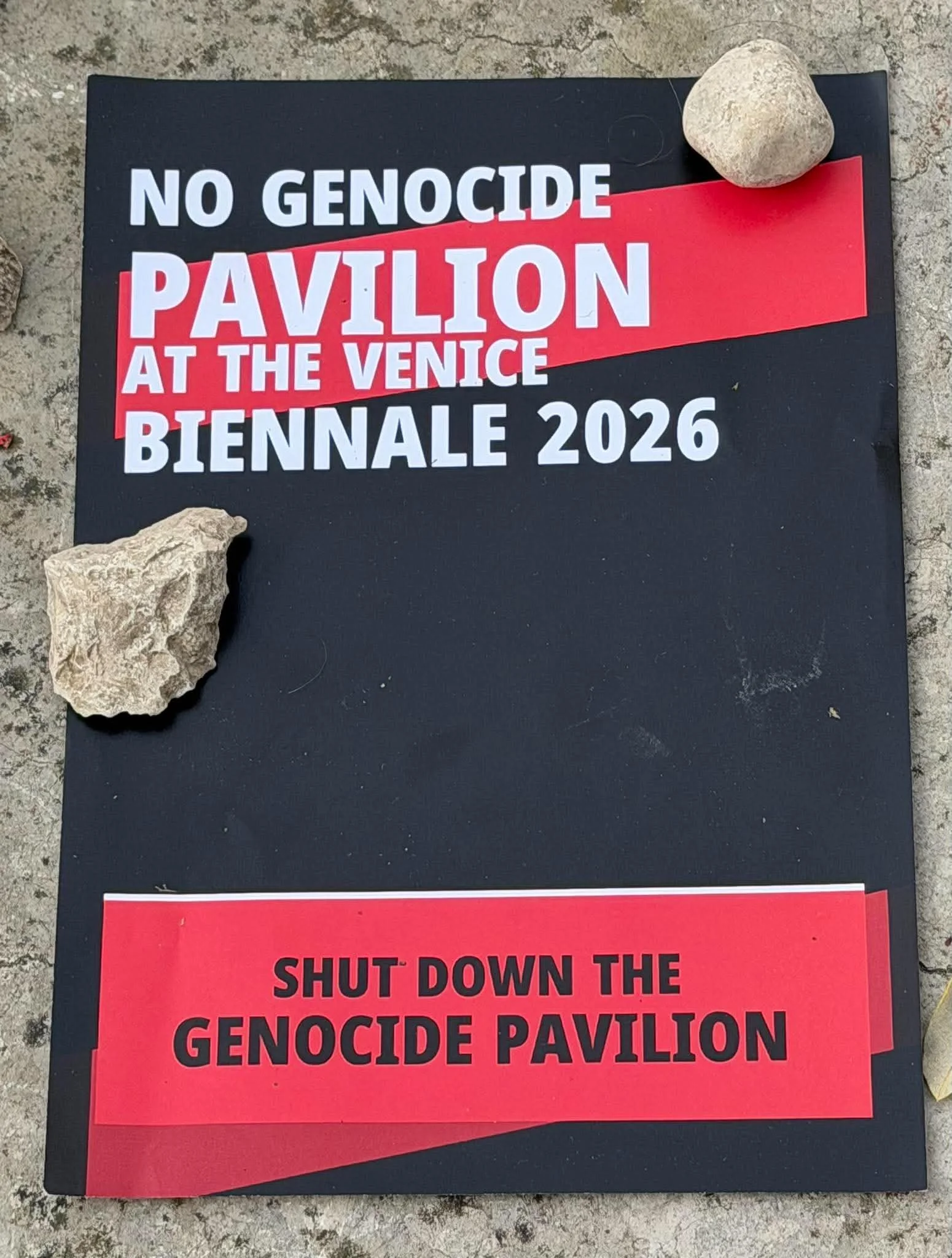
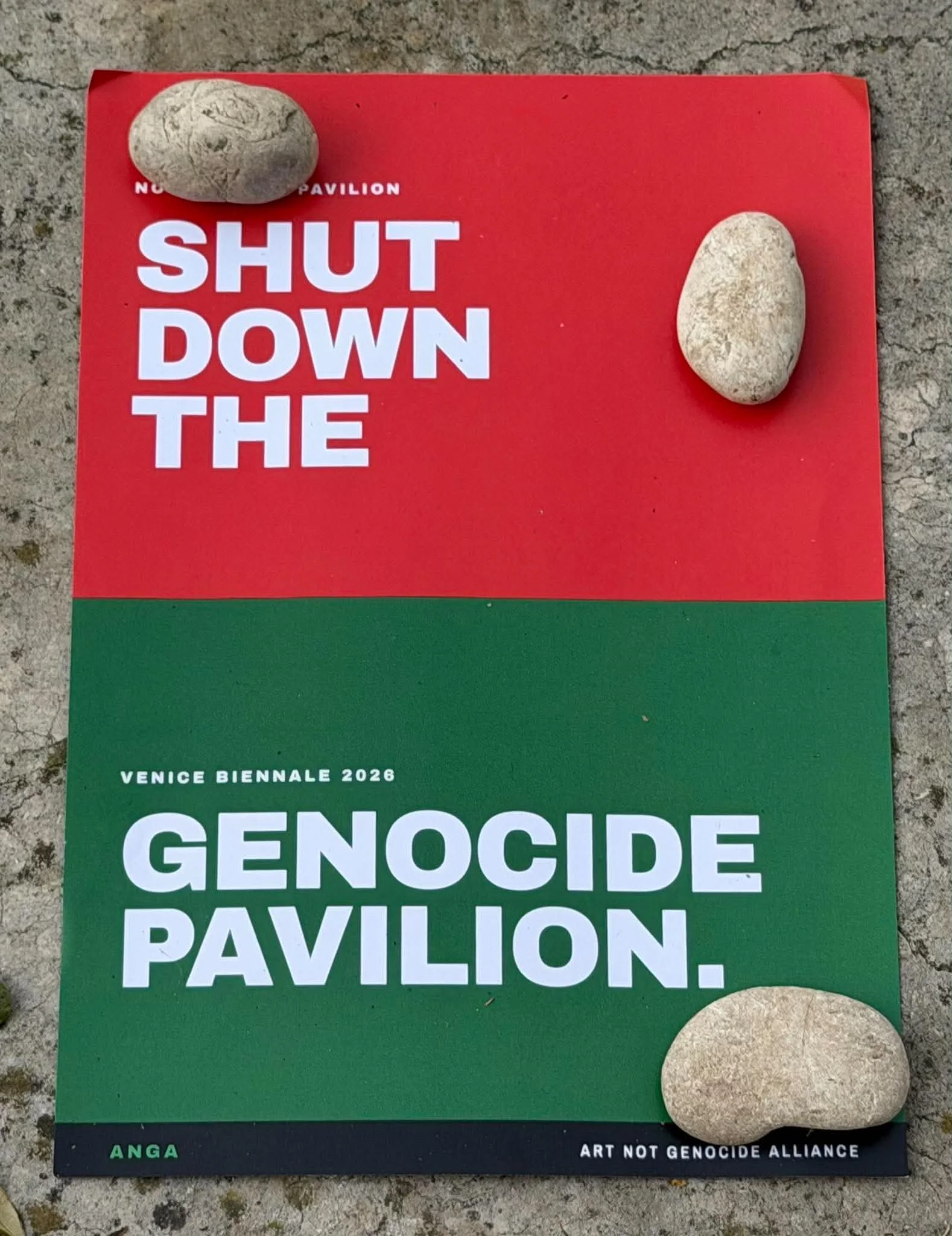
Protests also took place outside Israel’s exhibition. During the opening days, 27 national pavilions closed fully or partially during a full day in solidarity with the protests against Israel’s participation. A larger march for a free Palestine also led to clashes with police.
Pasolini Watches Us
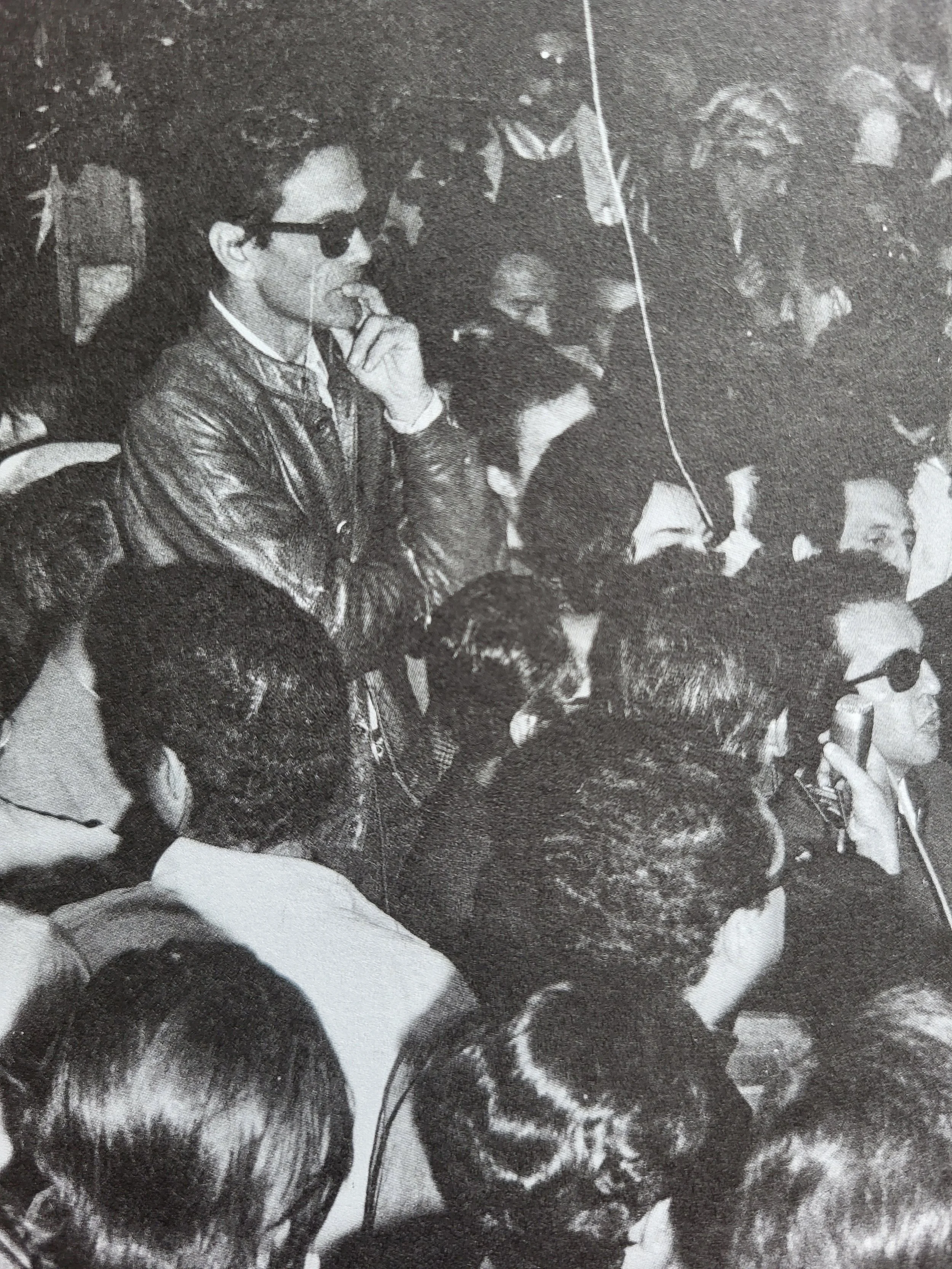
Pier Paolo Pasolini in campo Santa Margherita during the protest 1968
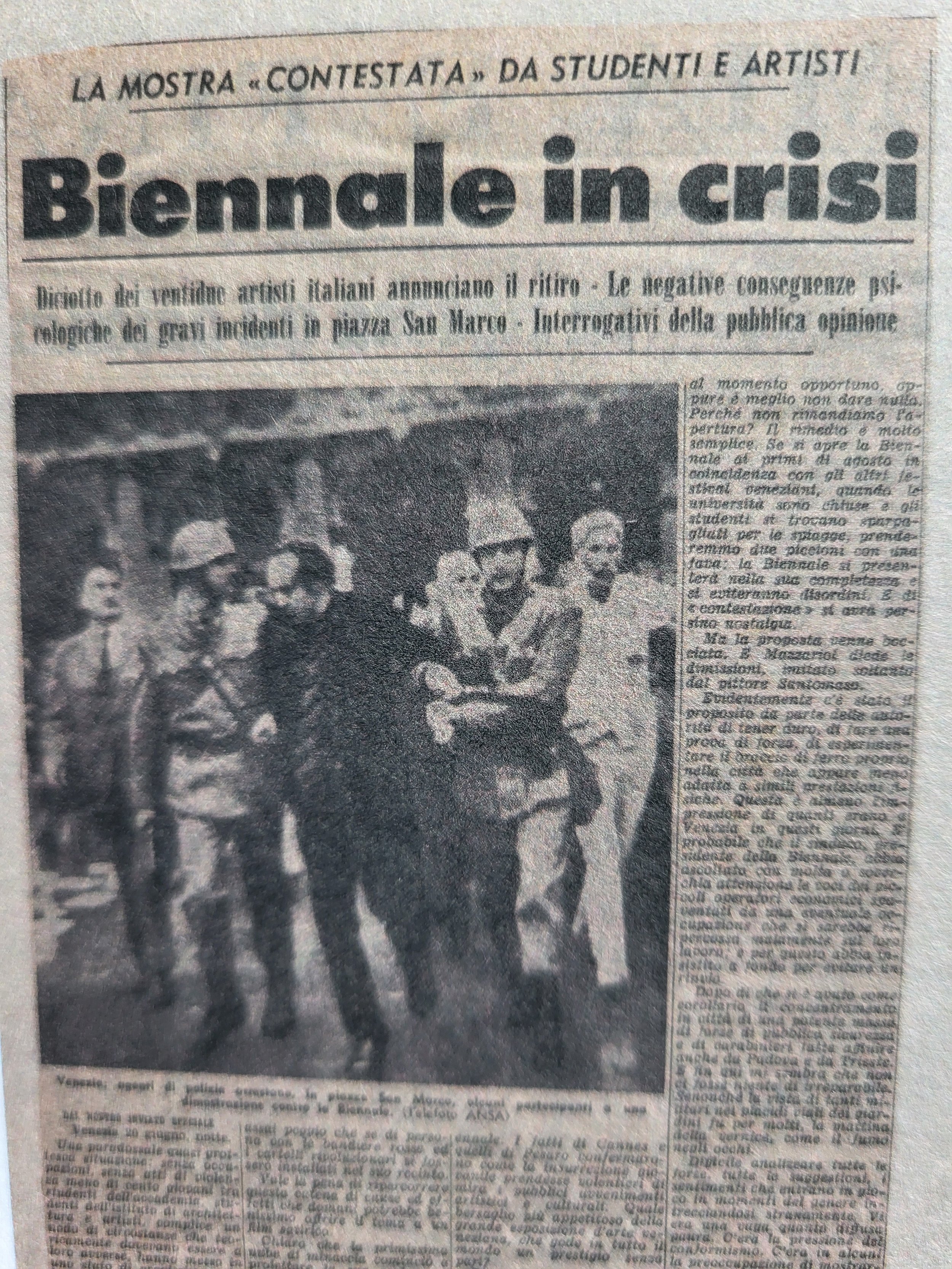
And yet this is far from the 34th Venice Biennale in 1968, or from the unnumbered Biennale of 1974, which broke with the usual pavilion logic and devoted the entire edition to Chile after the military coup, through a series of anti-fascist and solidarity-based manifestations. The 1968 Biennale came to be known as the “Police Biennale,” due to the recurring clashes between police and protesting students. It was not only a general protest against the Biennale as a bourgeois and capitalist apparatus. There were also protests against South Africa’s pavilion, which was accused of using Black artists to legitimize apartheid. Then, as now, there were also protests against the official prizes. Armed police were called in to protect the pavilions, and during the press days many people, including art critics, were beaten with batons and arrested.
This led to an internal strike: pavilions chose to close their doors in protest against the Biennale, artists turned their works to face the wall, and it became clear that the pavilions were not neutral rooms. The Biennale no longer appeared as a neutral place where art was shown, but as an apparatus that had to be defended. Its structure was laid bare. The protests led to the suspension of the international prizes, until they were reintroduced in 1986, and sales from the exhibitions were prohibited. South Africa’s pavilion was closed, and between 1968 and 1993 the country was excluded from the Biennale. In 1973 a new statute was also introduced, in which the institution’s task of prioritizing democratic, multidisciplinary culture over market forces was written in. The protests had a structural impact. At least for a time.
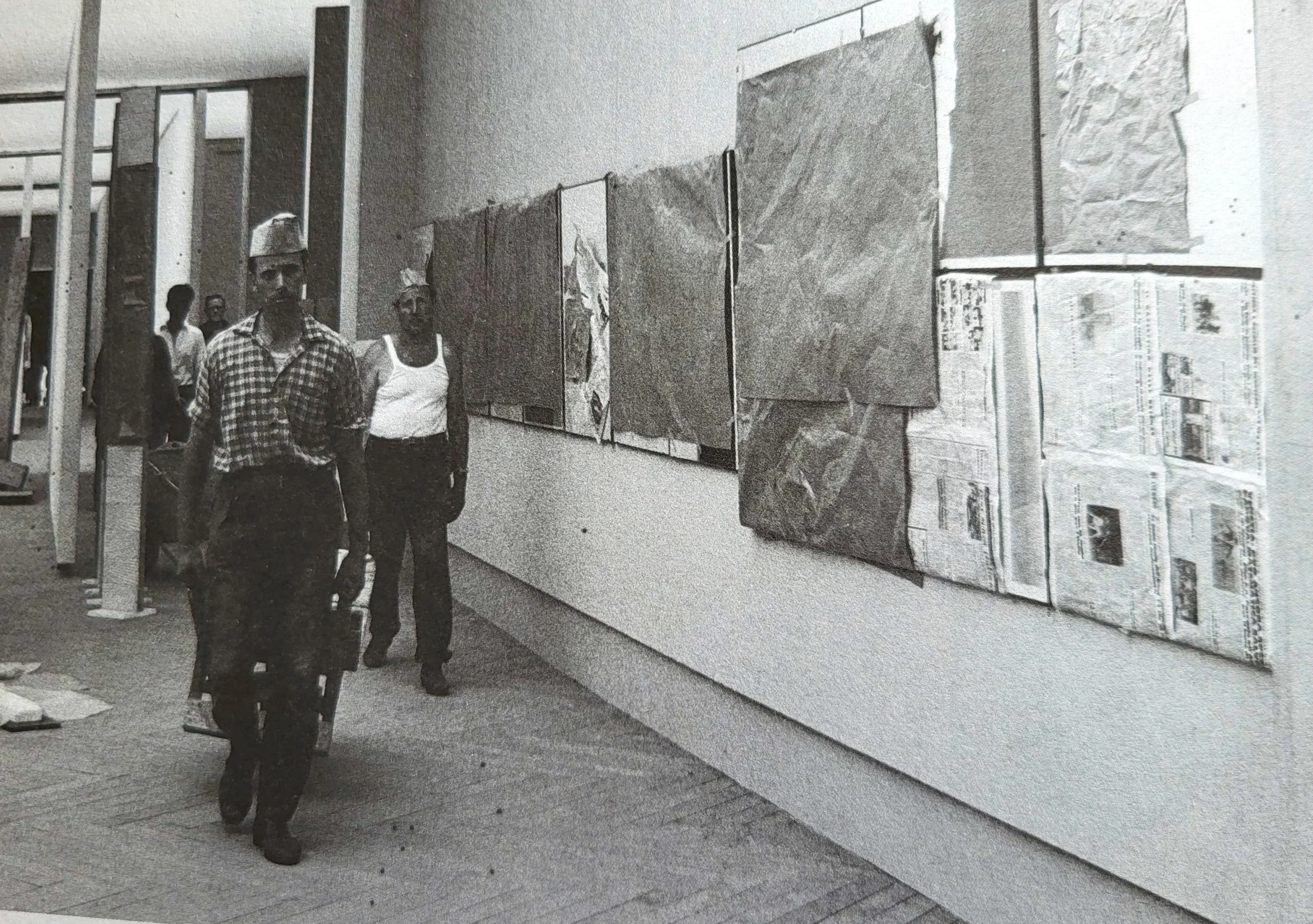
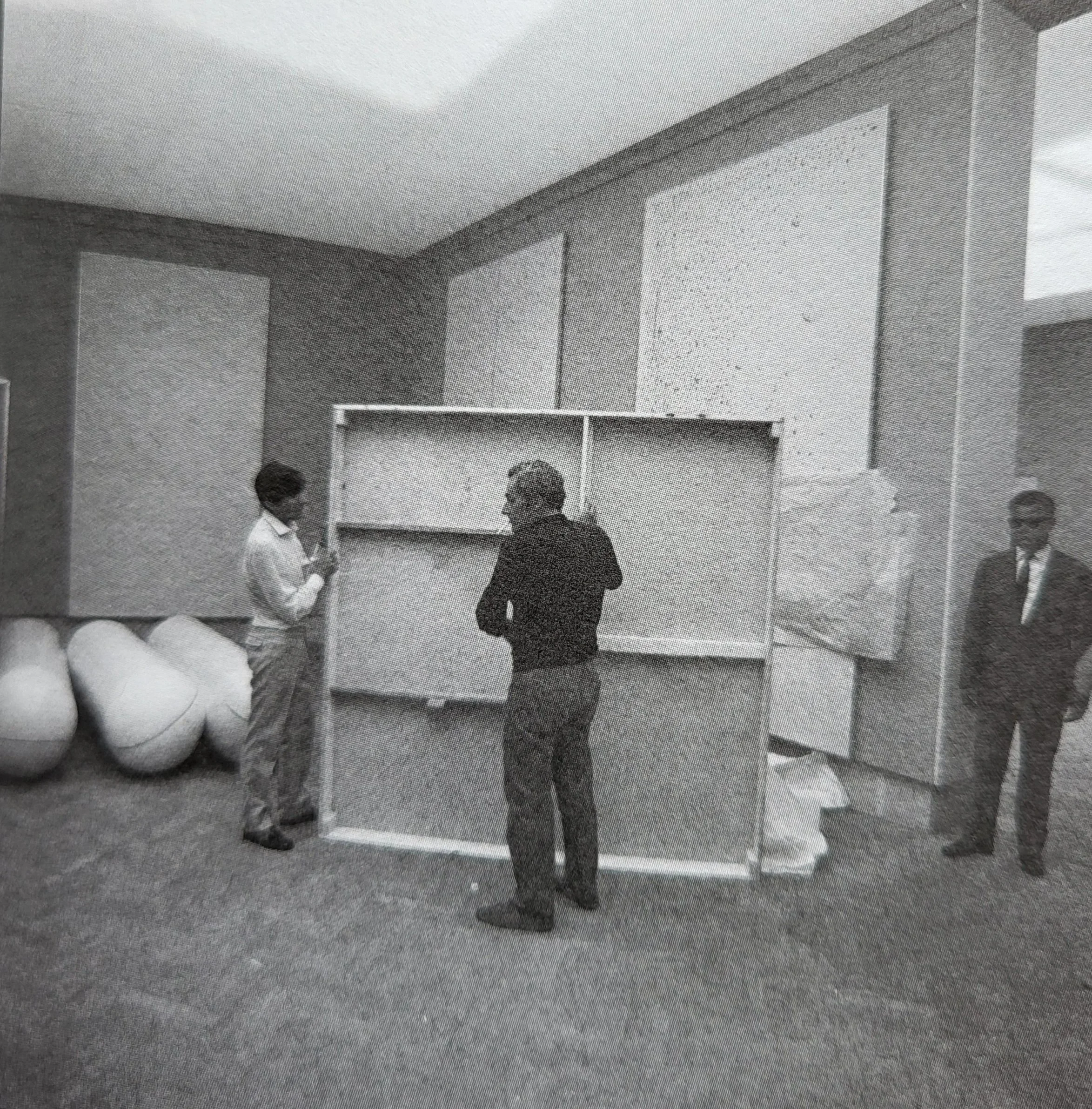
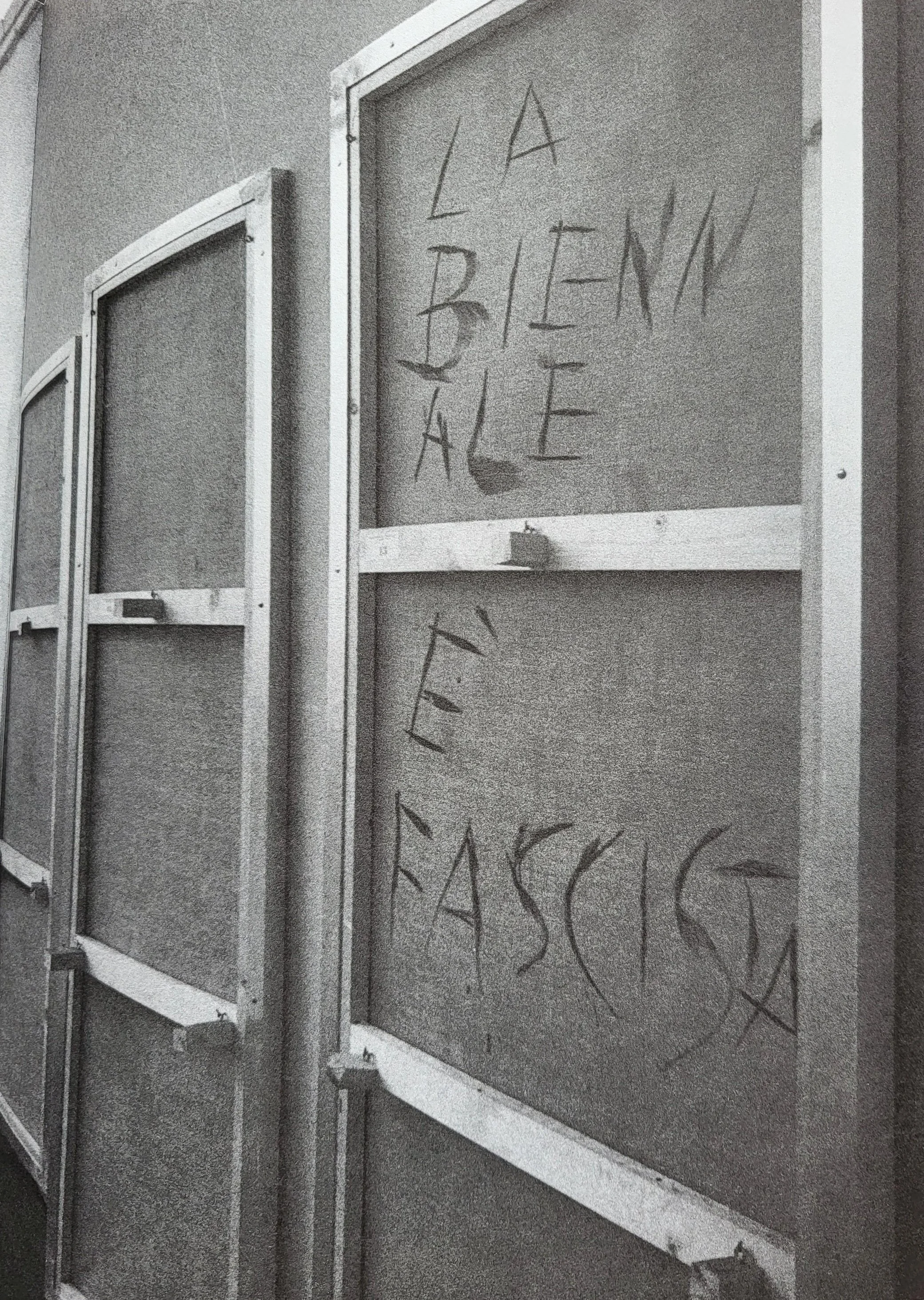
Impressions from the main exhibition 1968, with artists protesting by hiding their art works and turning the paintings around.
An Absent Reform
The 56th Venice Biennale, All the World’s Futures, curated by the late Okwui Enwezor in 2015, looked back to precisely this period and discussed fascism, Nazism, capitalism and perhaps above all the rise, fall, unions, and dissolutions of nation-states. Former Yugoslavia, the Soviet Union, the union between Egypt and Syria and Czechoslovakia can be mentioned as examples of state formations whose altered geopolitical status also left traces in the Biennale’s pavilion structure. By then, Russia had already annexed Crimea. But Enwezor identified capitalism, “the great drama of our age,” and neoliberalism as that which overshadowed all conflicts, and as the target of his concept, through a look back at the changes in the pavilions over the years and a reading of the problems of 2015 through the 1974 Biennale.
Enwezor wanted to make a concerted effort to change the structure from within. How, one may leave unsaid since nothing was really changed — structurally — through the reading aloud of Marx’s Capital in the exhibition. Since then, through the Biennales of 2017, 2019, 2022 and 2024, no major structural change has taken place. Rather, the development today appears as a regression. The protest action outside the Israeli and US pavilions in 2024, organized by ANGA, then appeared as an anomaly among the champagne glasses. In 2026, this anomaly has become harder to dismiss.
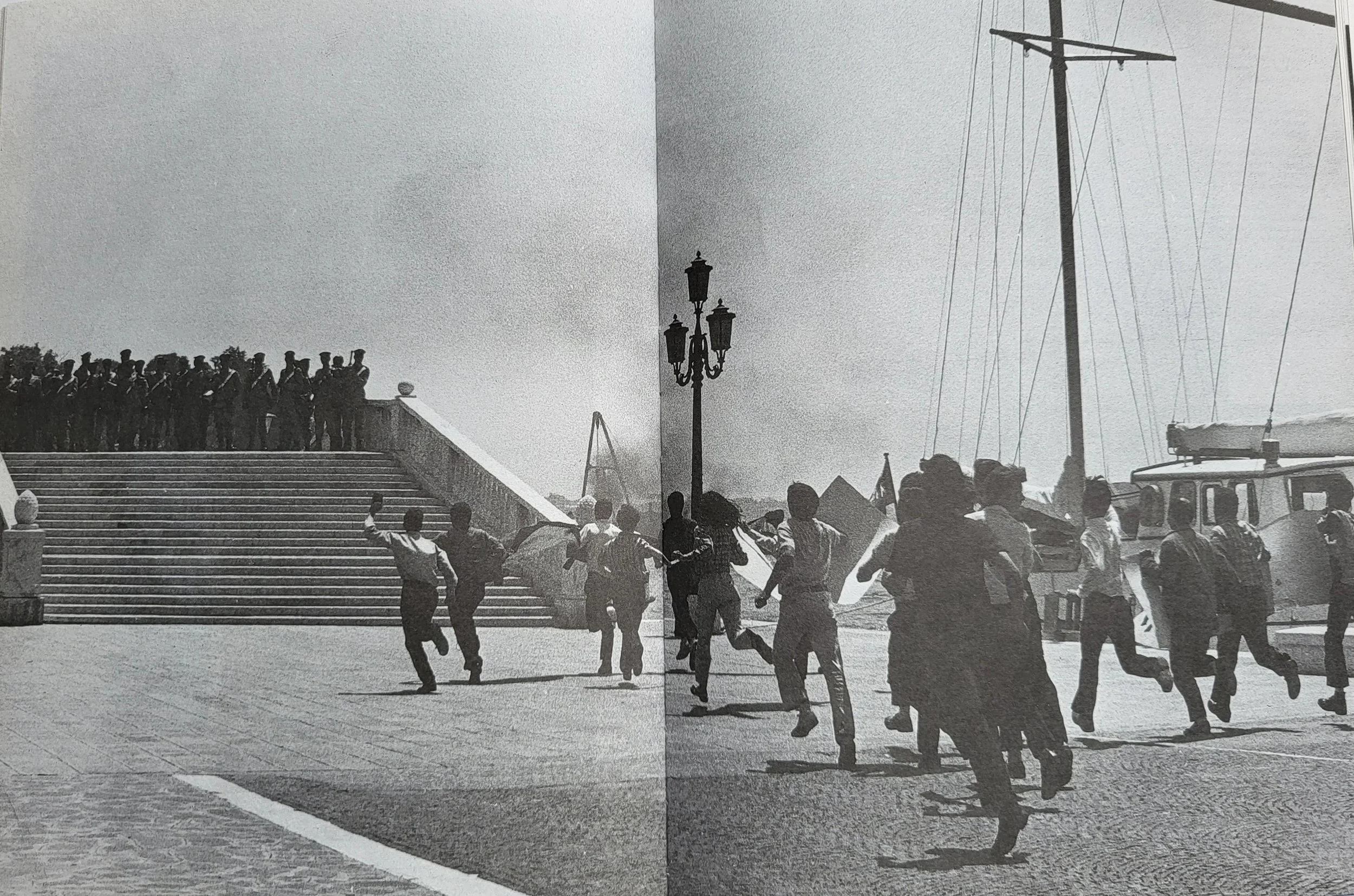
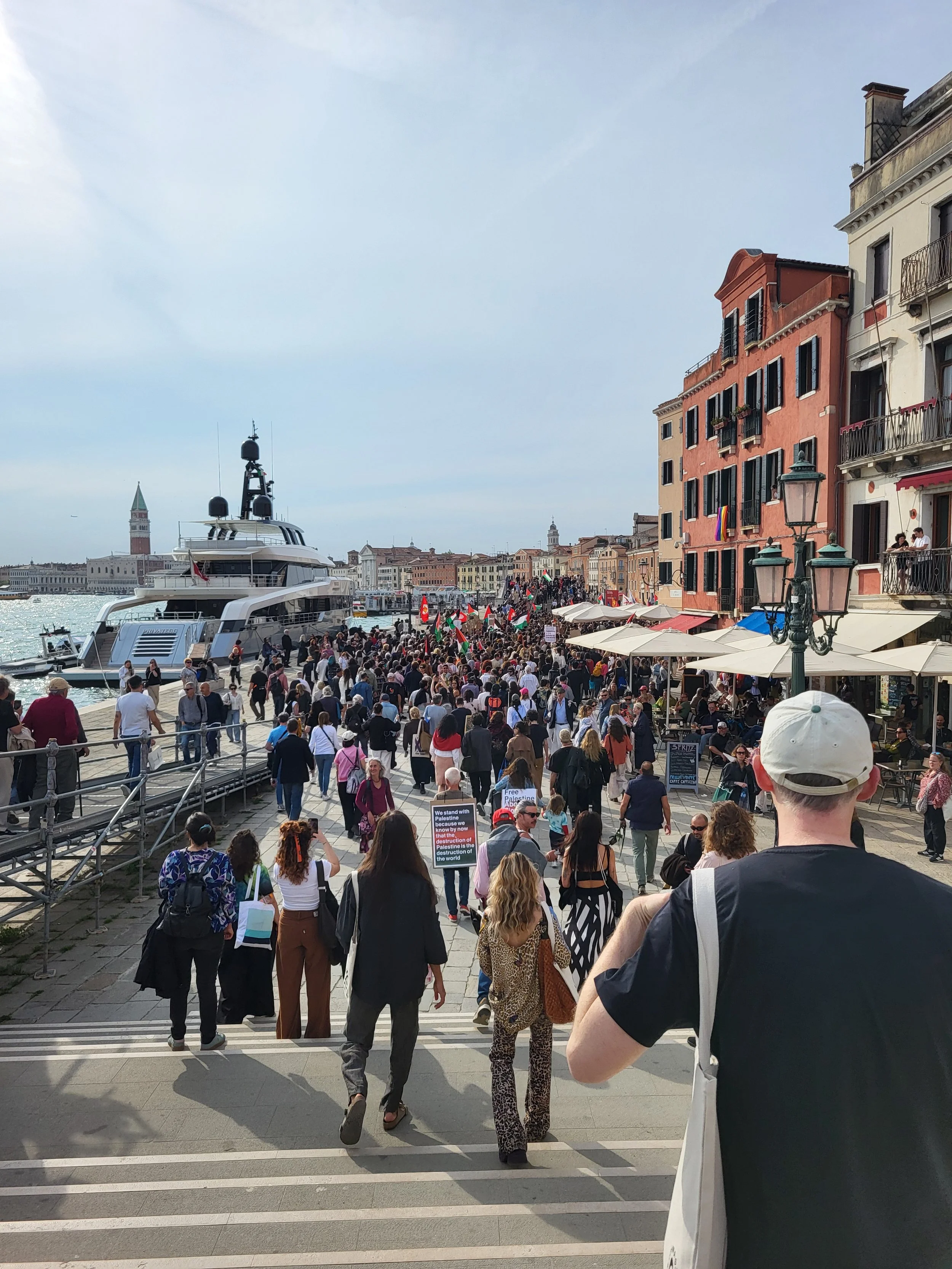
The protests in 1968 and in 2024 at the same bridge close to Giardini. Photo 2026: Power Ekroth
The protest actions organized by ANGA in 2026, partly outside Israel’s installation in the Arsenale and partly through a larger protest march with thousands of participants, had a significantly greater impact. What has really had an effect, however, is the pavilion strike and the collective decision by artists and pavilion teams to withdraw from prize consideration. More than 70 artists, roughly half of the participants, have withdrawn from prize consideration, as have 22 national pavilions. The question is no longer only how the Biennale can handle protests, but how it can survive when its own model of representation begins to strike against itself. This was also precisely what threatened to happen when even the ground staff threatened to strike — because if no one scans the VIP entrance or cleans the toilets, chaos will commence.
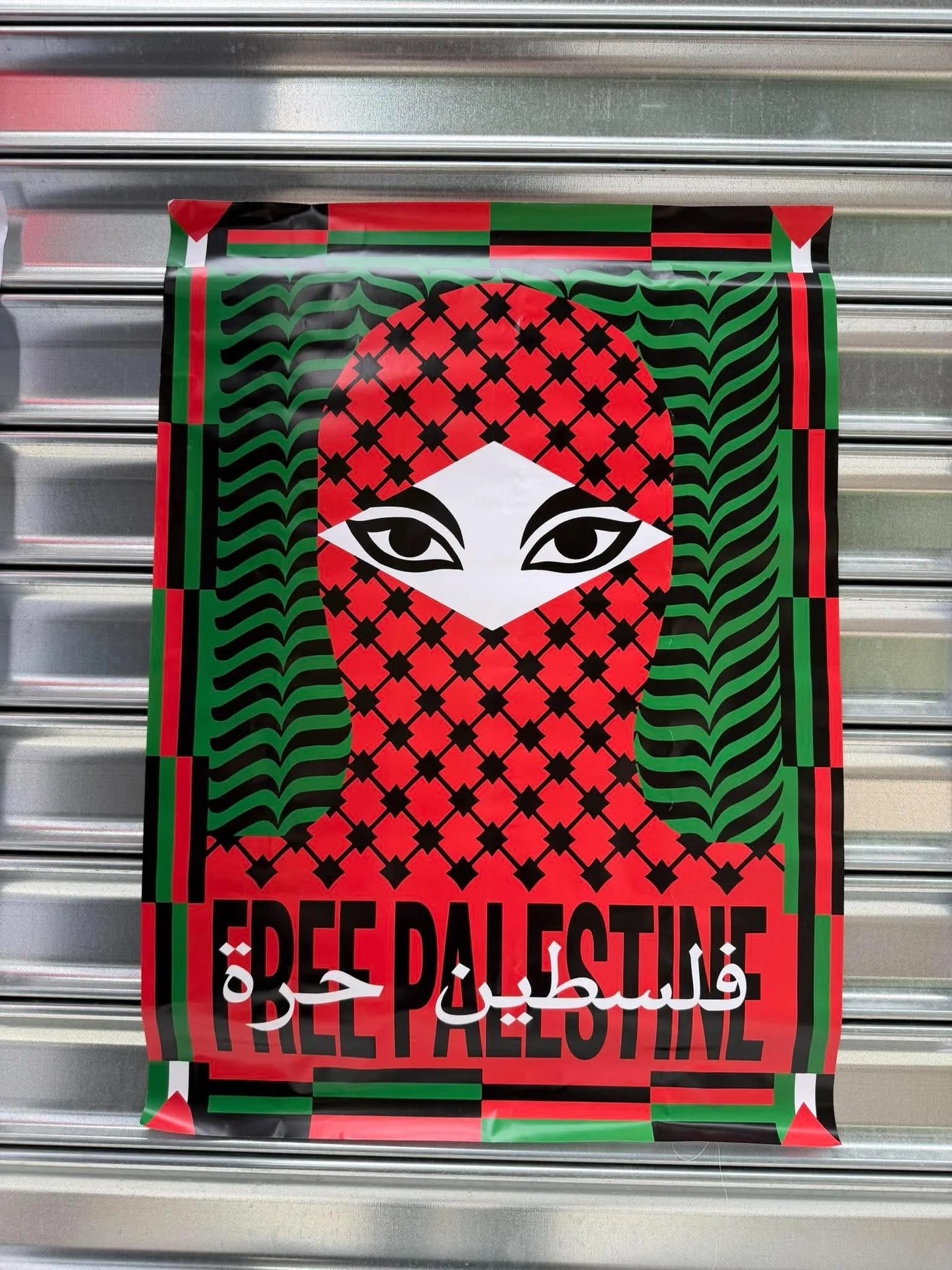
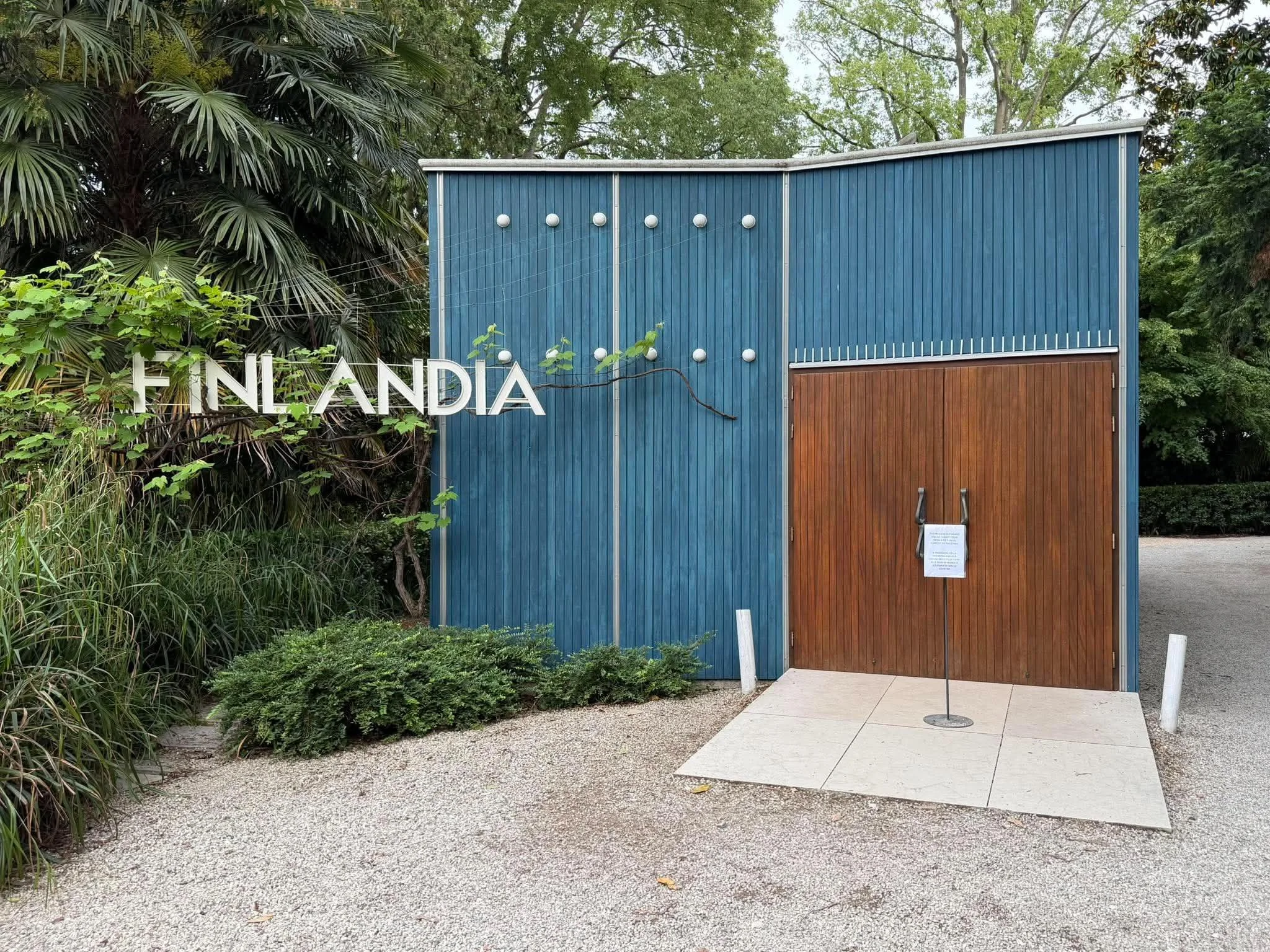
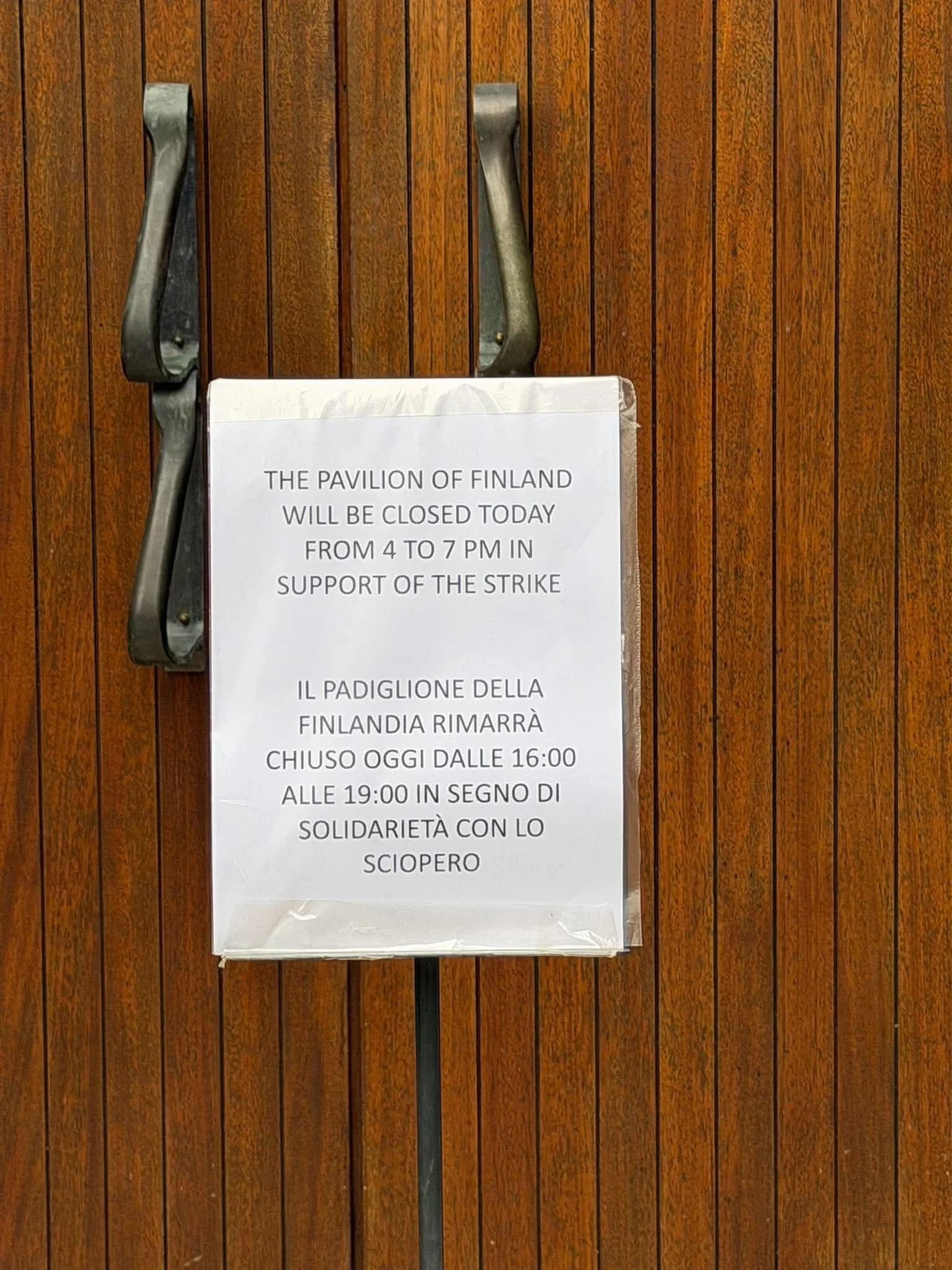
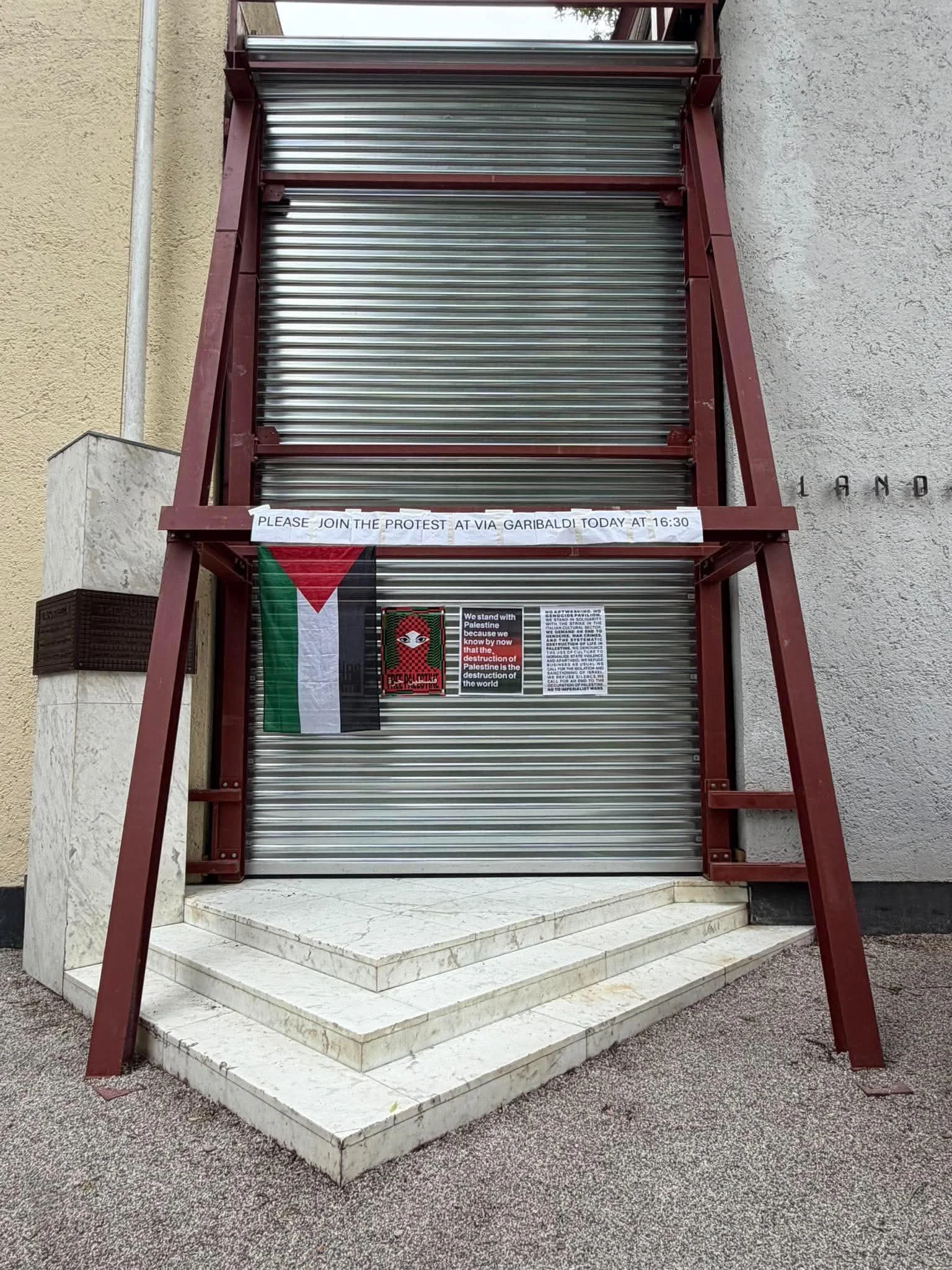
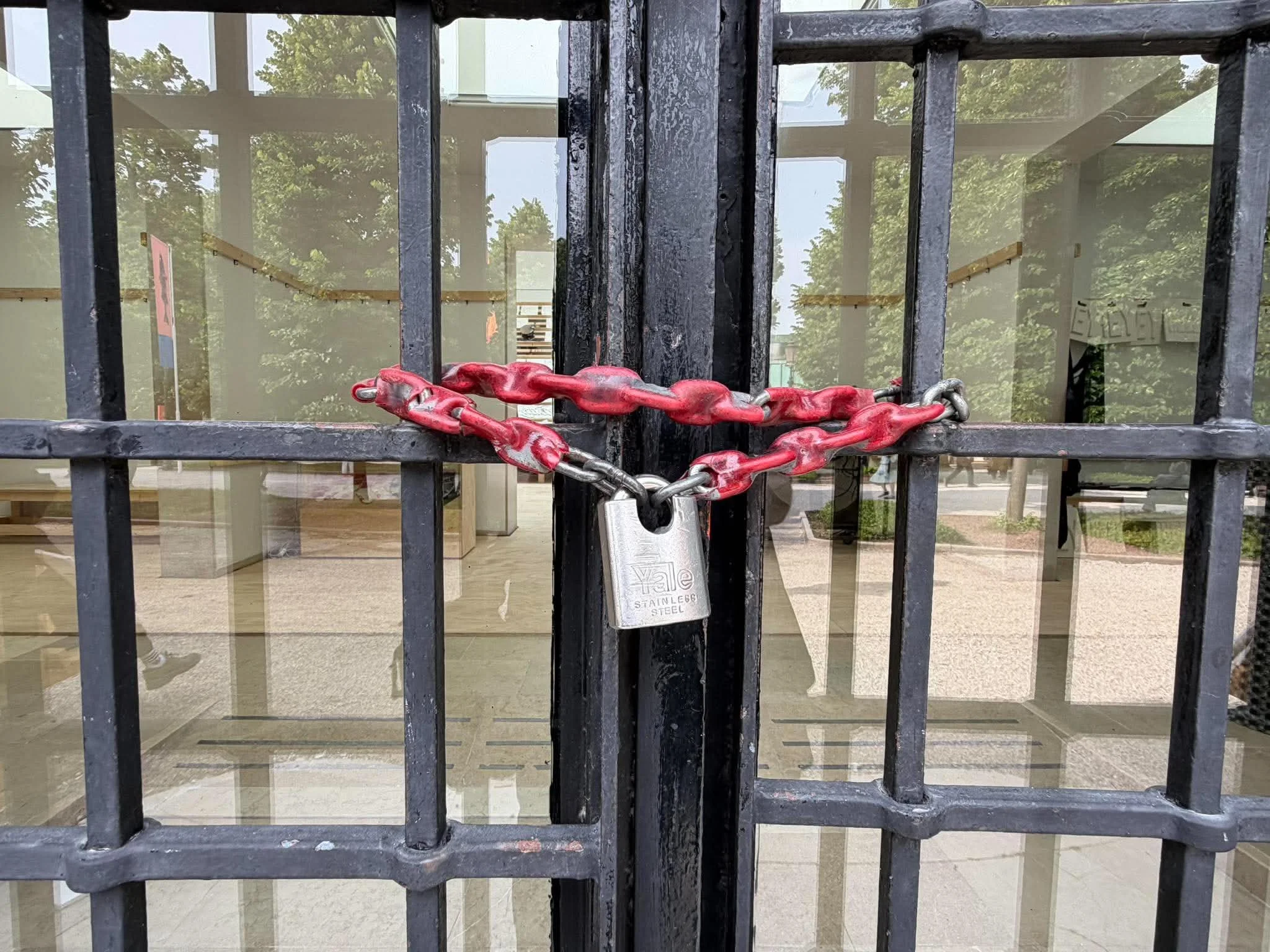
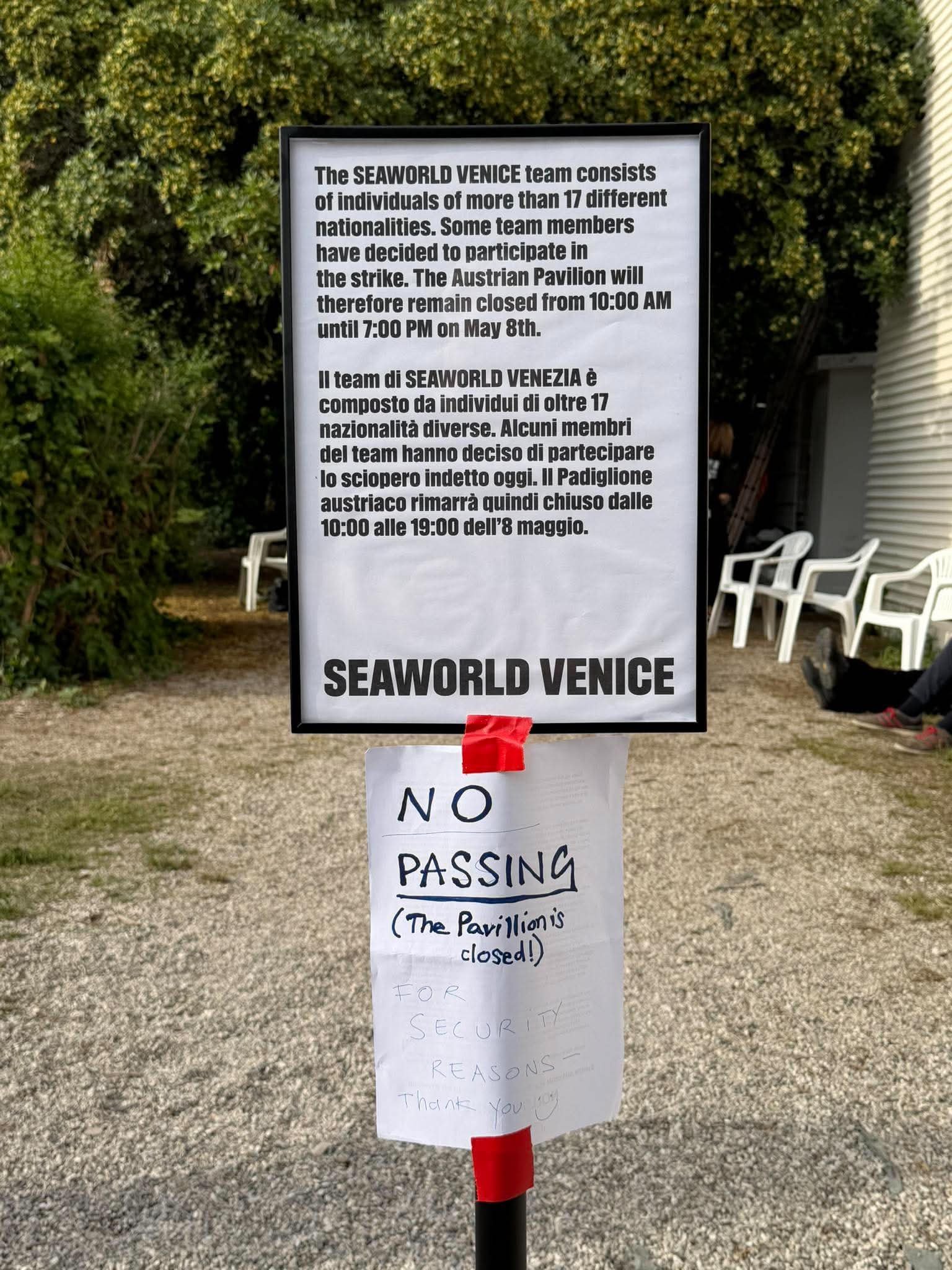
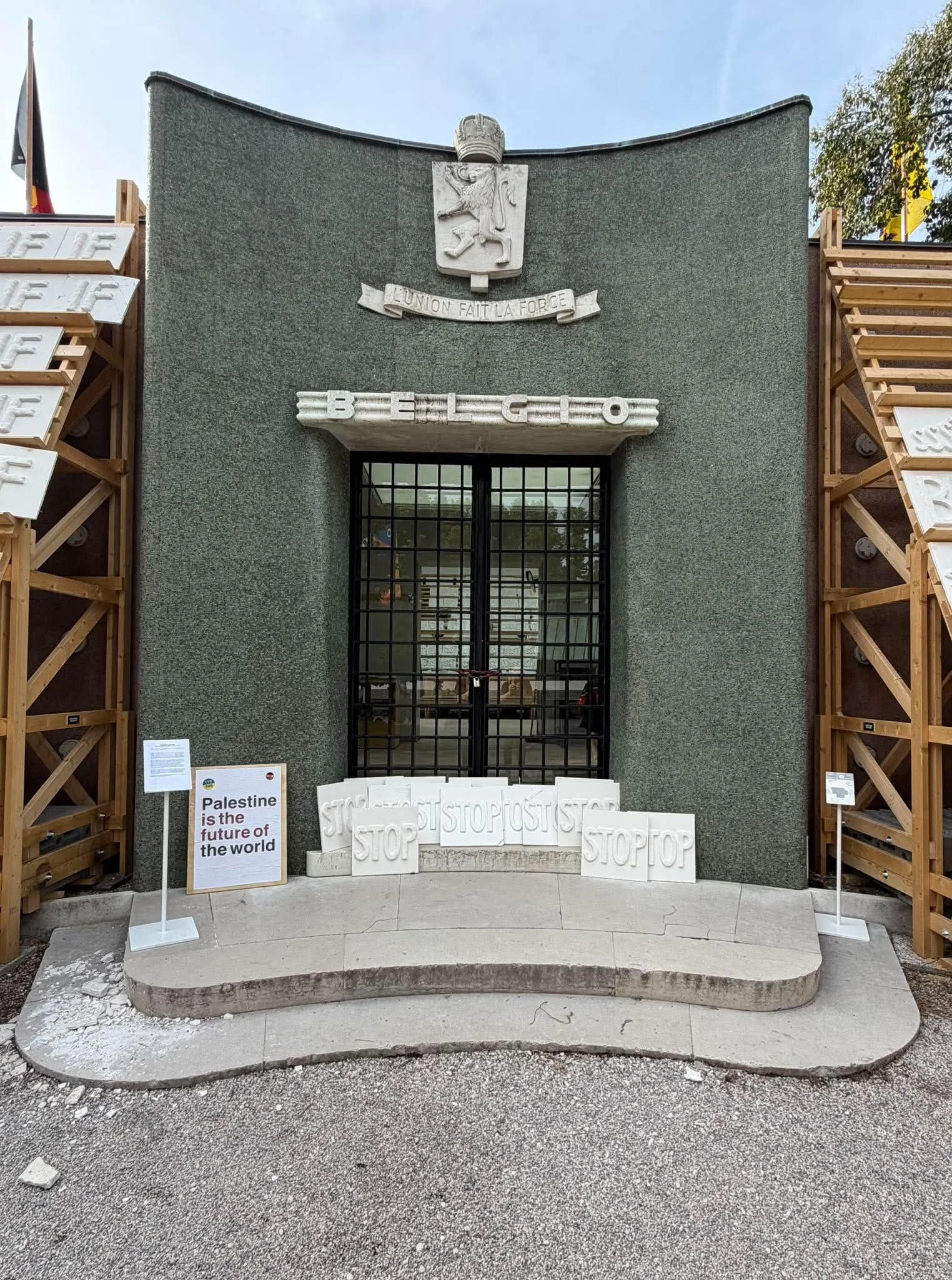
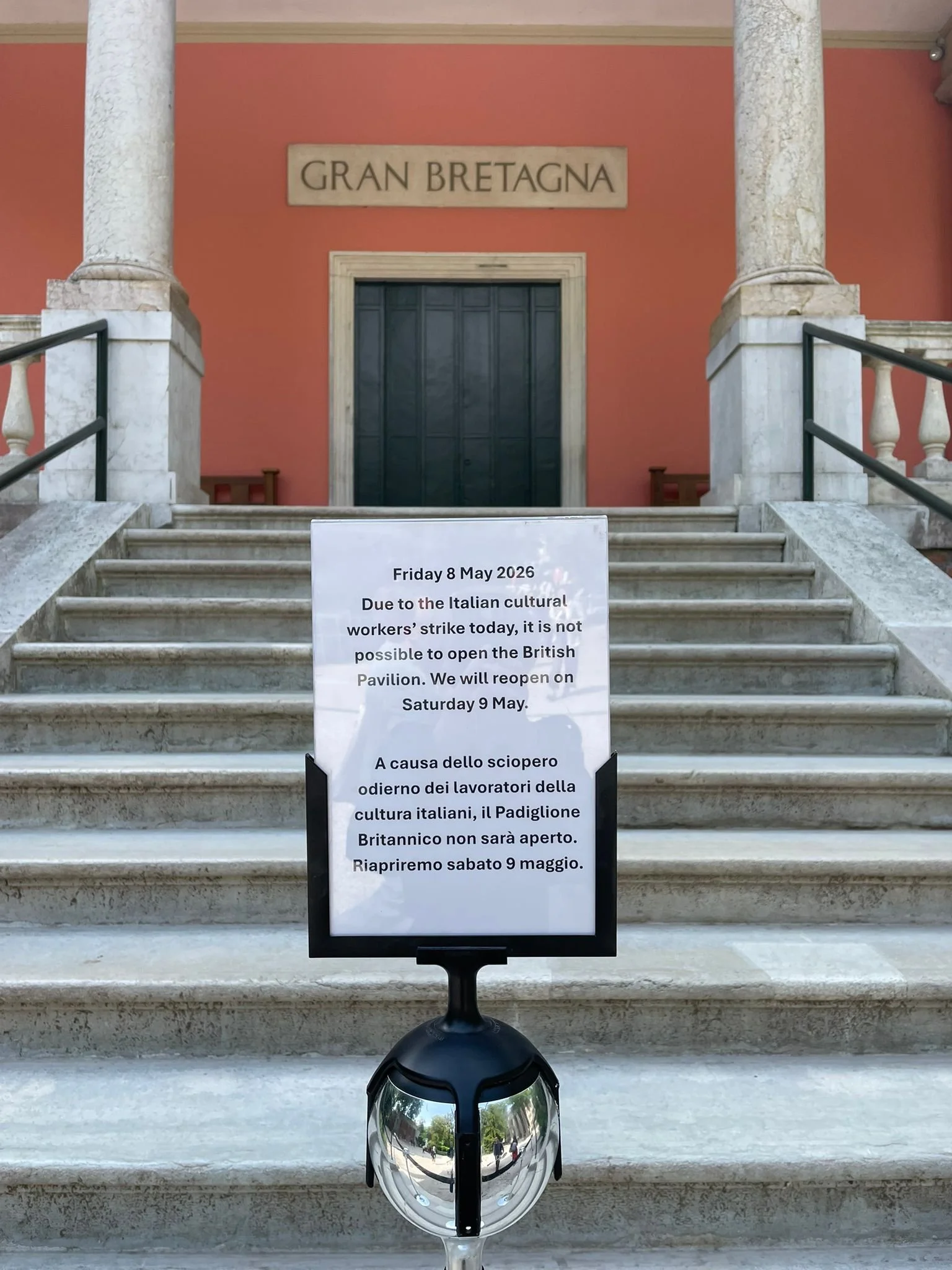
All images by Jan Watteus, except for the photo outside the British pavilion which is by Randi Thommessen.
The North is protected?
The Nordic Pavilion becomes particularly interesting to look at in this context. It already functions as a kind of umbrella and represents three different states and should therefore be able to stand more freely in its interpretation of who or what can represent a nation. Yet here, too, the national logic returns. Each country invests money, and each country wants a return on its investment. Even where the pavilion seems to exceed the national model, its economic and symbolic ground conditions are thus reproduced.
In a year when the Biennale’s pavilion structure itself has become the object of strike, protest and refusal, an exhibition that turns toward Nordic mythology, the Kalevala and fairy-tale material does not appear as innocent escapism. Rather, it becomes a symptom of how easily the national pavilion can retreat into a safe cultural self-image.
Finland, which is also hosting the Nordic Pavilion this year, has nevertheless chosen to let this pavilion remain in prize consideration, even though Finland’s own pavilion, with curator Steffi Hessler and artist Jenna Sutela, has withdrawn. The Nordic Pavilion, with Tori Wrånes, Klara Kristalova and Benjamin Orlow, thus becomes not only an example of Nordic co-production, but also of the ambivalence that arises when several states share a pavilion but not necessarily a political position. (Update: After this text was written, the Nordic Pavilion as a unity also joined the boycott of the prize.)
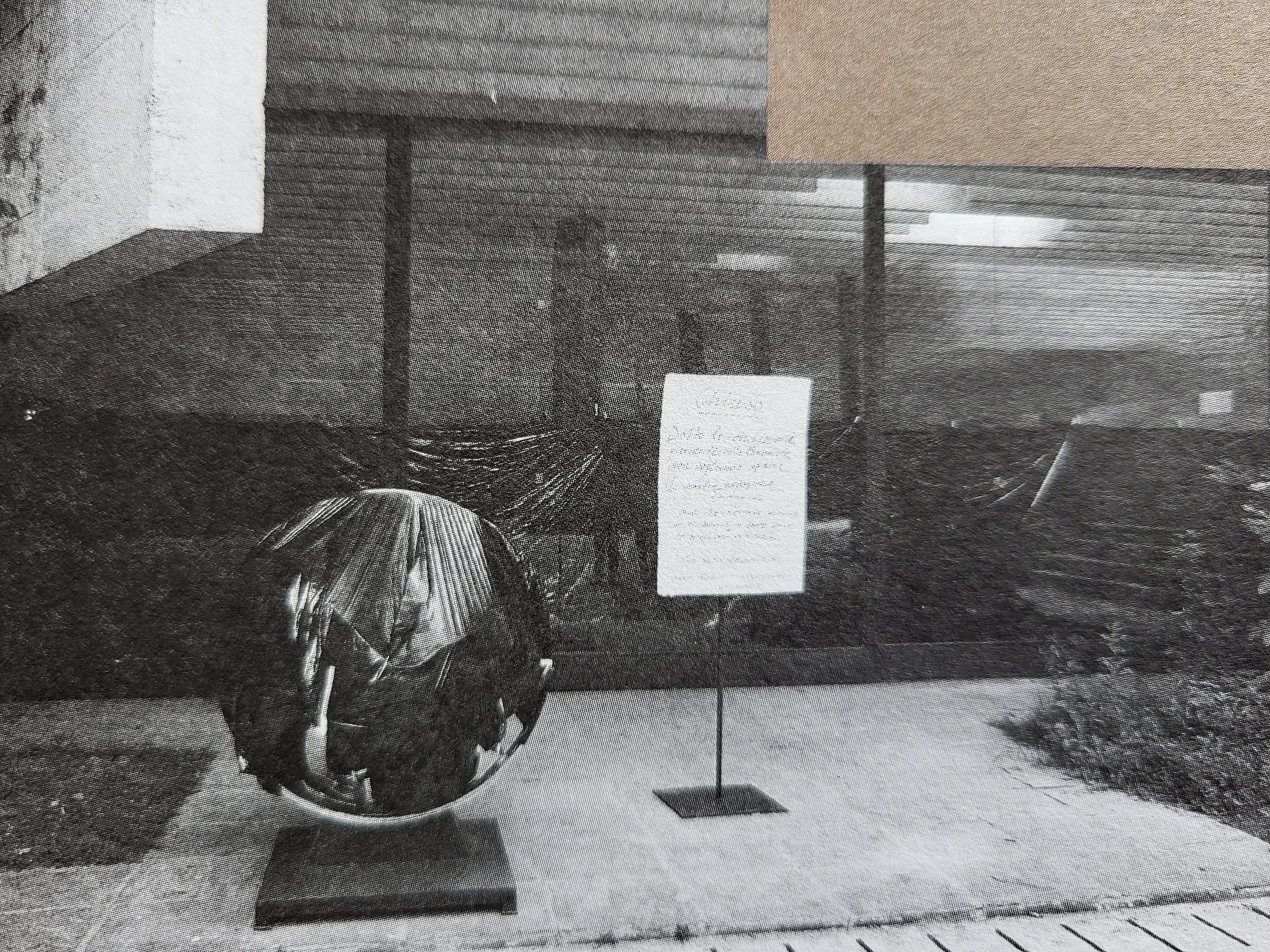
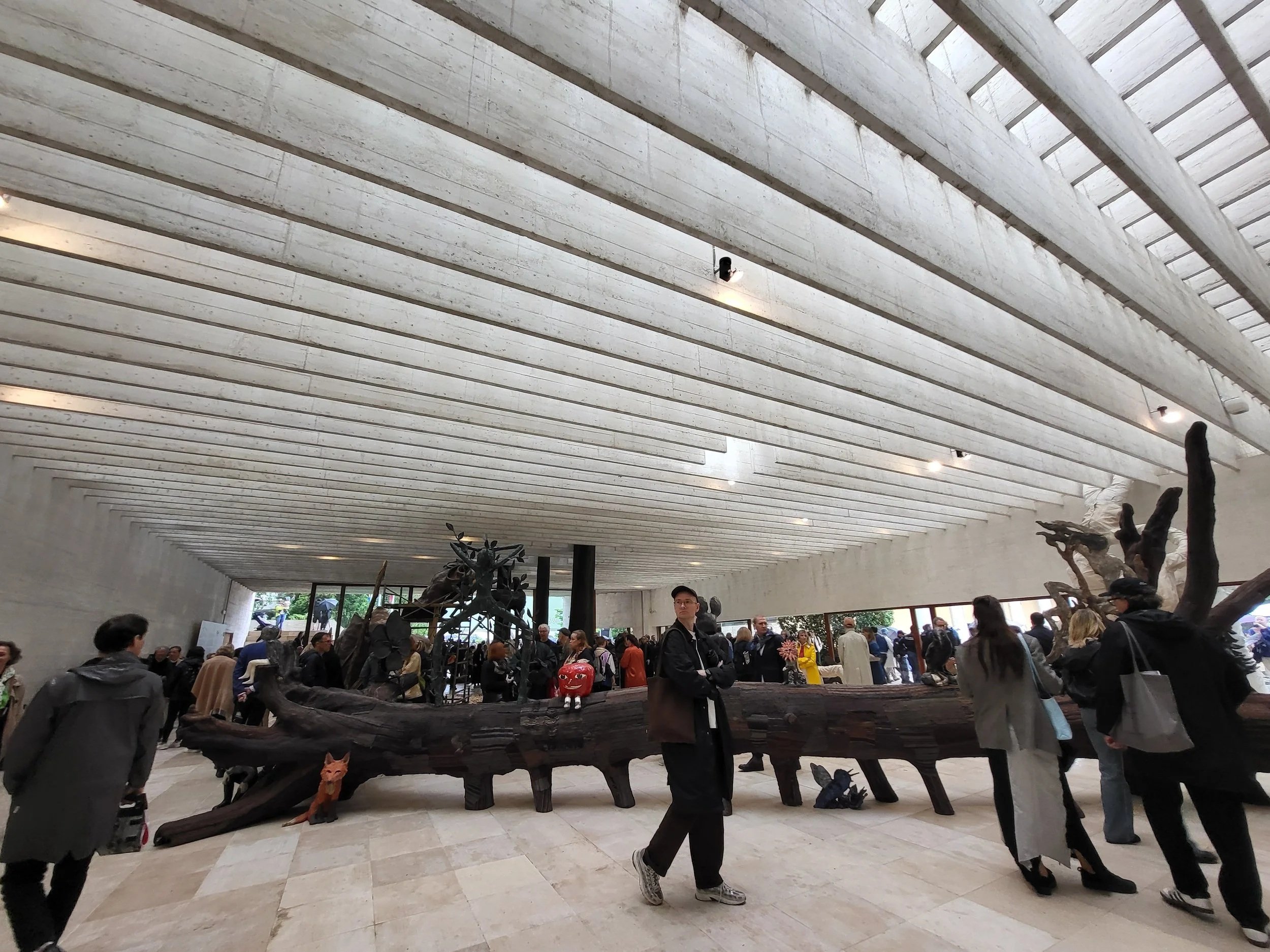
The Nordic Pavilion in 1968 and 2026.
The internal conflict zone, not only between nation and art, but also between different understandings of artistic responsibility, was evident already in 1968. Sweden’s contribution to the Nordic Pavilion at the 34th Biennale had been selected by Olle Granath and consisted of Arne Jones and Sivert Lindblom. All three chose to join the protests. They covered the Swedish section of the Nordic Pavilion with black plastic and refused to open it throughout the exhibition period.
The Finnish representatives Mauno Hartman, Kimmo Kaivanto, and Ahti Lavonen, as well as the Norwegian artist Gunnar S. Gundersen, chose to keep their part of the exhibition open.
This created a strange visual contrast inside Sverre Fehn’s open pavilion architecture. It exposed a fissure in the Nordic countries’ view of civil disobedience within culture, and recalls the divided lines of protest in 2026.
Wanda Nanibush writes in the catalogue text “Archipelago to Archipelago” for 61th biennial about acting as an external advisor for the Nordic Pavilion in 2022:
“To think with Glissant inevitably collides with the Westphalian order of territorial states and its inability to account for internally colonized nations that have inherent sovereignty. This collision plays out in the Biennale Arte. In the Biennale Arte 2022, I was one of two external advisors on the Nordic Countries Pavilion. The three invited participants, The Sámi artists Pauliina Feodoroff, Máret Ánne Sara and Anders Sunna, wanted to formally rename the pavilion the Sámi Pavilion; however, the National Participation could not be formally renamed due to official reasons, as Sámi Indigenous land is not recognised as an independent country by the Italian State. The episode exemplified how Indigenous nationhood is systematically denied in both law and language in the ‘West’.”
If the Biennale’s pavilion logic is based on the idea that culture can be sorted by flagpole, Glissant thinks in the opposite direction: identity as relation rather than root, as connection rather than national representation. This is also why the impossible renaming of the Sámi Pavilion in 2022 remains telling. It showed that the Biennale can allow another story, but not fully recognize its political form.
The inner dream of the nation-state still seems to revolve around territory, power, conquest, and the right to exploit, incorporate and rule. Less around community, empathy, democracy, and the equal right of all people to exist. The Biennale’s pavilions are therefore not merely rooms for representation, but places where the fantasies of the nation-state continue to be staged, even when the art inside them tries to say something else.
But if the nation-state as pavilion form ought to be retired, it is evidently still attractive. So attractive that Qatar, for the first time in 30 years, has been granted permission to build a permanent pavilion in the Giardini. The price tag was 50 million euros in donations to the city of Venice. Money still talks.
If 1968 made the Biennale’s glass container visible, 2026 shows that the container is no longer only transparent, but cracked. The question is no longer how art can be shown inside it, but whether art can force another form into being. The Biennale did not die. It learned to continue. The question is whether it can now be forced to continue with other terms.
For a Viva la Biennale! to be able to follow La Biennale è morta, it must therefore mean something other than the institution’s own survival. It must mean that art breaks apart the forms that keep it captive. Not the nation as form, not the institution as guarantor, but art as the motor for other ways of thinking community, conflict, responsibility, and presence.
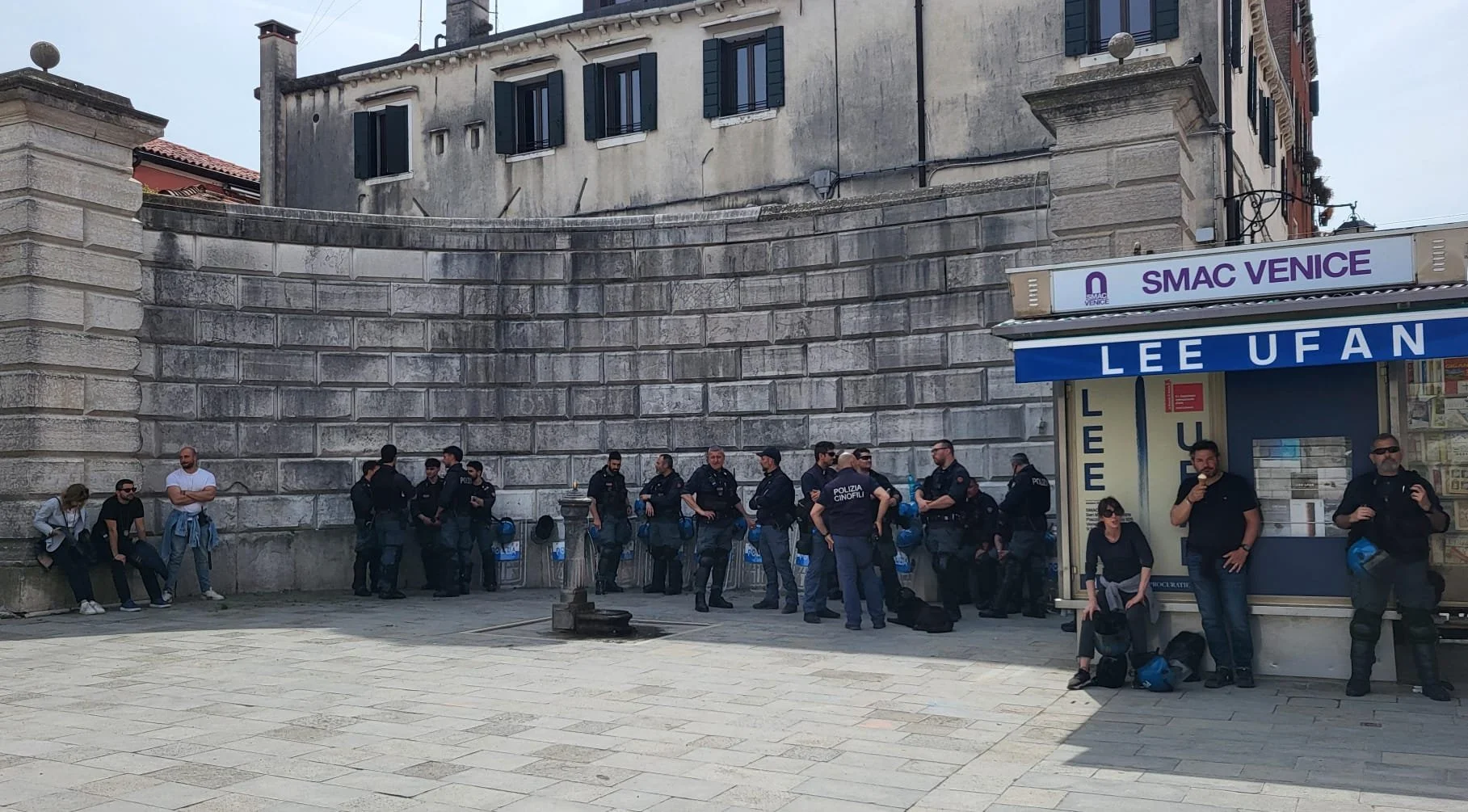
Riot police waiting for the demonstration at Via Garbialdi, 2026. Photo: Power Ekroth