

Die rücksichtslose Kritik alles Bestehenden
or Contropiano’s geography of the critique of ideology
Matteo Trentini
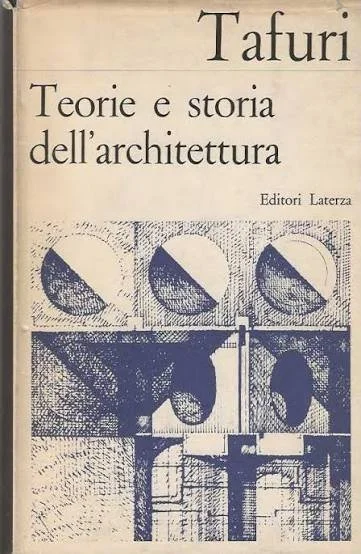
In 1968 Manfredo Tafuri published Teorie e storia dell'architettura [Theories and History of Architecture], in which historical activity, “in the most total indifference toward positive action” is seen as “critique of architectural ideologies” and, as such, as “political activity, even if only mediately political.”[1] The bringing to light of what architecture is—as a discipline historically conditioned and institutionally functional first to the progress of the pre-capitalist bourgeoisie, and then to the new perspectives of capitalist Zivilisation—must therefore be recognized as “the only aim endowed with historical meaning for anyone who intends to force the institutional role assigned to intellectuals since the Enlightenment onward.”[2]
In the same year, in the midst of the student occupation of the faculty, Tafuri was appointed professor of the history of architecture at IUAV by direct call, thereby coming to occupy the chair that had been held by Bruno Zevi between 1949 and 1963. In Venice, Tafuri would find almost unique conditions in which to organize his own historiographical work in full autonomy, exploiting the particular character of the Venetian school, which, as an institute, enjoyed a certain degree of autonomy with respect to ministerial programs. At the Department of the History of Architecture, Tafuri brought in to work alongside him a number of young Venetian intellectuals, such as Massimo Cacciari—who had recently graduated in philosophy from Padua—and Francesco Dal Co and Marco De Michelis, then students at IUAV, as well as the Roman historians Giorgio Ciucci and Mario Manieri-Elia. Many of these young authors gravitated around the Marxist-inspired journal Contropiano, whose first issue appeared in the fateful year 1968. There thus came to form an almost unique coincidence between the scientific work carried out at IUAV and theoretical-intellectual refinement of Contropiano. It is therefore no accident that in Venice, thanks to the immediate proximity between university and factory, there developed the concrete possibility of uniting intellectual labor and working-class labor in an experience of struggle that was, in certain respects, unitary. This saw the Venice school of architecture, at the time considered “the most advanced in Italy» and “the historic heir to the antifascist tradition and to the Modern Movement,”[3] become one of the first Italian universities to absorb the climate of dissent that was spreading through Italian universities.
The first issue of Contropiano was published in the first half of 1968, inserting itself into that phase of political discussion which Mario Tronti defines as “post-operaismo”[4] [post-workerism]. This phase of cultural debate is marked by the encounter between the militant culture of early operaismo and the great tradition of bourgeois intellectual thought of the twentieth century, on which the journal's critique of ideology—not only architectural ideology—would largely concentrate.
As the journal's first stock-taking [bilancio] report states, the objective was in fact not to “reconstruct a systematic culture of the working class [...] but rather to systematically destroy, down to its most distant foundations, the class culture of the bourgeois adversary.»[5] And this project of “destruction” of the various disciplines of intellectual labor—which Tafuri was simultaneously outlining in Teorie e storia dell'architettura—would be at the center of the Contropiano experience.
Only once the ideological veil that had until then clouded political and intellectual action was lifted would it in fact become possible, thanks to profound theoretical work, to give depth and incisiveness to the political action undertaken. “The culture of crisis and historical crisis”[6] are welded together, through Contropiano, into a broader field of action, practical and theoretical, into which all the disciplines of modern intellectual labor were to converge, beginning with architecture in all its ideological dimensions.
Within this broader political-cultural project, the discipline of architecture, across the various scales of planning, occupies a privileged position given its centrality within the developmental process of a mature modern capitalism. If, here, architecture—according to the definition offered by Tafuri in 1968—proves to be an “institution that realizes ideology,”[7] then the critique of ideology, understood as a critique of planning practices, becomes the moment in which the nature of the Plan as an “overarching project to organize production, distribution, and consumption within the space of the city”[8] is most clearly revealed.
This presumed absorption of architecture into the ideology of the Plan becomes entirely evident in the early twentieth century, when the discipline completes its transformation into a “pure science.”[9] Indeed, the entire development of modern architecture is read—both in Contropiano and at the Venetian Department of the History of Architecture—as the moment in which the architectural and urban-planning discipline demonstrates the utmost readiness to become an instrument of capitalist rationalization. For this reason, the work of architectural historiography will also focus on those episodes within twentieth-century architectural modernism that allow for a precise analysis of the function of architecture within the most diverse and refined contexts of the ideological elaboration of the Plan, through die rücksichtslose Kritik alles Bestehenden—the ruthless criticism of everything existing.[10]
All planning practices of modern architecture are interpreted in the journal with reference to their presumed functionality—and, at the same time, dysfunctionality—vis-à-vis capitalist organization. In demonstration of this, Contropiano’s analysis investigates three specific moments of architectural modernity, each notable for the sophistication of its ideological proposal: the attempt at a social-democratic management of the European city between the 1920s and 1930s, large-scale planning in Soviet Russia between the Revolution of 1917 and the Stalinist period, and finally the development of the American city, oscillating between hypotheses of planning-based control and urban-planning liberalism.
Architectural production in Europe, and in Germany in particular, at the beginning of the twentieth century would repeatedly become a focus of the historiographical interests of Contropiano and beyond. This period corresponds, in fact, to the moment in which the architectural discipline appears particularly disposed to contribute to a broader process of Rationalisierung.[11]
According to Contropiano's reading, European functionalist architecture represents one of the moments in which it reveals its utmost readiness to become an instrument of “programming and planned reorganization.”[12] As Werner Sombart writes, “modern technology presupposes the intensive interest of capitalism”[13] in order to advance the general process of Rationalisierung of capitalist development. Having now become an institution internal and functional to the capitalist cycle, modern architecture cannot but constitute, for the Contropiano group, the ideal terrain through which to analyze the more general ideological involvement of the intellectual in the process of capitalist acceleration.
For Tafuri, the intellectual labor of the architect here develops around two nodes, apparently in contradiction with one another: on the one hand, its becoming “labor properly speaking, and therefore not recoverable for a revolutionary movement”; on the other, its becoming pure ideology, that is, “stepping outside of productive labor, and positioning itself before it as critical consciousness.”[14] Functionalist architecture is not, in other words, granted the possibility of occupying a position external or opposed to the capitalist system of production, since it shares its forms and objectives. Like other disciplines, architecture too now becomes Beruf, dissolving itself into the general Plan for the rationalization of the city and its management.
In particular, it is within the social-democratic municipal governments of European cities that what Tafuri calls “the passage of bourgeois ideology into the socialist project” takes place—a “fundamental node” to which the critique of ideology must be applied. It is, in fact, in the attempt to provide a formal remedy to the growth of the Grossstadt at the turn of the century that it appears with particular force how the intellectual task of the architect is now that of “ordering the processes of massification of industrial labor, rationalizing through artistic-cultural form the simple destiny of metropolitan concentration.”[15]
This line of reflection will be introduced in the journal by an essay by Francesco Dal Co entitled “Note per la critica dell'ideologia dell'architettura moderna” ("Notes for a Critique of the Ideology of Modern Architecture”), which introduces the theme of the critique of ideology as an instrument of critical-historiographical analysis. The purpose of the essay is, in fact, not merely the reconstruction of a historical event—however fundamental to the destinies of twentieth-century architecture—but rather the framing of that event within a broader perspective of reflection on the establishment of the capitalist system and its taking possession of bourgeois intellectual labor, which sees, in this specific case, “the whole of Germany, as an economic-political expression, now paying the price of civilization.”[16]
In this sense, the specific analysis of the events of German architecture between the 1920s and 1930s, and of the Bauhaus in particular, serves as a pretext for a broader reflection on that “process of maturation” which sees architecture reconfigure itself as a “new conception and redimensioning of the very mechanism of design.”[17] Architecture loses its exclusive claim to the use of the Plan as an instrument of ideological anticipation, and finds itself compelled, like the other disciplines, to accept what Cacciari will call the imperative of “ordering the processes of massification of industrial labor, rationalizing through artistic-cultural form the simple destiny of metropolitan concentration. Being organs and instruments of Weberian Rationalisierung.”[18]
Architecture becomes a purely political instrument precisely at the moment in which it decides to participate fully in the broader process of reorganizing systems of production along capitalist lines. Placing itself in service of this objective, and thereby becoming an integral part of it, strips the discipline of any possibility of exercising a critique of the system, just as it annuls any possibility of positioning itself outside the Plan itself. Architecture here discovers its own complete politicization at the very moment in which it finds itself operating within a process of overall rationalization, from which it literally derives its forms and structures.
While, in the face of the exasperated crumbling of the values of bourgeois Kultur, literature decides to react with silence,[19] modern architecture, according to the authors of Contropiano, will continue to consider possible, even from this internal position, a genuinely ideological connotation of its own operations. Compelled to search for new values, part of German bourgeois Kultur will find in the rationalization of the Neue Sachlichkeit a partial way out of its own disintegration, through the sublimation—Veredelung—of industrial labor, of its ethic, and of its forms.[20]
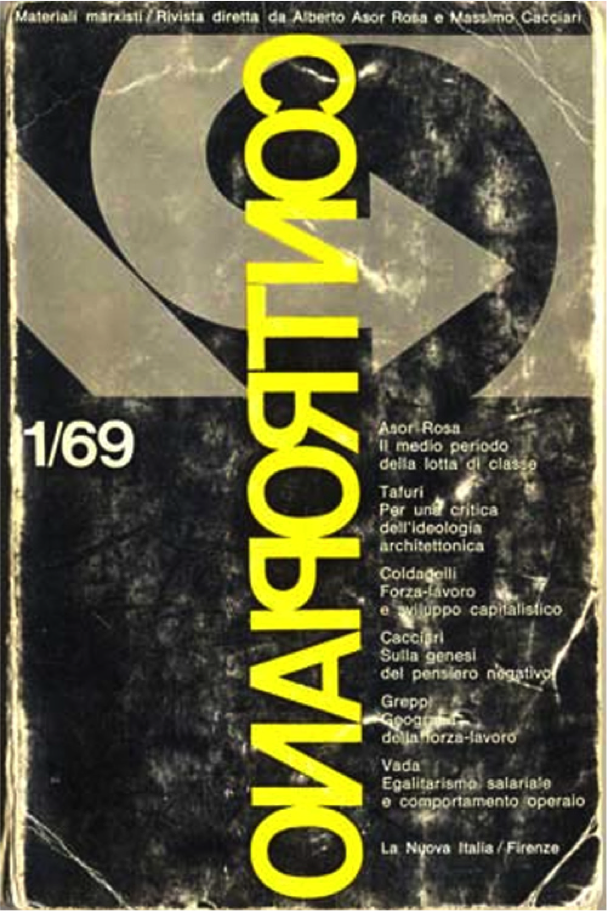
The centrality of German architecture during the years of the Weimar Republic will also be reaffirmed by Tafuri in an essay that appeared in the first issue of Contropiano in 1971,[21] subsequently taken up and developed further in a chapter of La sfera e il labirinto of 1980. Here Tafuri sets out to examine the “exemplary work of social housing led by the radical architects of the Weimar Republic”[22] as an attempt to rationalize the imbalances of the capitalist cycle. Tafuri thus denounces the transformation into a “technical-administrative” practice of the activity of figures such as Ernst May in Frankfurt, Fritz Schumacher in Hamburg, or Martin Wagner in Berlin: these figures, engaging in a “concrete management of the building cycle” in its entirety, confirm—perhaps even more emblematically than what was happening at the Bauhaus—the inevitability of “a real and total acceptance of the new role of the architect as organizer of an economic cycle in which the dislocation of the formal theme has lost all its former valences as an independent variable.”[23]
It is precisely these attempts, following the demands of concrete planning, that provide that example of the «institutionalization of intellectual labor directly inserted into productivity». In cities traversed by industrial Rationalisierung and the consequent tertiarization of productive forms, the issue is not one of hypothesizing utopian scenarios for a hypothetical “new man,” but rather, Tafuri writes, one of organizing “the economic calculation of the productivity of the tertiary city, the optimization of the transport network in relation to the integration of productive centers and to the commuting patterns of the workforce.”[24]’
Architecture is thus invested by a process of professionalization that pushes it “to be practiced in a specialist manner, in the service […] of the knowledge of objective connections.” Architecture, then, as Beruf: faced with the breadth of the rationalization process underway, the architect is no longer capable of carrying out, through the project, a projection of an envisioned and desired scenario, but can only make available his own technical knowledge, for the purposes of perfecting the process of rationalizing methods of development. Faced with the inevitability of the subordination of one's own technical and intellectual knowledge to the broader productive system, “salvation”—Tafuri will write, again in Contropiano in 1970—"no longer lies in ‘revolt,’ but in unconditional surrender.”[25]
The historiographical inquiry of Contropiano thus finds, in the ideological elaboration and refinement of early twentieth-century European architecture, one of its privileged fields of investigation. Alongside the events of European architecture, and German architecture in particular, the Contropiano group turns its attention as well to a series of experiences destined to recur repeatedly at the center of its historiographical investigations.
The analysis of the architectural and urban production of Soviet Russia, of early twentieth-century America, and of the housing program of the Viennese socialist municipal government enriches — with reference to three distinct moments in the elaboration of the Plan — the critical horizon on architectural ideology introduced by studies on early twentieth-century European architecture.
The architectural and urban-planning events of Russia in the post-revolutionary period are read as one of the moments of maximal ideological elaboration of planning strategies across their various scales.
Between 1917 and 1937—the chronological span on which Contropiano's inquiry focuses—Russia developed, in fact, an articulated politics of the Plan, whose most visible effects would be the elaboration of the New Economic Policy (NEP) and the subsequent Five-Year Plans, whose scale would remain unmatched over the course of the twentieth century. It was precisely the unprecedented scale of planning practices in Russia during the 1920s and 1930s that led many European intellectuals of the period to look to the Soviet horizon as that “lost center” in which to rediscover the conditions for a politically connoted intellectual labor, unthinkable in a Europe by then hurtling toward the abyss of Nazi-Fascist dictatorship.
The work on Russia is instead introduced by Dal Co in the third issue of Contropiano in 1969, with a text on Soviet architecture between the 1920s and 1930s.[26] In this condition of disciplinary difficulty, the Soviet universe, with its ideological ramifications, fulfilled perfectly that need for a “surrogate” through which certain committed Western architects believed they could rediscover a “social mandate” for architecture. For precisely this reason, the reading of Soviet events by certain Western architects was purged of the Stalinist period.
It is precisely the understanding and inclusion of the Stalinist period as an integral moment in the formation of a socialist ideology that carries, instead, a precise political significance within the scientific work undertaken by Contropiano. For the journal's authors, it is not in fact possible to separate—chronologically just as little as ideologically—the Stalinist drift from the early years following the Revolution of 1917, since it is precisely in the post-revolutionary period that the premises are created for the fulfillment of the socialist ideology of the Stalinist age. For this reason, Contropiano's critique addresses the very foundations of socialist ideology between 1917 and 1937, a period within which five-year planning represents its maximal ideological elaboration.
This is the central point of Contropiano's critical reading of the Soviet experience: at the moment in which the real need to create a socialist state manifests itself, the superstructural logic of the Plan inevitably becomes the sole horizon for all the disciplines of intellectual labor. For the avant-gardes, the central reason for their own being thus suddenly comes to be lacking—namely, the possibility of contesting the given reality, now having become socialist and therefore uncontestable. Yet it is precisely with the progressive institutionalization of the avant-garde’s role within the project of constructing the socialist state that Soviet architecture experiences, according to Dal Co, its most “seductive season,”[27] precisely by virtue of its total adherence to the broader Soviet political project.
To an extent not entirely dissimilar to what occurs in the Russia of the Five-Year Plans, the American city too, at the beginning of the 1930s, appears to embark on a path toward defining the instruments for large-scale planning. This comes about as a consequence of the capitalist restructuring that follows the international financial crisis of 1929, to which all the major international economic powers are called to respond.
In this context, both the turn that Stalin gives to Soviet policy toward the end of the 1920s and the contemporaneous introduction, in the United States, of practices aimed at correcting an unbridled liberalism can be read as two ideologically distinct solutions, yet united by a shared recourse to large-scale planning as an instrument of overall reorganization.
The theme of the planning of the American city is introduced in a note, signed by Dal Co, in the first issue of Contropiano of 1970,[28] before returning repeatedly to the center of the interests of the Venetian historians—first in a collective volume by Ciucci, Dal Co, Manieri-Elia, and Tafuri, published in 1973.[29]
Within this broader interest in American affairs, Dal Co's essay for Contropiano sets itself the objective of grasping “in historical terms, a series of contradictory hypotheses of planned direction of development, prefiguring, however, many of the solutions that would later be rationalized at the European level.”[30] The American context is thus interpreted, owing to its paradigmatic character in employing the instruments of planning as a tool of capitalist rationalization, as an anticipation of the dynamics that would only subsequently come to affect European reality. The 1970 text—already from its title, “Città senza piano, piani senza città: note a margine della pianificazione urbana negli Stati Uniti” [“Cities without a plan, plans without a city: notes on the margins of urban planning in the United States”]—thus makes clear that the interest here is directed toward an analysis of territorial planning practices as a technical instrument functional to a broader process of reorganization and ordering of advanced capitalism. The analysis put forward here should be read as a central part of the critique of architectural ideology, insofar as it goes on, in the specific case of the American city, to analyze the function of planning practices within a logic aimed at maximizing the profits. It is no coincidence that Dal Co's article opens with the question of the legitimacy of the term “planning” in its European sense, when applied to the American context.
In a paradoxical analogy—a further confirmation of the generic character of the dynamics of the Plan—to the situation of the Soviet city in the 1920s, the American city too was at that time at the center of a vast institutional effort aimed at bringing the urban environment within a programmed and programmable dimension, thereby remedying the disequilibrium that had marked earlier urban development. Within this broader political discussion, Dal Co identifies two questions around which American urban-planning ideology revolves and which, consequently, bear upon the role of the planner as technician: on the one hand, the possibility of eliminating an innate dysfunctionality of the capitalist city, envisaging, through the introduction of planning practices, greater rationality and democraticity of the entire building cycle; on the other, the possibility of investigating new paths for the transition to a global dimension of the Plan, parallel to but external to a single general policy of territorial planning.[31]
If, in the Europe of the 1920s and 1930s, economic planning and the technical disciplines had come together in a common project of rationalizing the entire system of production, in the American city economic liberalism—institutionally authorized and accepted—and technical culture still appear, according to Dal Co's reading, difficult to reconcile, in such a way as to render a condition of disequilibrium permanent. This begins to shift slightly after the crisis of 1929 and the subsequent election of Roosevelt in 1932, when, thanks to the introduction of a series of initiatives—among them the Agricultural Adjustment Act of 1933 and the National Housing Act of 1934—instruments of planning finally legitimated at the institutional level are introduced. This does not, however, eliminate a condition of imbalance inherent to the American city, whose refractoriness to comprehensive planning reveals itself, in Contropiano’s analysis, as the most faithful representation of the architect’s inability to modify, from within his own professional activity, the overall macro-policies of the Plan. In a reality whose”«non-programmability”[32] frustrates every attempt at controlling intervention on the part of the bourgeoisie, there emerges once again the ideologism that animates architects’ hope of being able to take an active part in the definition of an overall political project intended as an alternative to, or even merely a proper corrective of, the imbalance imposed by capitalist development.
This ideological illusion—or “utopia,” according to the title of Tafuri's 1973 volume, which will elaborate on the essay on architectural ideology published in Contropiano in ‘69—also concerns one of the most refined attempts to reform the European city at the beginning of the twentieth century: namely, the public housing program of the socialist municipal government of Vienna between 1919 and 1933. The specificity of the Viennese case—the only single city now analyzed in Contropiano, as opposed to the macro-contexts of Soviet Russia, the American city, and German functionalist architecture—will be addressed by Tafuri not only in a 1971 essay in Contropiano entitled “Austromarxismo e città” [“Austro-Marxism and the City”], but also in a monographic volume of 1980,[33] and in a monographic course at the IUAV in 1977–78.
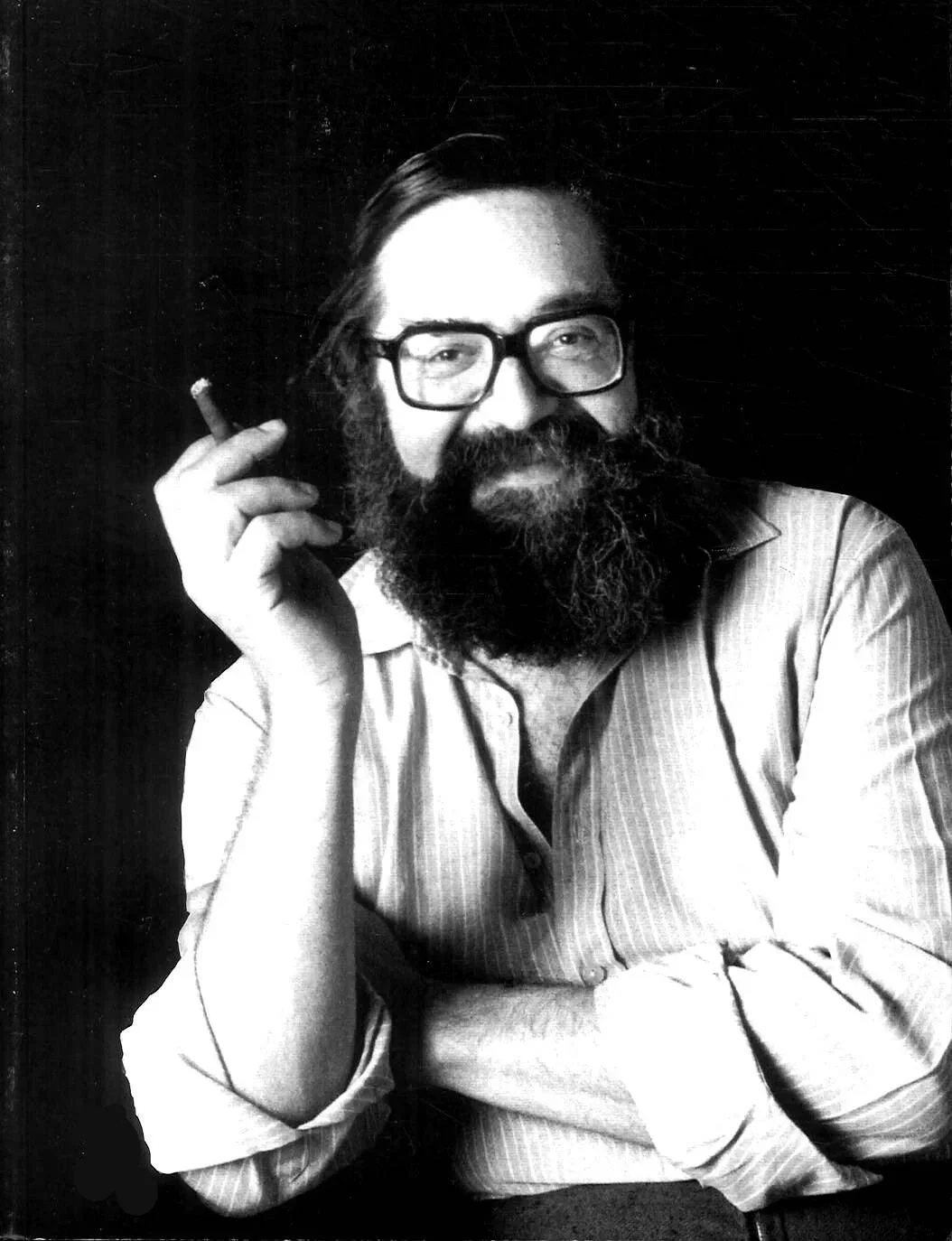
Manfred Tafuri. Photographer unknown.
The detailed analysis of the Viennese case allows not only for the filling of what was then a surprising historiographical gap in Italy, but also for the continuation of that broadening of the critique of all ideologies—including the reformist ones, still a point of reference at the time for part of the Italian left—which lay at the foundation of the Contrarian project.
With the analysis of the Viennese program, the critique of the ideology of a possible reformist management of the twentieth-century city thus comes to be completed. The particularity of Vienna lies in its having been, for the fourteen years of the program, a “red island” within a country entirely governed by conservative forces. Tafuri identifies here the difficulty of grasping, in its full complexity, the entire organization of an “abnormal capital that over the course of the nineteenth century had assumed only outwardly the characteristics of a modern Großstadt, while in reality consolidating its own facies as a city-symbol of the imperial myth.”[34]
Otto Bauer's program of 1919 demonstrates an interest in addressing specific themes—first and foremost, precisely, that of housing—which fall within a broader process of “socialization” that is, however, never further specified. This is the principal criticism that Tafuri levels at Viennese socialist planning: if the “housing question” is the only terrain on which to found—as the Roman historian writes—"demonstrative models of realized social democracy,”[35] the broader urban problem in its entirety, the “negative inheritance” of the capitalist city, is destined to remain substantially unresolved, ideologically replaced by the realization of “partial organizations of residential democracy,”[36]
If, on the political plane, intervention in housing was fully justified, at the urban scale the program of the socialist municipal government appears instead incomplete: the city of nineteenth-century speculative capitalism, whose disastrous housing conditions were its first effect, is not challenged at its root but merely contested by the new collective residences, as a “gigantic exhibition of the new proletarian ethic.”[37]
If Red Vienna was thus a social-democratic island within a conservative and reactionary sea, its great residential complexes were fragments of realized social democracy within a capitalist city whose nature it was not substantially possible to call into question. Within the building program of Red Vienna there are not to be found, according to Tafuri’s reading, any hypotheses for a general restructuring of the contemporary city; the very absence of an urban plan encompassing the entire territory of the city demonstrates how the nineteenth-century city was treated as merely “an ineliminable persistence to be contested.”[38] The specific analysis of the Viennese case thus offers Tafuri, and the collaborators of the Venetian institute, the possibility of analyzing the role of the architect within a broader framework of ideological reflection from which the architectural program of Red Vienna arises.
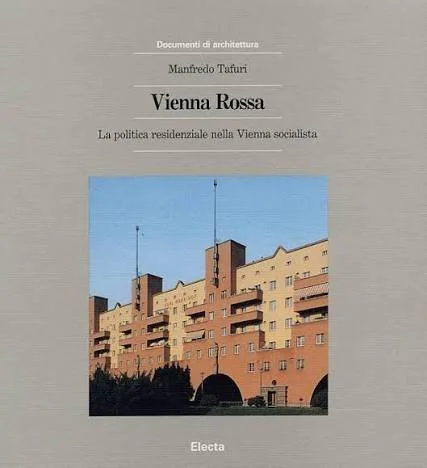
Beyond the formal and architectural aspects of this project, Tafuri once again shows himself interested in gauging the spaces of agency that such a Plan does, or does not, allow the architect as an exponent of intellectual labor. If, on the one hand, the Viennese case offers a situation of total adherence between ideological discussion and local technical culture, this program already explodes, from within itself, those ambiguities and difficulties in truly bringing into crisis the structures of the city inherited from nineteenth-century speculative capitalism.
The volume on Vienna Rossa was published in 1980, the same year as La sfera e il labirinto, the last book in which Tafuri deals explicitly with modern architecture, rich in references to the great Viennese Kultur of the twentieth century—that Vienna where Lord Chandos, the character in a a short text by Hugo von Hofmannsthal, finds himself compelled to discover that language expresses only “mute things.”[39]
Just as mute, before the inevitably capitalist city, were the great Höfe of Red Vienna, with their expressive and rhetorical architecture: the paradox of an architecture that had by then become pure form alone.
Matteo Trentini is Professor for Architectural History and Theory at the IU-Internationale Hochschule and Assistant Professor at the Institute of History and Theory of Architecture at the Catholic University in Linz (Austria), where he is currently working on a habilitation project focusing on the reactionary critique of modernism in architecture in the 1930s.
[1] Manfredo Tafuri, Teorie e storia dell’architettura (Bari: Laterza, 1968,) 270.
[2] Ibid.
[3] Rossana Rossanda, L’anno degli studenti (Bari: De Donato Editore, 1968), 57.
[4] Mario Tronti, Noi operaisti (Rome: DeriveApprodi, 2009), 66.
[5] “Primo bilancio,” Contropiano 2 (1968): 243.
[6] Mario Tronti, Noi operaisti, 43.
[7] Manfredo Tafuri, “Avvertenze alla seconda edizione,” in Teorie e storia dell’architettura, xi.
[8] Sven-Olov Wallenstein, Architecture, Critique, Ideology (Stockholm: Axl Books, 2016), 25.
[9] Hannes Meyer, Über Marxistiche Architektur (1931), in Francesco Dal Co (ed.), Hannes Meyer. Architettura o rivoluzione. Scritti 1921-1942 (Padua; Marsilio, 1969).
[10] Karl Marx, from a letter to Arnold Ruge, written from Kreuznach in September 1843. The letter was later published in 1844 in the Deutsch-Französische Jahrbücher. The citation is also used by Mario Tronti in Operai e capitale (1966), a central text of operaismo. See: Mario Tronti, Operai e capitale (Turin: Einaudi, 1966), 30 .
[11] As Tomas Maldonado notes, the theme of rationalization (Ratonalisierung) constitutes an "almost obsessive" constant in cultural reflection in early twentieth-century Germany, particularly during the years of the Weimar Republic. See Tomas Maldonado, Tecnica e cultura. Il dibattito tedesco tra Bismarck e Weimar (Milan: Feltrinelli, 1979), 20 note.
[12] Manfredo Tafuri, “Per una critica dell’ideologia architettonica,” Contropiano 2 (1969): 57.
[13] Werner Sombart, “Tecnica e cultura” (“Technik und Kultur,” 1911), in Maldonado (ed.), Tecnica e cultura, 146.
[14] Manfredo Tafuri, “Lavoro intellettuale e sviluppo capitalistico,” Contropiano, 2 (1970): 251.
[15] Massimo Cacciari, Metropolis. Saggi sulla grande città di Sombart, Endell, Scheffler e Simmel (Rome: Officina, 1973), 40.
[16] Francesco Dal Co, “Note per la critica dell’ideologia dell’architettura moderna: da Weimar a Dessau” Contropiano 1 (1968): 153.
[17] Ibid, 155.
[18] Massimo Cacciari, Metropolis. Saggi sulla grande città di Sombart, Endell, Scheffler e Simmel, 40.
[19] In addition to Asor Rosa's works of literary criticism in Contropiano on the figures of Thomas Mann’s work and their silence as the only possible reaction to the crumbling of bourgeois culture, see also Claudio Magris, L'anello di Clarisse. Grande stile e nichilismo nella letteratura moderna (Turin: Einaudi, 1984).
[20] Massimo Cacciari, Metropolis. Saggi sulla grande città di Sombart, Endell, Scheffler e Simmel, 40.
[21] Manfredo Tafuri, “Socialdemocrazia e città nella Repubblica di Weimar,” Contropiano 1 (1971).
[22] Ibid, 212.
[23] Ibid.
[24] Ibid, 217.
[25] Manfredo Tafuri, “Lavoro intellettuale e sviluppo capitalistico,” 254.
[26] Francesco Dal Co, “Architettura e piano in Unione Sovietica: stalinismo e il ‘destino dell’avanguardia,’” Contropiano 3 (1969).
[27] Ibid, 546.
[28] Francesco Dal Co, “Città senza piano, piani senza città: note a margine della pianificazione urbana negli Stati Uniti,” Contropiano 1 (1970).
[29] Giorgio Ciucci, Francesco Dal Co, Mario Manieri-Elia, Manfredo Tafuri, La città americana dalla guerra civile al New Deal (Rome-Bari: Laterza, 1973)
[30] Francesco Dal Co, “Città senza piano, piani senza città: note a margine della pianificazione urbana negli Stati Uniti,” 173.
[31] Ibid, 176.
[32] Ibid, 186.
[33] Manfredo Tafuri (ed.), Vienna Rossa. La politica residenziale nella Vienna Socialista. 1919-1933 (Milan: Electa, 1980=Å.
[34] Manfredo Tafuri, “Austromarxismo e città: Das rote Wien,” Contropiano, 2 (1971): 265.
[35] Ibid, 273.
[36] Ibid.
[37] Ibid, 278.
[38] Ibid.
[39] Hugo Von Hofmannsthal, “Ein Brief”, first published in Der Tag (1902); see Hofmannsthal, Gesammelte Werke in Einzelausgaben: Prosa II, ed. Herbert Steiner (Frankfurt am Main: Fischer, 1976), 7–20.