

The Eternal Intrigue of Forms in Space
Nina Beier’s Real Estate at Bozar
Diana Murray Watts
« Le monde est plein de vérités éteintes. »
- Henri Maldiney
Walking through the marble corridor that leads to the smallest exhibition space at Bozar, one is already confronted, albeit from afar, with the oddity of a staged scene: two mechanical bulls swaying next to each other, each holding plastic containers with large quantities of baby formula. The artwork foreseeably received the title Beast.
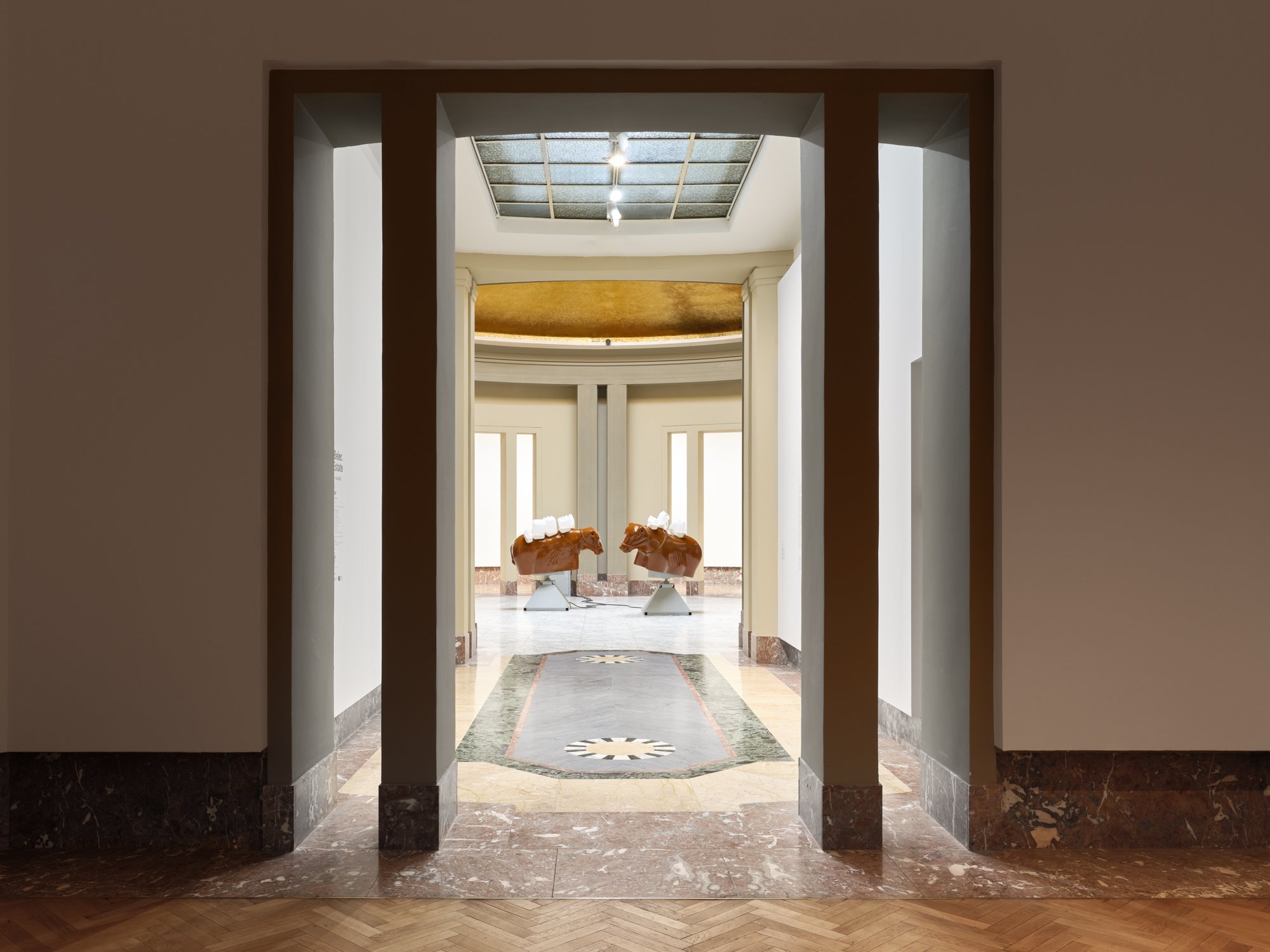
Nina Beier, Beast, 2018-2024, courtesy of Standard Oslo. Photo credit: We Document Art
Understanding a work of art, explained the philosopher Henri Maldiney, does not entirely depend on using notions, ideas, and concepts, but rather on grappling with the way in which the work of art constitutes itself. Through this constitutive process, Maldiney claims, the work of art follows pathways that open novel directions inside the viewer, according to which the aesthetic-artistic experience is articulated. In this way, both the formal and formative structures of an artwork – themselves spatial-temporal structures – determine the aesthetic structures of our perception.[1]
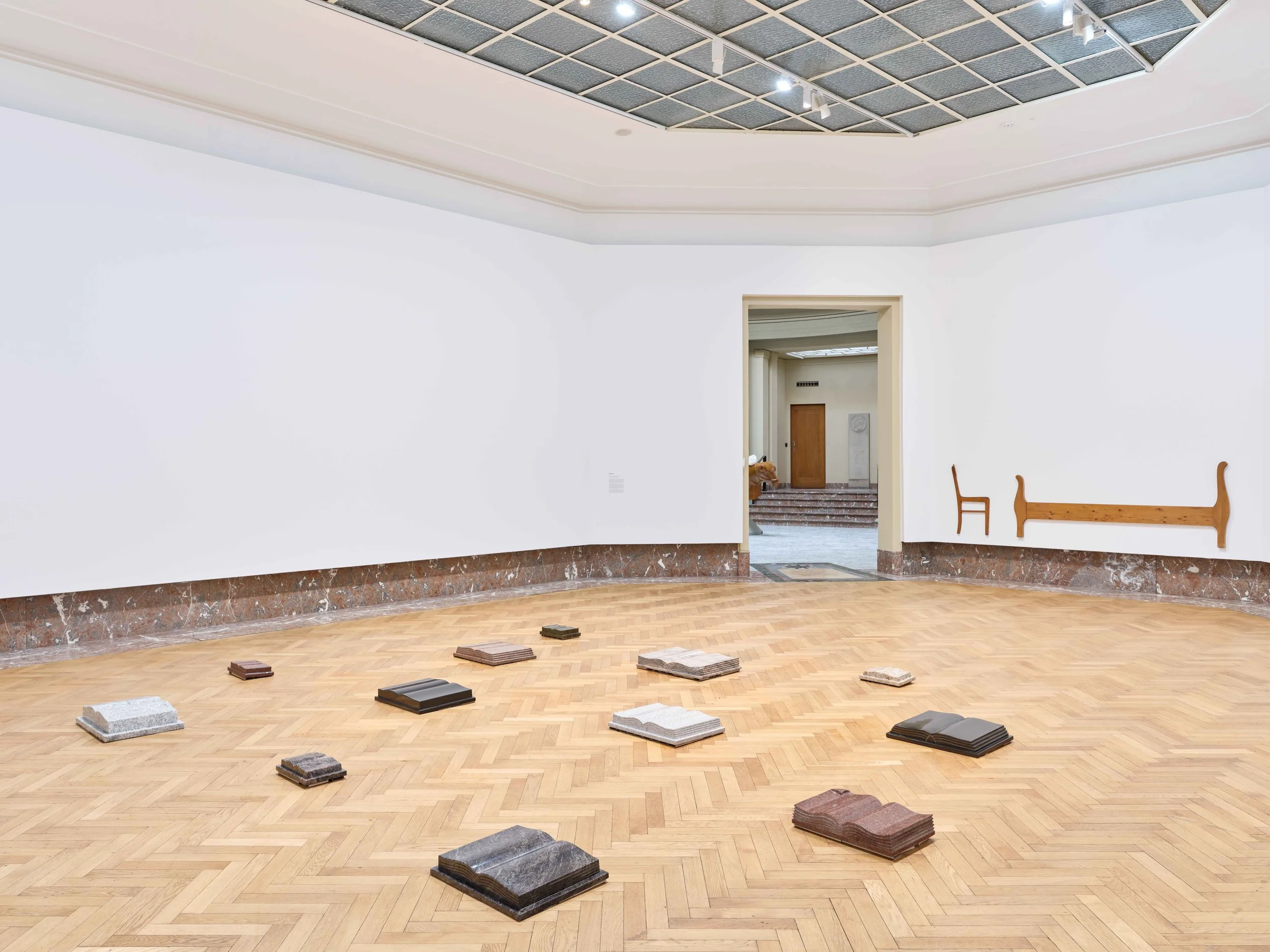
Therefore, approaching Real Estate – Nina Beier’s first-time solo exhibition at Bozar – calls for the acceptance to leave behind any preconceptions. At first glance, her sculptural works come across as intriguing, tinged with subtle drops of surrealism. Relief, for instance, dresses a wall with two wooden silhouettes conspicuously representing a chair next to a bed. A parent reading a bedtime story to his already drowsy child? A nurse carefully notating the last words of a dying patient? A man sitting down in awe, admiring his sleeping lover? Beier masterfully provides a key for the viewer to decide which door to open in his imagination.
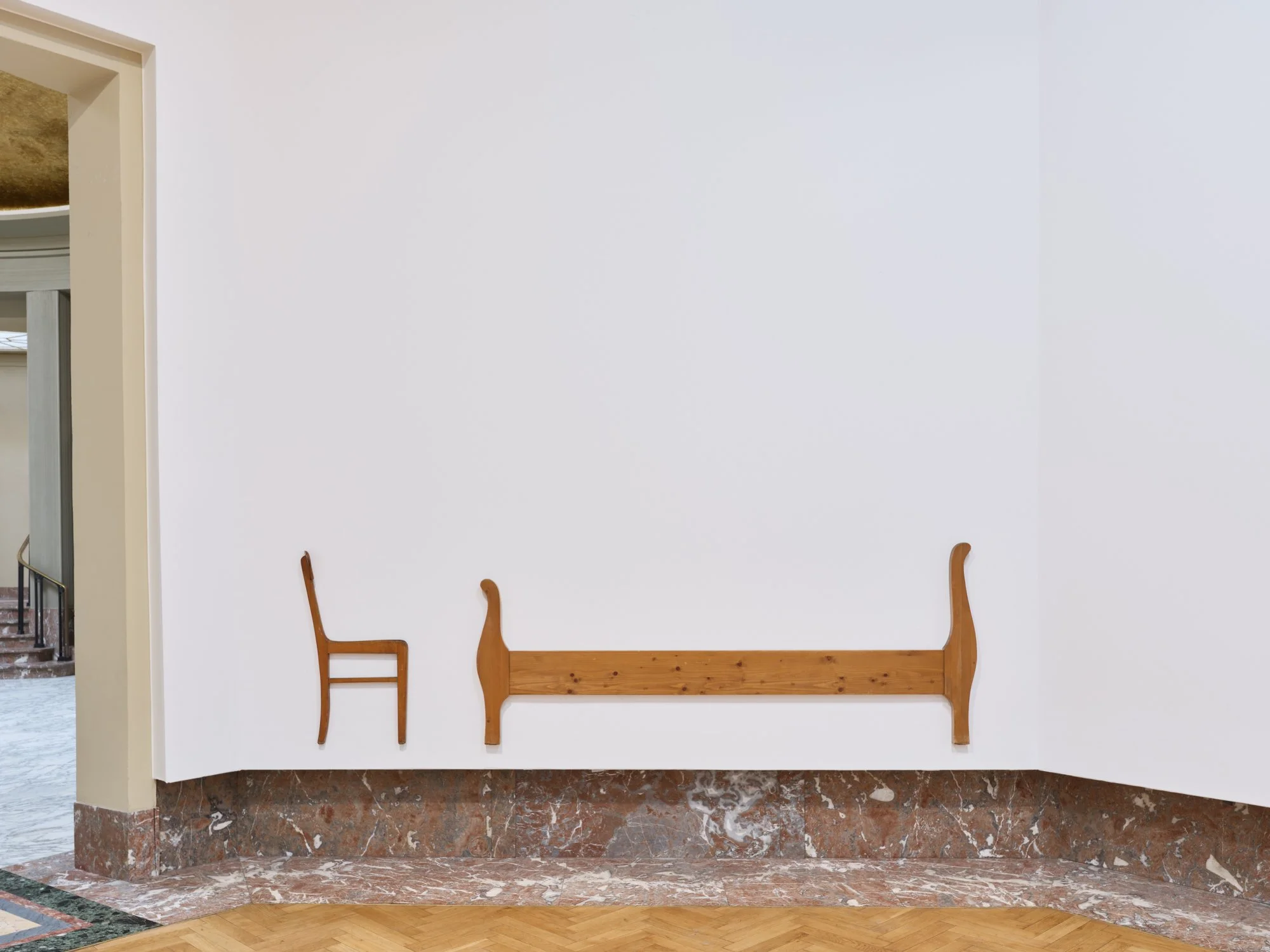
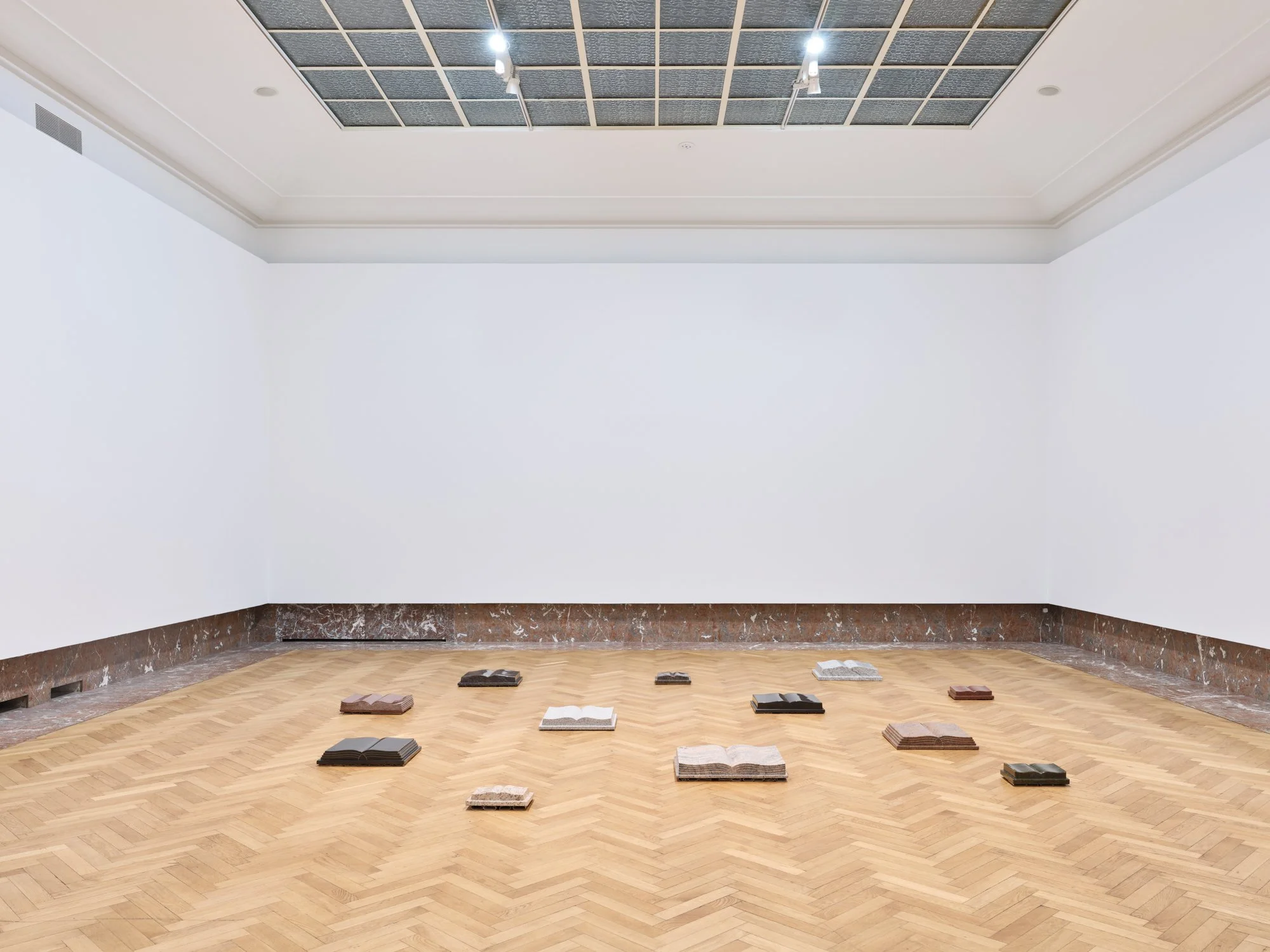
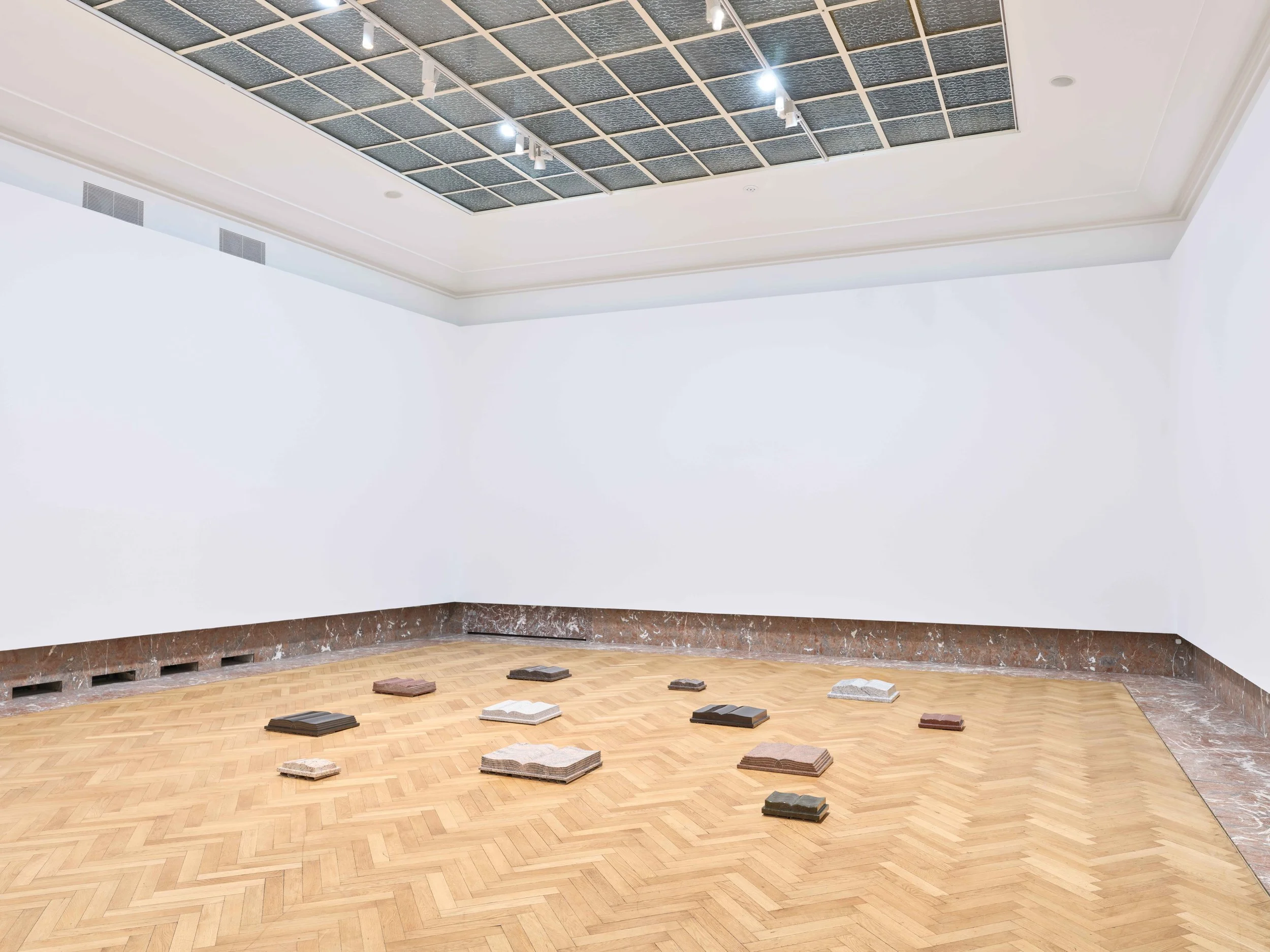
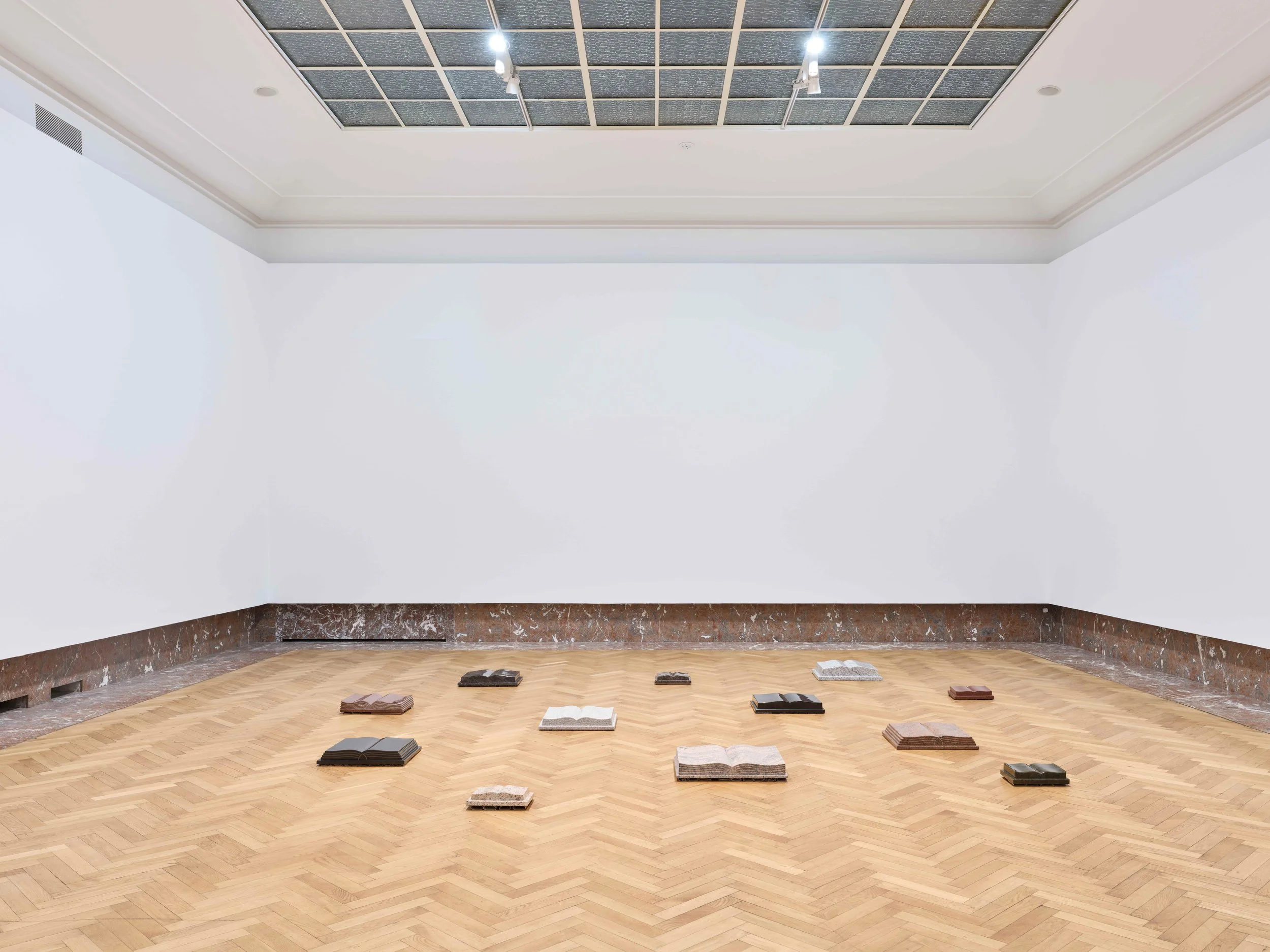
Nina Beier, Relief, 2025, and Sculpture, 2025, courtesy of the artist, Standard Oslo and Croy Nielsen. Photo credits: We Document Art
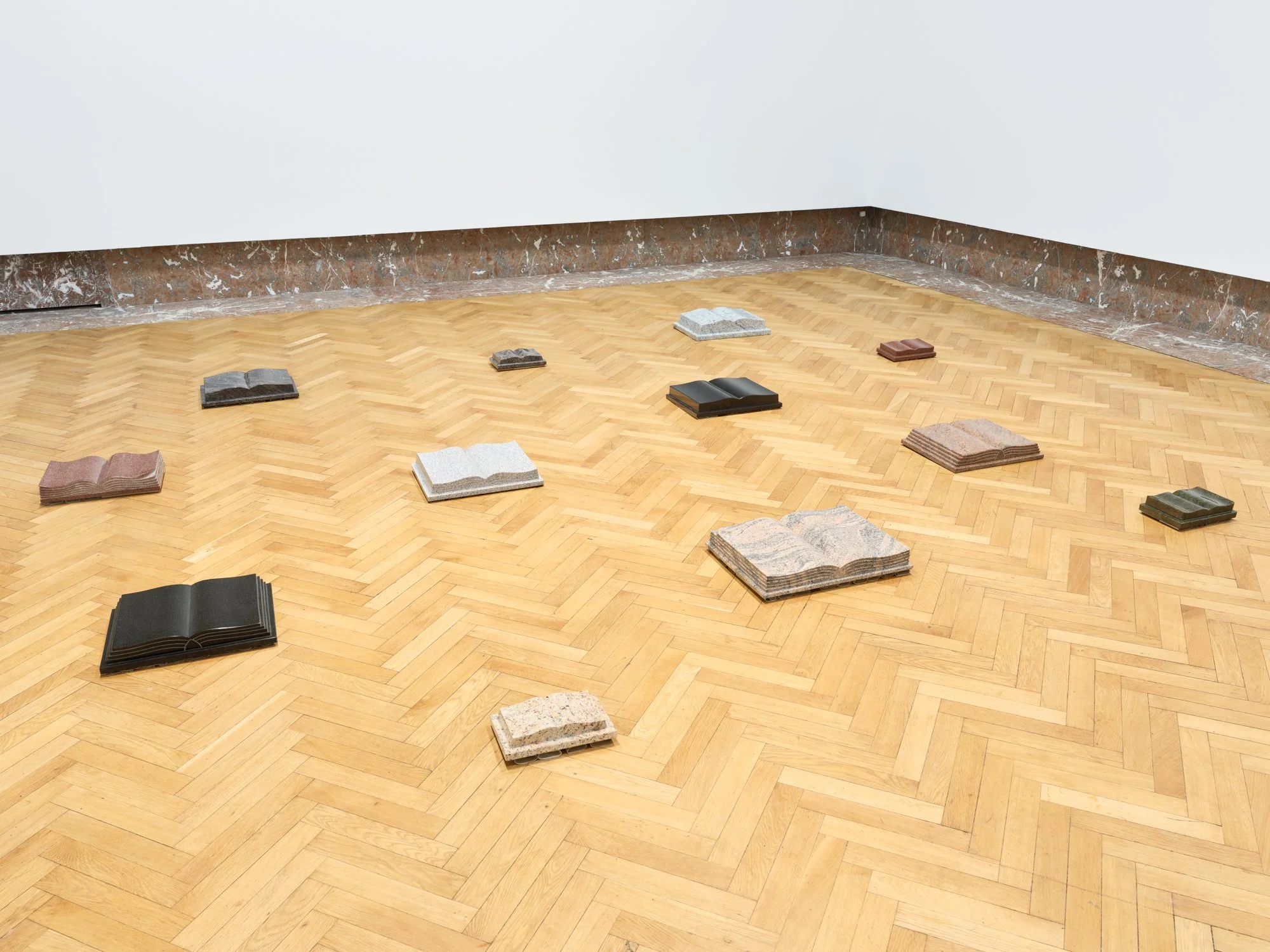
Displayed in that same room, Sculpture is an on-floor composition of marble and granite headstones over toilet and kitchen paper rolls. In this instance, the death-signaling headstones typically used over tombs are shaped as open books. Maldiney suggests another way to test the existence of an artwork: “Where there is no such moment of apparition, which is that of an absolute, unconditional opening, without precondition or premise, we are not in the presence of a work of art.”[2] Once again, Beier opens up the possibility of multiple readings of her artworks. The viewer is free to enter that “opening” and search for the pleasure that comes with finding answers to the existence of a given oeuvre. Open books without any words would imply blank sheets of paper onto which the description of someone’s life before death could be inscribed. The underlying paper rolls could signal the banality of everyday life or how the influence of someone’s existence exceeds the weight of any material linked to this earthly life. “When familiar things are moved away from their context, it is possible to look at them and read the signs they carry,” explains Beier, “It’s less about breaking free from the ordinary than about looking at it closely and letting all the forces that brought an object into the world expose themselves.”[3]
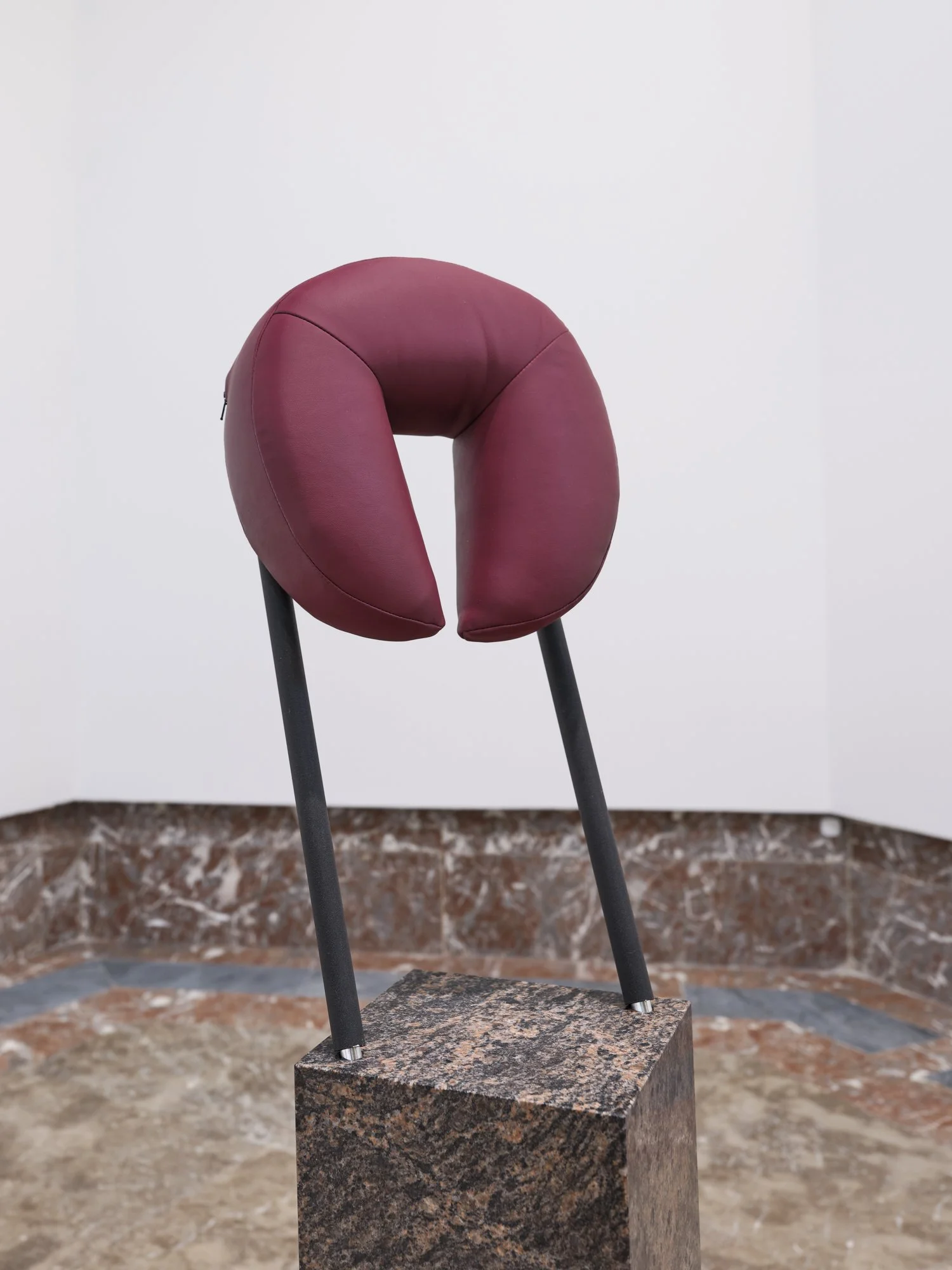
Real Estate is an artwork that occupies an entire room on its own. Materially speaking, it is comprised of tall marble and granite blocks displaying headrests from office chairs, cars seats, and massage chairs. Conceptually, however, its airy display allows for the eye to travel and imagine freely. Interesting contrasts abound. The heaviness of the marble and granite pillars against the softness implied by the headrests, for instance.
Nina Beier, Sculpture, 2025, courtesy of the artist, Standard Oslo and Croy Nielsen. Photo credit: We Document Art and Diana Murray Watts
Overall, this artwork resonates with Maldiney’s understanding of the relationship between form and space: “[…] the space of a form is a place. Form and space are indissolubly linked because space is the place of form. It establishes the space necessary to its own genesis.”[4] In this way, what is born is a space that renders possible the existence of forms that are free to open – back to Maldiney – different roads through which the mind can cruise, pastures on which the viewer’s imagination is able to graze.
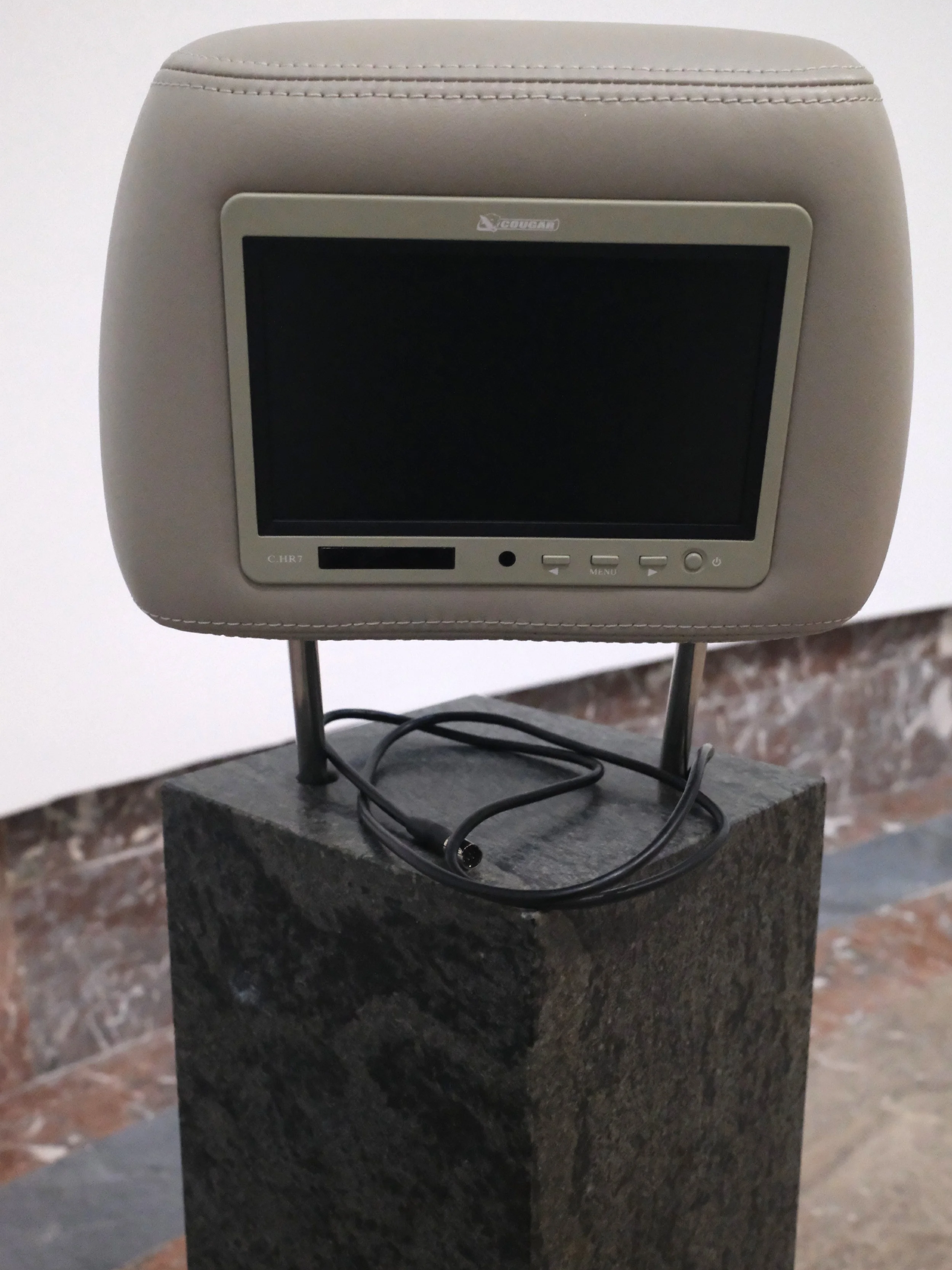
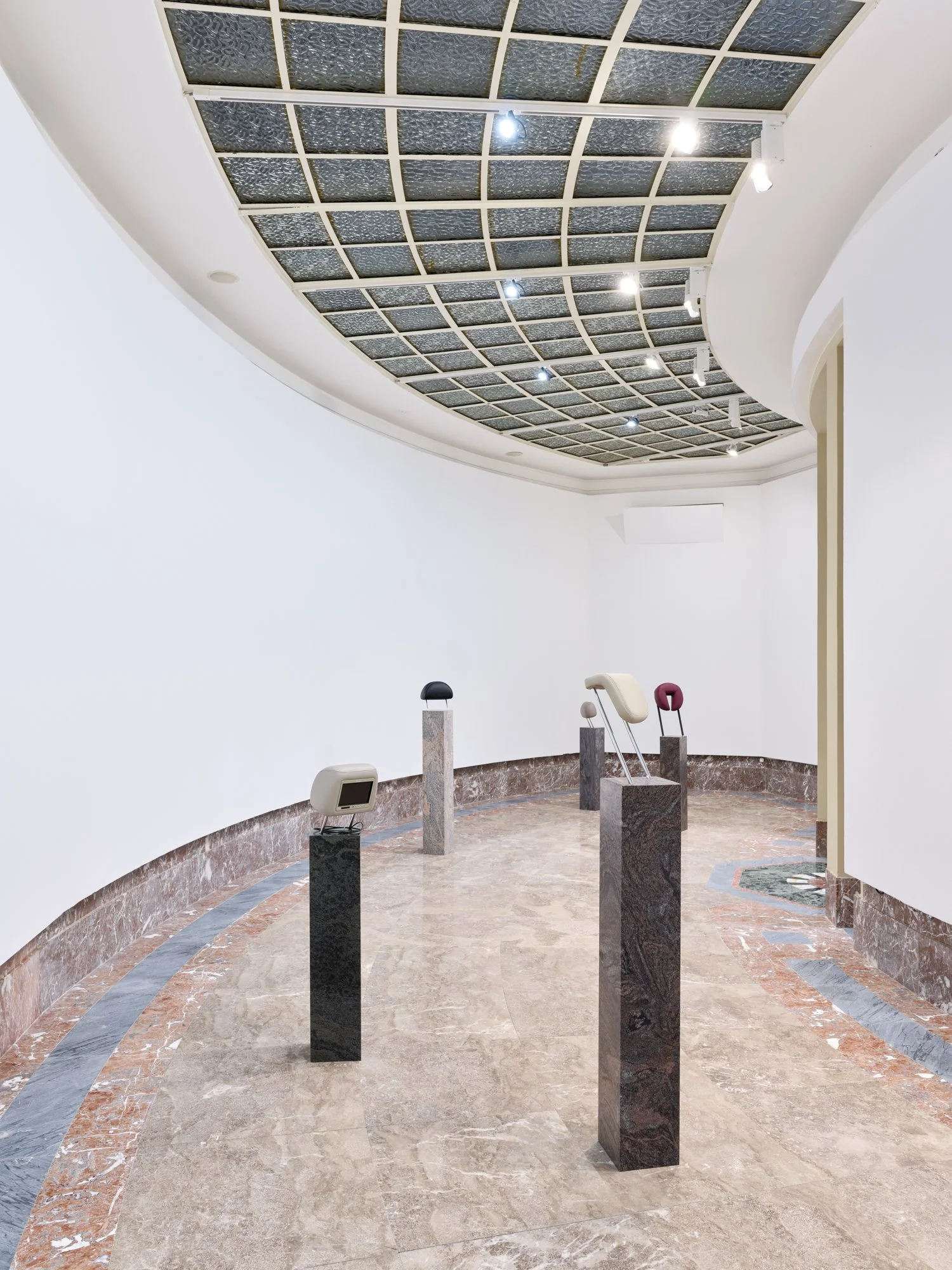
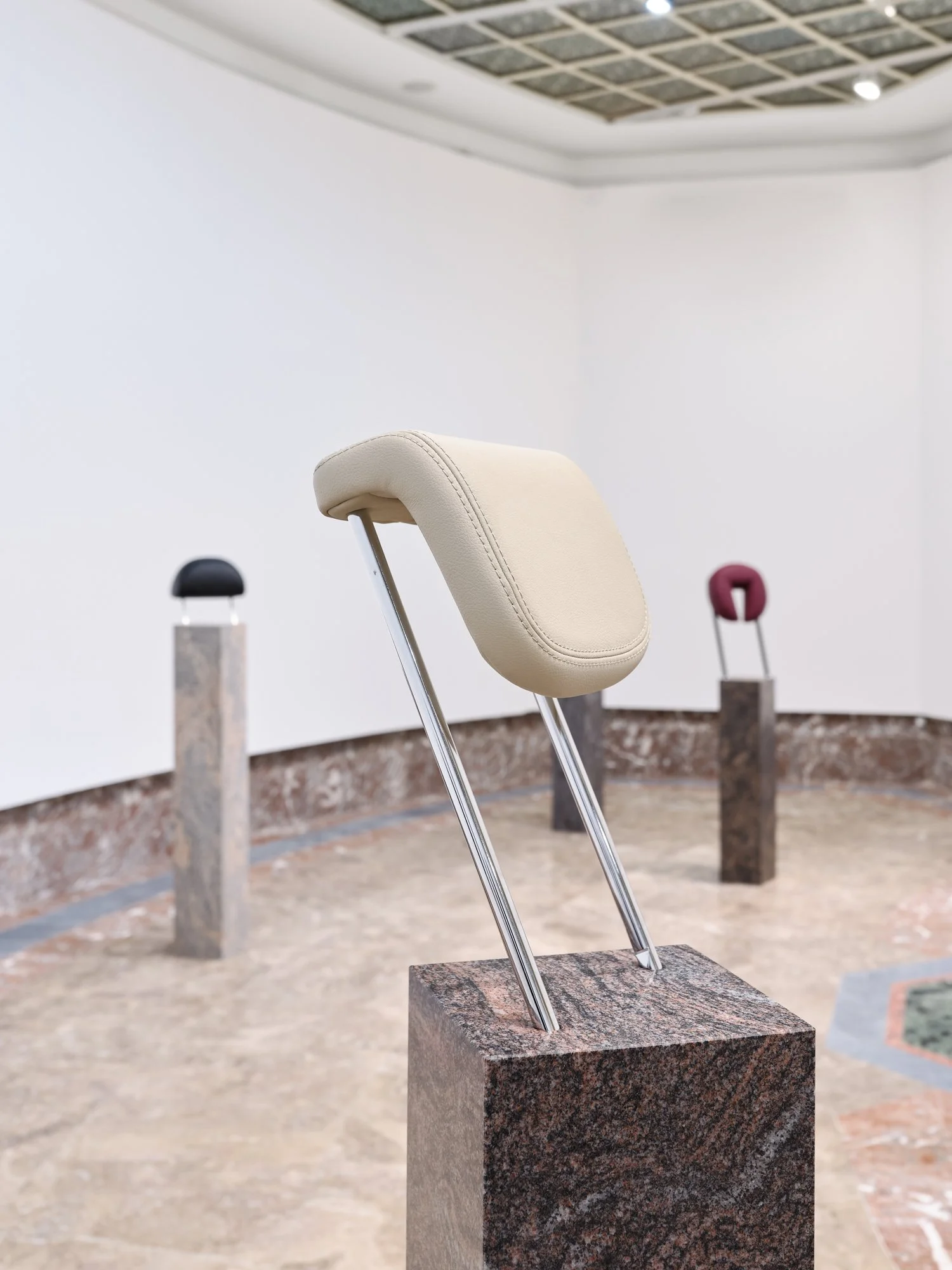
Nina Beier, exhibition views from Real Estate, 2025, courtesy of the artist and Standard Oslo.
Photo credits: We Document Art and Diana Murray Watts
Parts is another artwork exhibited on its own. It consists of three sets of manly beards made of human hair. Purposedly aligned below the eyesight’s horizon, they spark a feminist reading of men on their knees. Moreover, Parts communicates a unique rhythm that, according to Maldiney, does not unfold in time. “On the contrary, time is implied in the rhythm. Rhythm does not have a place in space. On the contrary, space is implied in the rhythm. A rhythm arouses its space-time from every here-now that is found in it based on present.”[5] Having understood this, the eyes and the mind can enjoy myriad ruminations about human nature and its insistence on gender-based differences that inevitably carry a potential for disagreement and conflict. And yet, there is another plausible route: one that is tinted with humor. For Beier’s artworks are not necessarily meant to be cerebral and thus can equally stir interpretations that naturally lead to a smile or a laugh.
Her Fleet, for example, leads to a remembrance of childhood. Conceived as a series of cruise ships models hanging from the roof, it is an almost direct invitation to reconnect with cheerful memories of child games and family vacations. When looked upon closely, however, sugar and sand appear inside the cruise ships. While both elements continue hinting toward the joys of childhood, they also unlock the reflection on how those extractive industries have come dominate international relations; often producing conflict between countries and violence toward the natural environment. “I tend to hone in on a certain type of object and then start collecting its many versions. Objects that don’t belong to a single maker or origin, things that have evolved through repetition and variation, shaped by use and imitation,” says Beier. “What interests me is how the mechanisms of this world give form to this kind of collective production: the motivation that brought them into being, the way in which they were produced, traded, travelled, valued and, in the end, maybe gained a symbolic status and how that status shifted over time. When I look at these objects, I can’t help to see them as charged with the hierarchies and contradictions of the systems that produced them. Rather than illustrating these structures, I hope my works embody them.”
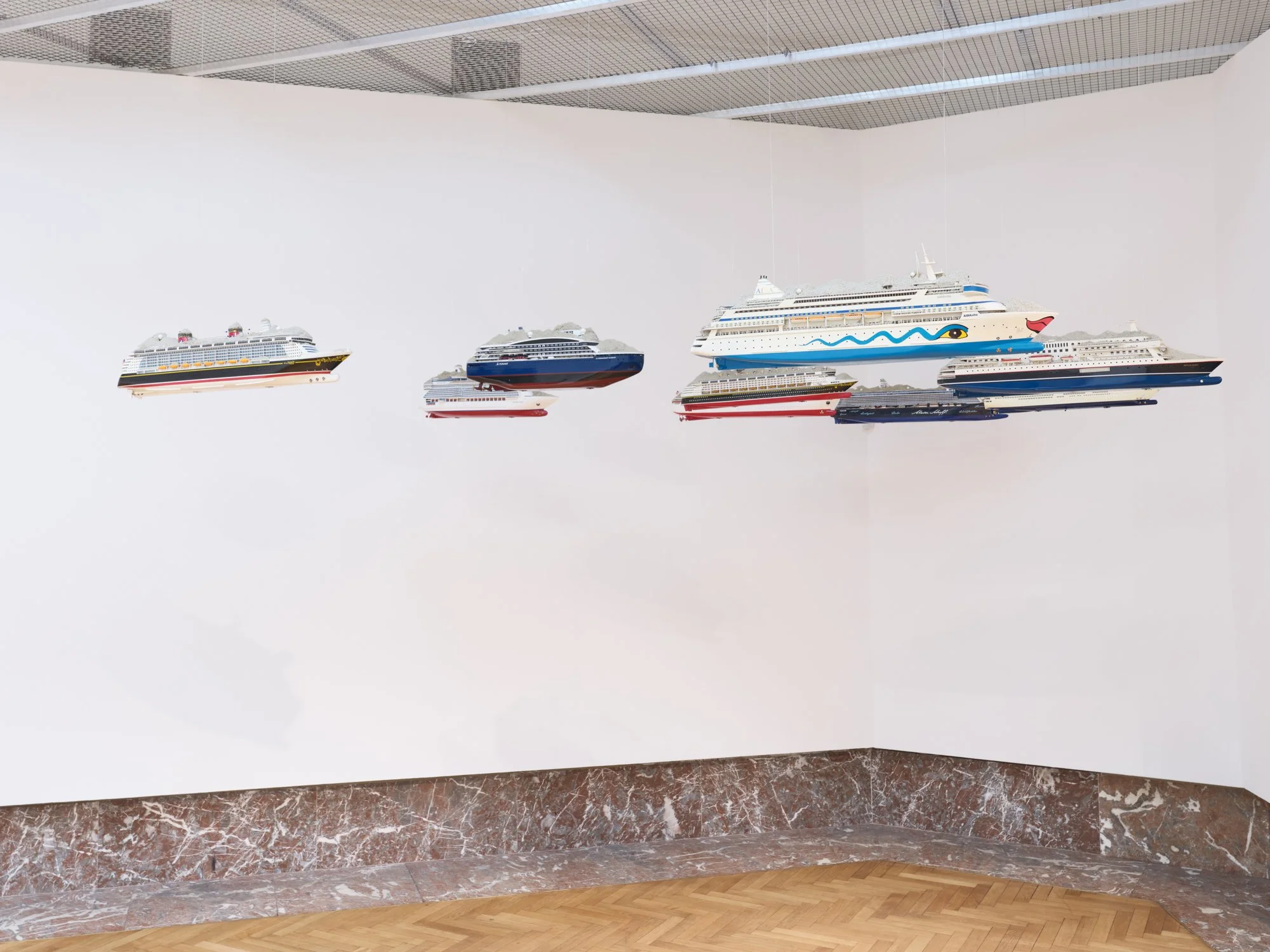
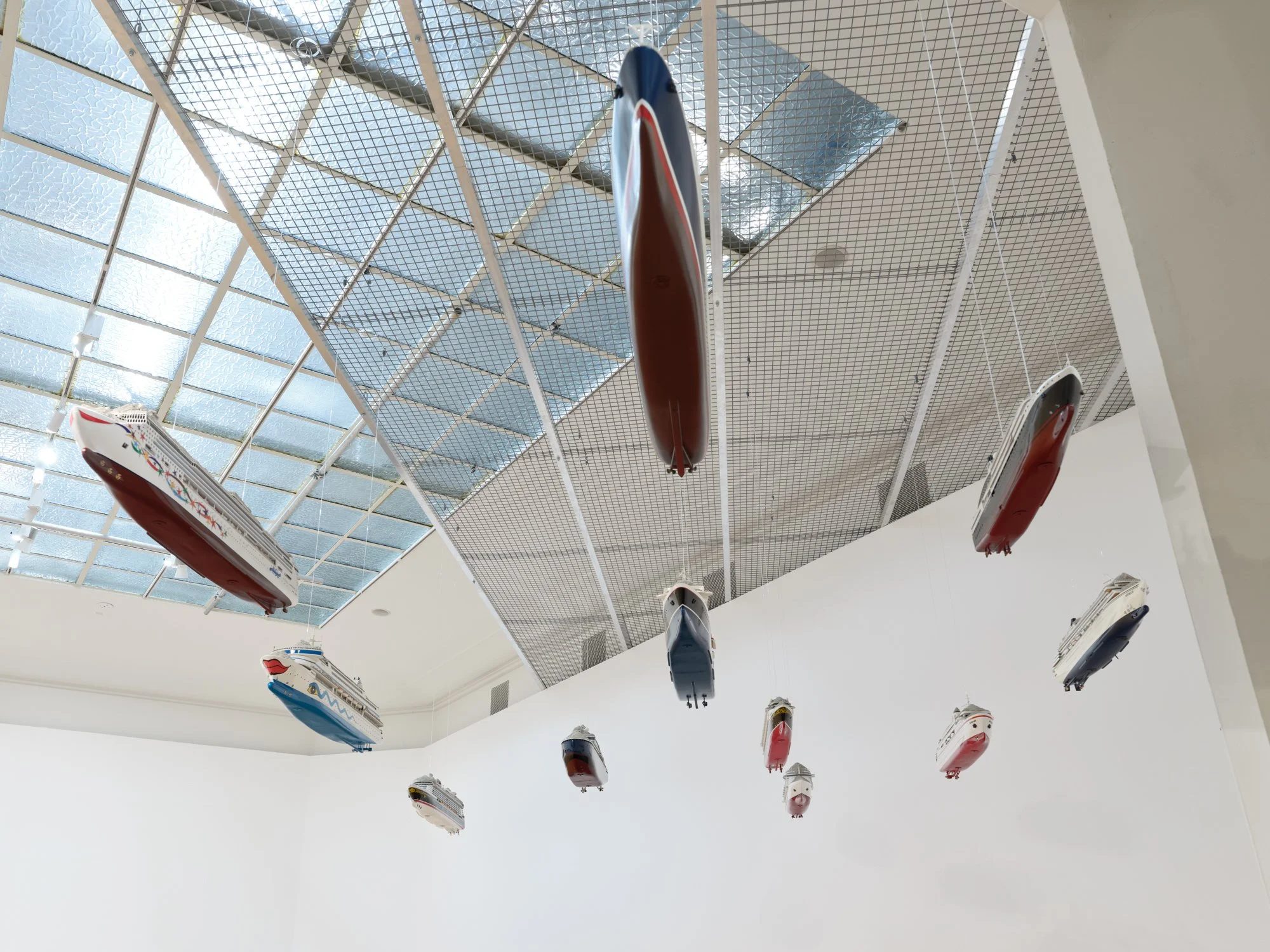
Nina Beier, exhibition views from Fleet, 2024, courtesy of Louisiana Museum of Modern Art, Humblebaek.
Photo credits: We Document Art
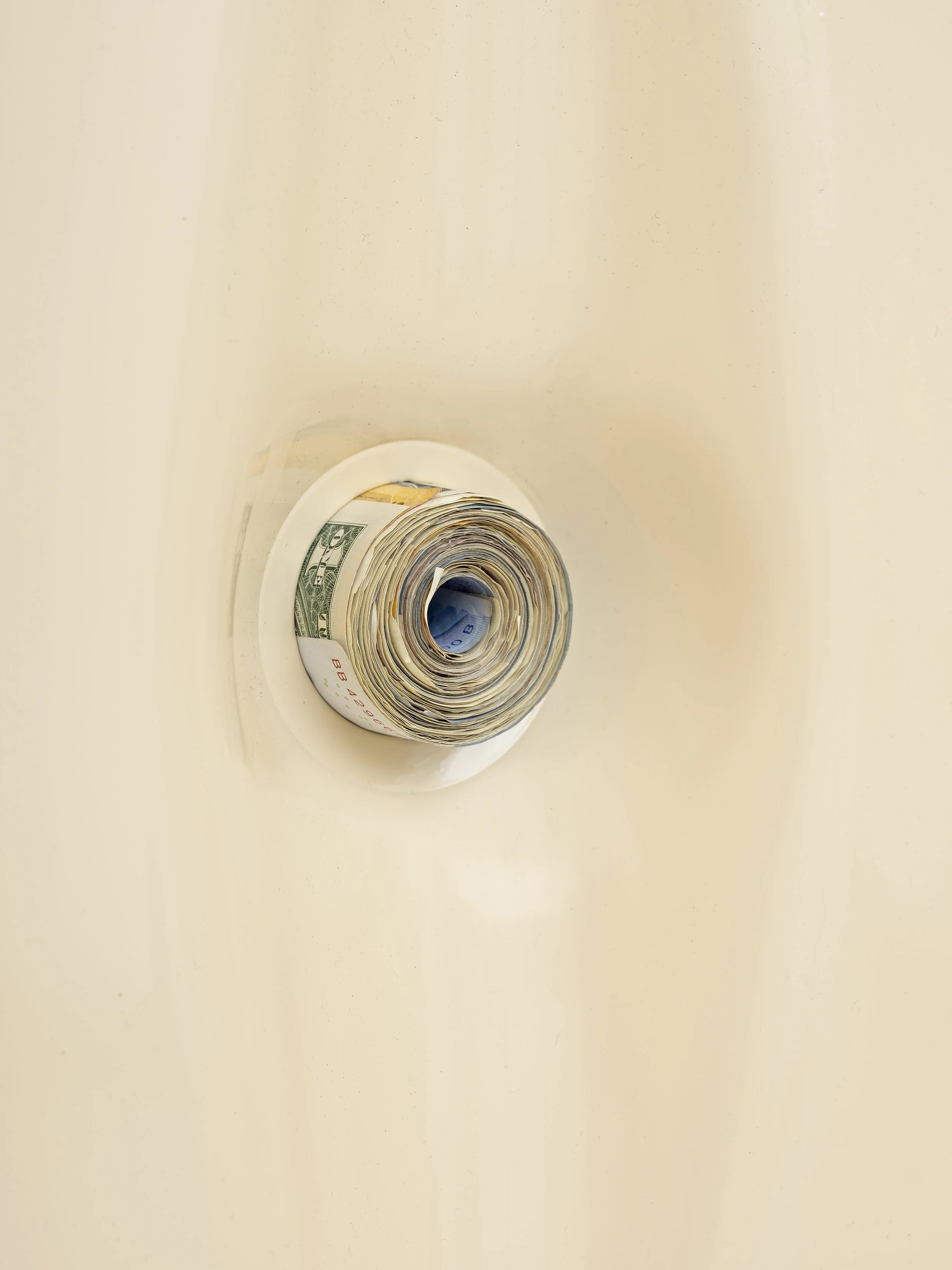
Nina Beier, close-up view of Great Depression, 2023, courtesy of Standard Oslo. Photo: Vegard Kleven
Needless to say, the global financial system is a mesh of contradictions. Beier’s Great Depression tactfully illustrates some of them, starting with the presence of a Colani fiberglass bathtub that recalls those organic forms and pastel tones that were so popular during the 1960s and 1970s. One must look more closely to notice the wad of cash that replaces the bathtub’s plughole. It humorously points at those rolls of bills that often appeared in films about shady tales. It could also come across as a statement denouncing the ephemerality of money as literally going down the drain in a world that feverishly seems to depend on it.
As an exhibition, Real Estate succeeds in challenging the viewer without pretending to provide any answers. On the contrary, Beier likes to think of this show as one that “operates some place outside the bounds of language and rational logic.” She adds: “Somewhere in the different meanings which are present in the objects themselves and the superimposed images added by the mind, a kind of owl pellet of indigestible remnants of reality are left. I try not to comb through the material, but rather leave the problems or tensions it carries unresolved.”
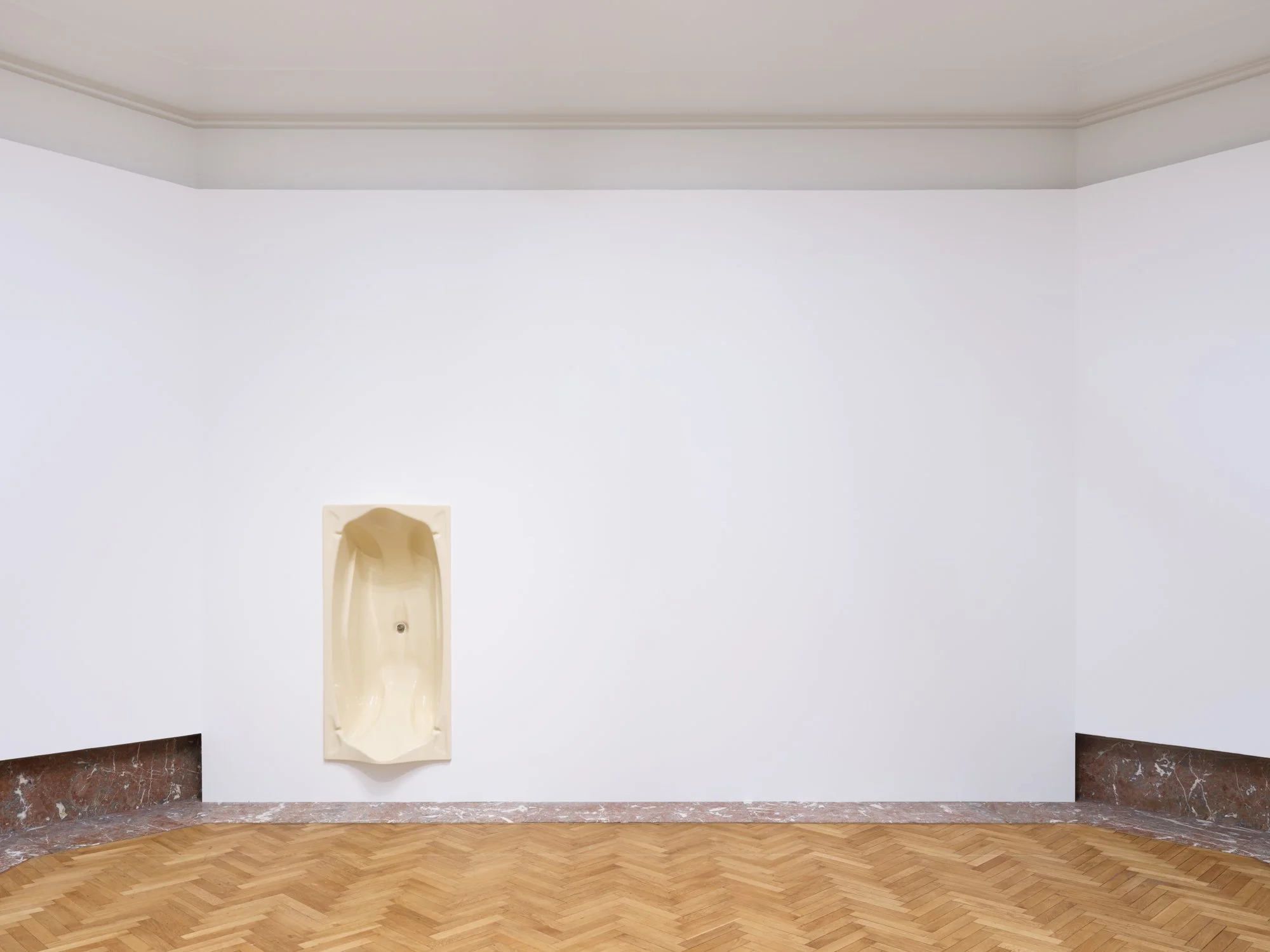
Nina Beier, Great Depression, 2023, courtesy of the artist and Standard Oslo. Photo credit: We Document Art
Having visited the exhibition several times, I can testify to its intrigue and how space, form, and rhythm become intertwined as to create a satisfying vertigo of open-ended questions and answers. Come indulge in this dizziness.
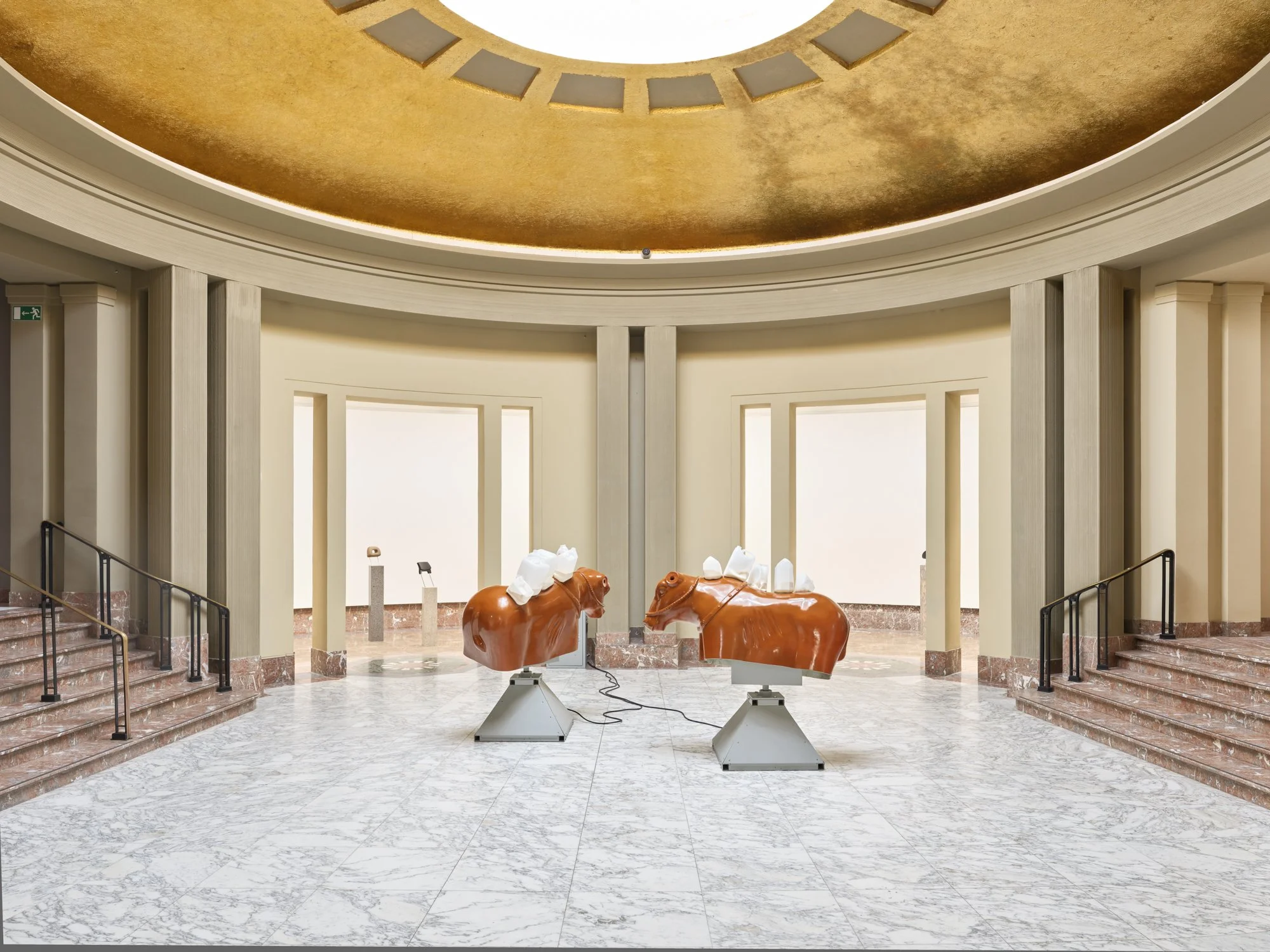
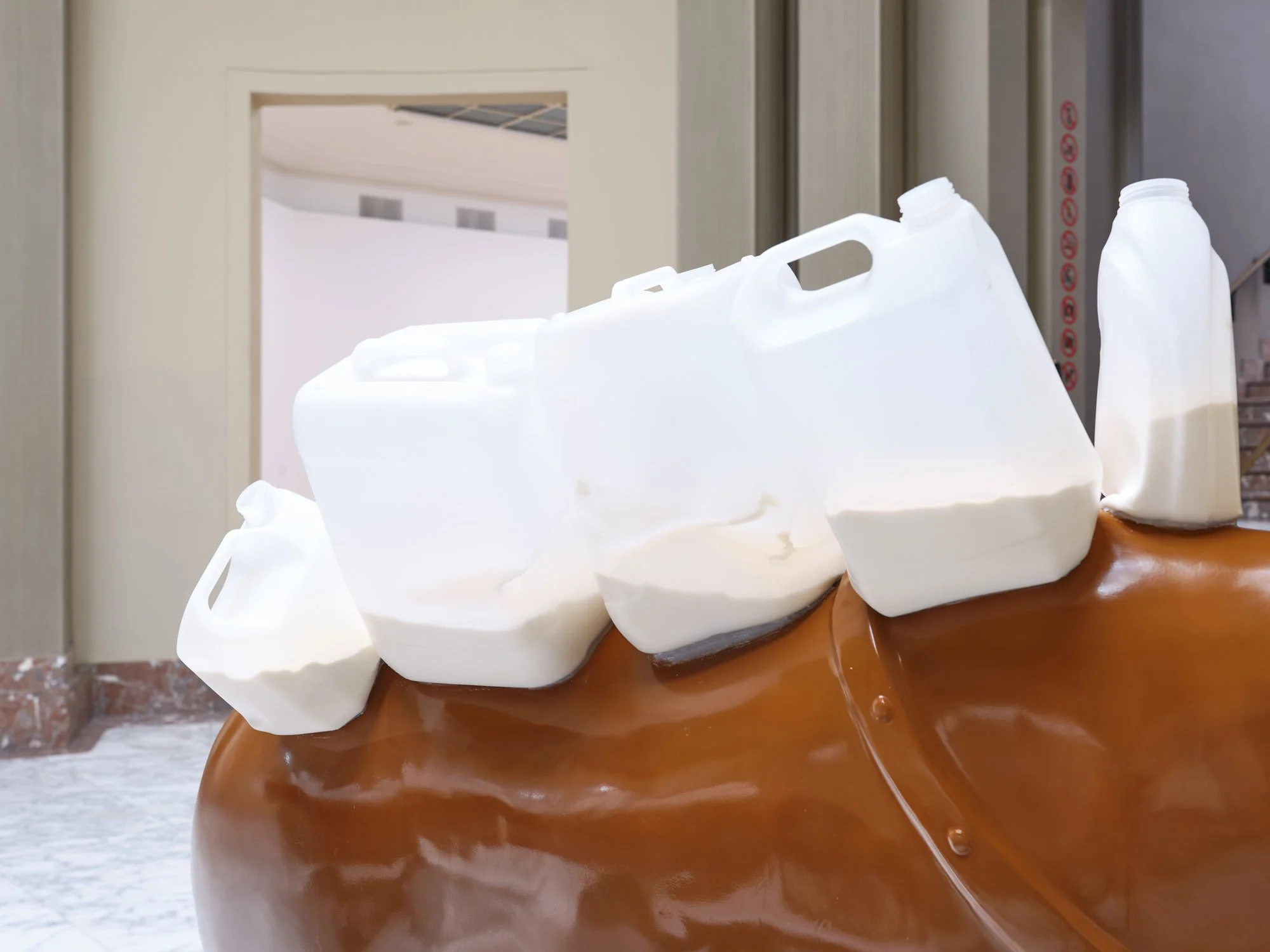
Nina Beier, Beast, 2018-2024, courtesy of Standard Oslo. Photo credit: We Document Art
Real Estate is on view at Bozar – Center for Fine Arts in Brussels, Belgium until January 4, 2026.
Diana Murray Watts is a writer, curator, and art critic. She is currently pursuing a PhD in Philosophy, Art and Social Thought at The European Graduate School.
[1] Henri Maldiney, Espace, Rythme, Forme (Paris: Les Éditions du Cerf, 2022), 56. Translation by the author.
[2] Ibid, 60
[3] All citations from the artist are from private conversations with the author.
[4] Maldiney, Espace, Rythme, Forme, 105
[5] Ibid. 116 and 117.