

Ekaterina Mastyukova
One curatorial concept, three fragments, four invocations, six chapters, twelve publications. Waterways, estuaries, bird migration patterns. The 36th São Paulo Biennial is intimidating in its theoretical background, but exciting to dismantle. Described by the curators as “maximalist”, the Biennial takes “humanity” as a starting point, reimagining it as a practice of coexistence. This year`s edition is borrowing its name “Not all Travellers Walk Roads of Humanity as Practice” from a poem by Conceição Evaristo “Of Calm and Silence”. The poem ends with the lines “Not all travellers/ walk roads/ that are submerged worlds/ that only the silence/ of poetry penetrates”. In the curatorial vision, the image of submersion, along with the accompanying silence, both transform into the image of the estuary. A place, where the waterways meet, forming a new ecosystem.
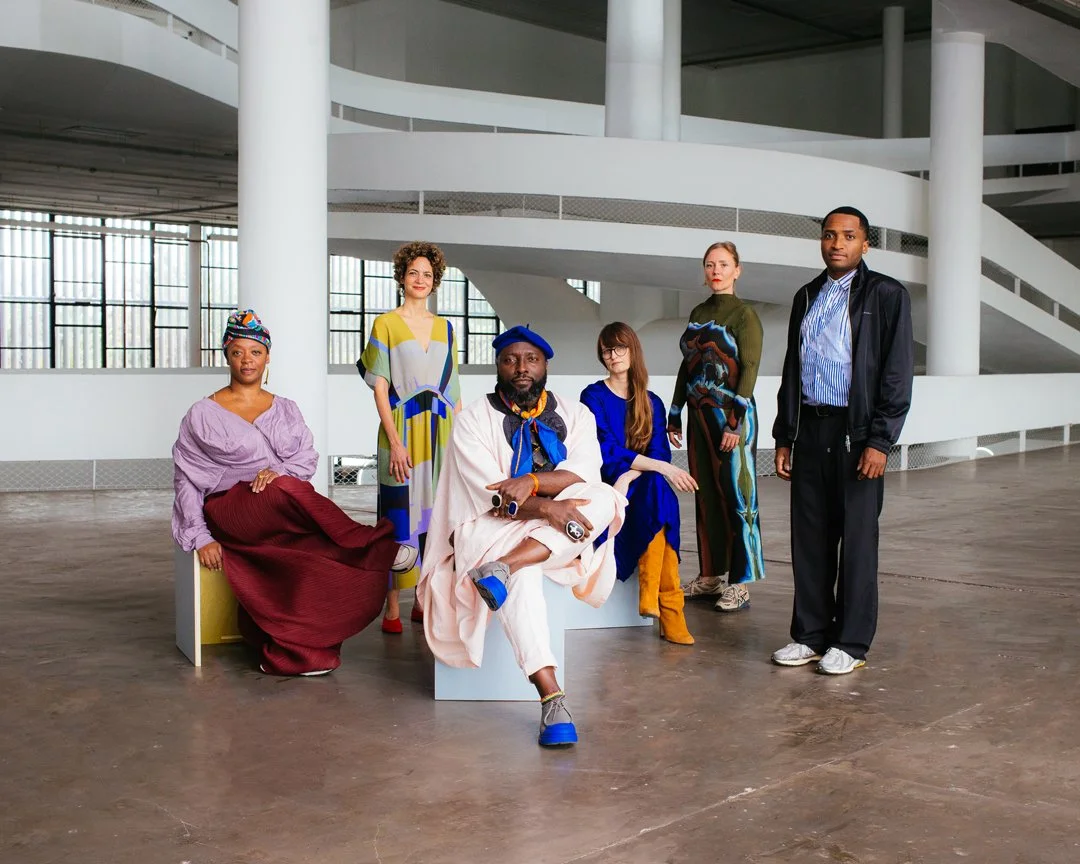
Conceptual team for the 36th Bienal de São Paulo, from left to right: Keyna Eleison, Alya Sebti, Bonaventure Soh Bejeng Ndikung, Henriette Gallus, Anna Roberta Goetz and Thiago de Paula Souza © João Medeiros / Fundação Bienal de São Paulo
Bonaventure Soh Bejeng Ndikung, the chief curator of the Bienal, focuses on the importance of the interdependence of the estuaries “...when two waterways meet each other, like a river meeting the sea, is a moment of negotiation…” Following the rethinking of Haus der Kultur des Welt as an institutional space under his artistic direction and his previous exploration of sonic practices at Sonsbeek20→24, the 36th edition of São Paulo Biennial picks up key threads from Ndikung’s broader curatorial practice.
The exhibition is mapping the pavilion as a space of convergence through six chapters, grouping the artworks in response to histories, spatiality and shared human experiences. Collectivity in the times of crisis becomes a starting point for many artists in this edition.
In the catalog, there is a disclaimer: “This Biennial is not about identities and their politics, not about diversity nor inclusion, not about migration nor democracy and its failures…” Yet, the Biennial manages to position itself within all these conversations, which are inseparable from the present and from humanity itself. In the films a night we held between and our songs were ready for all wars to come of Palestinian filmmaker Noor Abed, resistance is a repeatedly performed communal ritual. The product of generational memory of learned resilience translates into movement and sound on the analogue film.
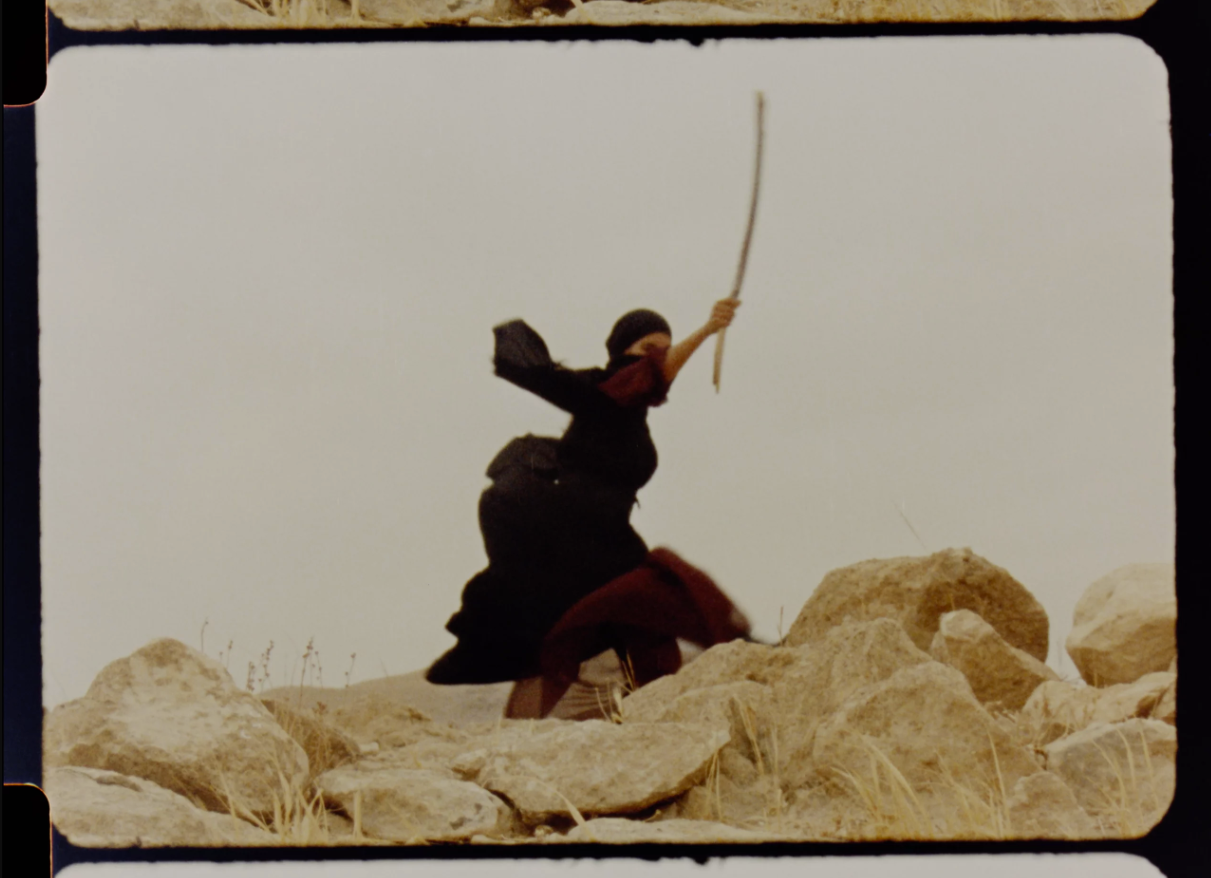
Noor Abed, A Night We Held Between, 2024, 16mm film still. Courtesy of the artist
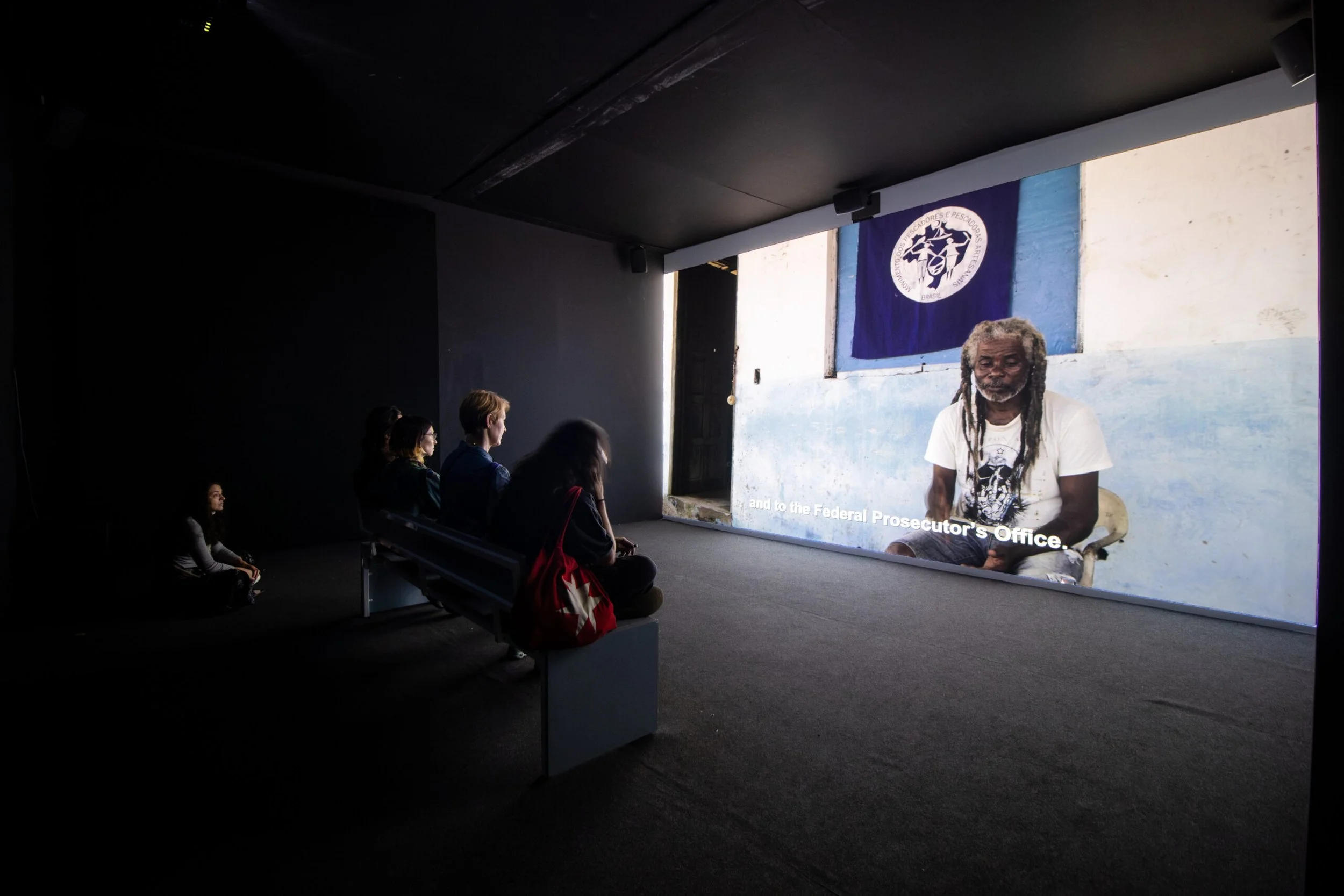
Installation view of Ouro negro é a gente, by Aline Baiana, during the 36th Bienal de São Paulo © Natt Fejfar / Fundação Bienal de São Paulo
For Brazilian artist Aline Baiana, collectivity shows in the voices from Ouro negro é a gente (We Are The Black Gold). A film that collects personal accounts of continuous resistance to the systematic environmental violence on Maré island in the state of Bahia. Baiana`s work proposes to rethink the notion of “wealth” that the capitalist driven society pursues.
The deconstruction of the materiality of “wealth” in the film echoes the overarching ideas of the Biennial. The exhibition prefers to avoid the labels both metaphorically and physically. The focus is not on the specific identities, but on the broader less tangible idea of “humanity”. This edition manages to adopt a very optimistic lens, despite the heaviness of the topics the artists deal with. By choosing to celebrate joy and beauty as an opposing political force, the Biennial tries to create a completely non-hierarchal space within the pavilion, where struggles coexist without competing for importance. This idea is also reflected in the spatial organisation of the artworks across the floors. The chapters of the exhibition are connected not only through the pathways that the building offers, but also through the vertical axis that the placement of the artworks creates. The woven tapestries of Otobong Nkanga meet the visitors on every floor at the exits of the ramps, while the columns of A Casa de Bené (Bené’s House) by Ana Raylander Mártis dos Anjos literally pierce the pavilion from the bottom to the top.
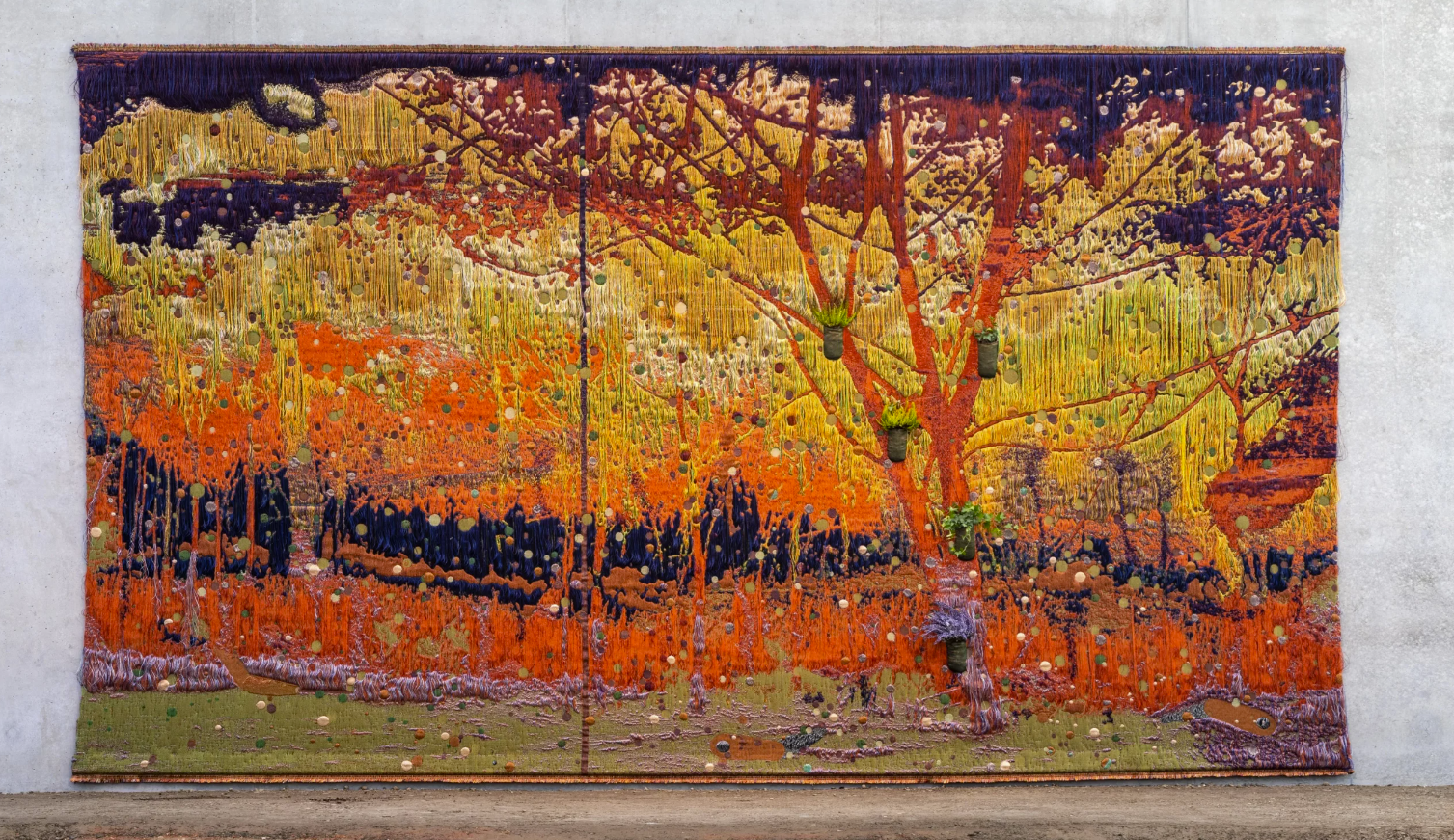
Otobong Nkanga, Unearthed – Sunlight, 2021, Woven textile (yarns: trevira, sidero, polyester, multifilament, merino wool, superwash, linnen, mohair, econyl, fulgaren, elirex, viscose), remembrance plants 350 x 600 cm.
Photo: Markus Tretter

Installation view of A casa de Bené, by Ana Raylander Mártis dos Anjos, during the 36th Biennial de São Paulo © Natt Fejfar / Fundação Bienal de São Paulo
Such strong focus on interconnectedness, however, creates a big dissonance within the exhibition, where the emphasis on positivity begins to undermine the urgency of the stories being told. The dissonance truly becomes tangible in the signaling system in the pavilion. While the refusal of the traditional wall texts is intentional, it remains a question if it is justified. It does allow a freer flow of meaning following the idea of the estuary, but it also inevitably obscures each individual narrative.
All the curatorial texts speaking about the artists are located around pillars scattered in the space, not necessarily close to the artworks themselves. The visitors are expected to find the artists on the map, locate the right column and match the initials of the artist to the right texts. The algorithm feels artificial and interrupts the “organic” flow more than supports it. In a way, this creates a barrier for understanding the exhibition. This is where the question of accessibility of the Biennial arises, since the focus on it has been thoroughly emphasised by the curatorial team. Without the support of the curatorial texts, the exhibition becomes quite abstract, which can confuse and frustrate someone who is a casual visitor (which the curators highlight as the target audience).
The efforts to democratize the exhibition are the most evident from its extended duration and free admission. The Biennial is also accompanied by the vast educational programming, including events that run in parallel with the exhibition in São Paulo (Tributaries) and the ones that were held prior to the main event around the globe (Invocations). Among the Tributaries, Butacada, a performance by Marcelo Evelin held in the cultural center Casa do Povo during the opening days of the Biennial. Butacada begins with the darkness of the underground theatre, generating a cacophony of sound that eventually finds the common rhythm. Performed by the 50 participants, Butacada invents a ritual of protest through the choreographed sonic landscape.
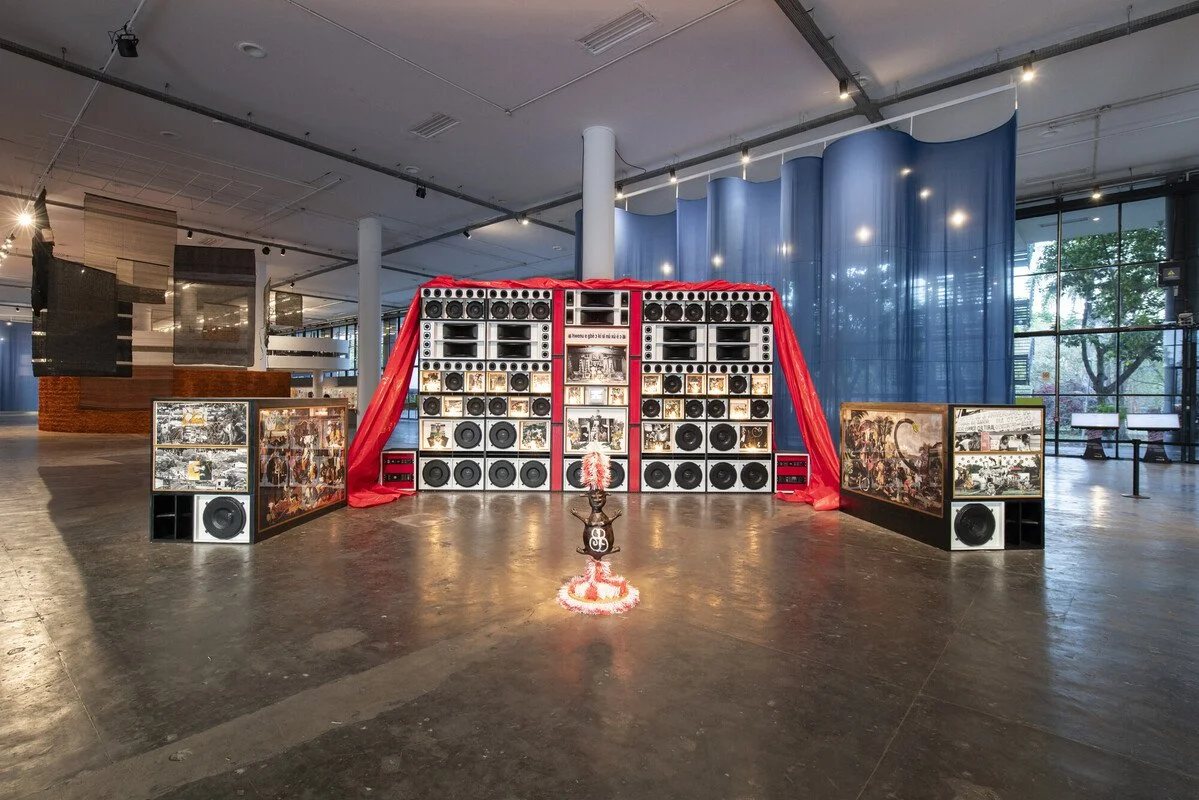
Installation view of A colheita de Dan, by Gê Viana, during the 36th Biennial de São Paulo © Levi Fanan / Fundação Bienal de São Paulo
The sound is yet another anchor of this year’s Biennial. It is a theme that continues through the chapters in the pavilion and even beyond, with the performances at Casa do Povo. In the exhibition, there are plenty of ongoing sound installations. If you enter from the first floor, Gê Viana’s massive sound systems would be one of the first artworks you will see (or hear). Built to take up space, the work is towering over. Maranhão's reggae radio stations become symbolic for overcoming colonial trauma through preserving and amplifying the authentic soundscape of the community. If you choose to enter through the ramps on the sides, the sound will be different, but still present. Cevdet Erek’s soundscape, Rhythmic Ramp, stems from the interaction with the modernist architecture of Oscar Niemeyer's pavilion. While accompanying both ascents and descents, Rhythmic Ramp creates a liminal space, transforming transition into presence. Within the pavilion, the rhythm is also important to Antonio Társis. His catastrophe orchestra no. 1 (Act I) creates a live soundscape from the interactions between the earthly materials like coal and the mechanisms that trigger their destruction. The pieces of coal, connected to the ropes are dropped on the drums, falling apart and producing sound at the same time. By mediating the destruction and creation through sound, Társis engages with the topics of labour politics and environmental crisis.
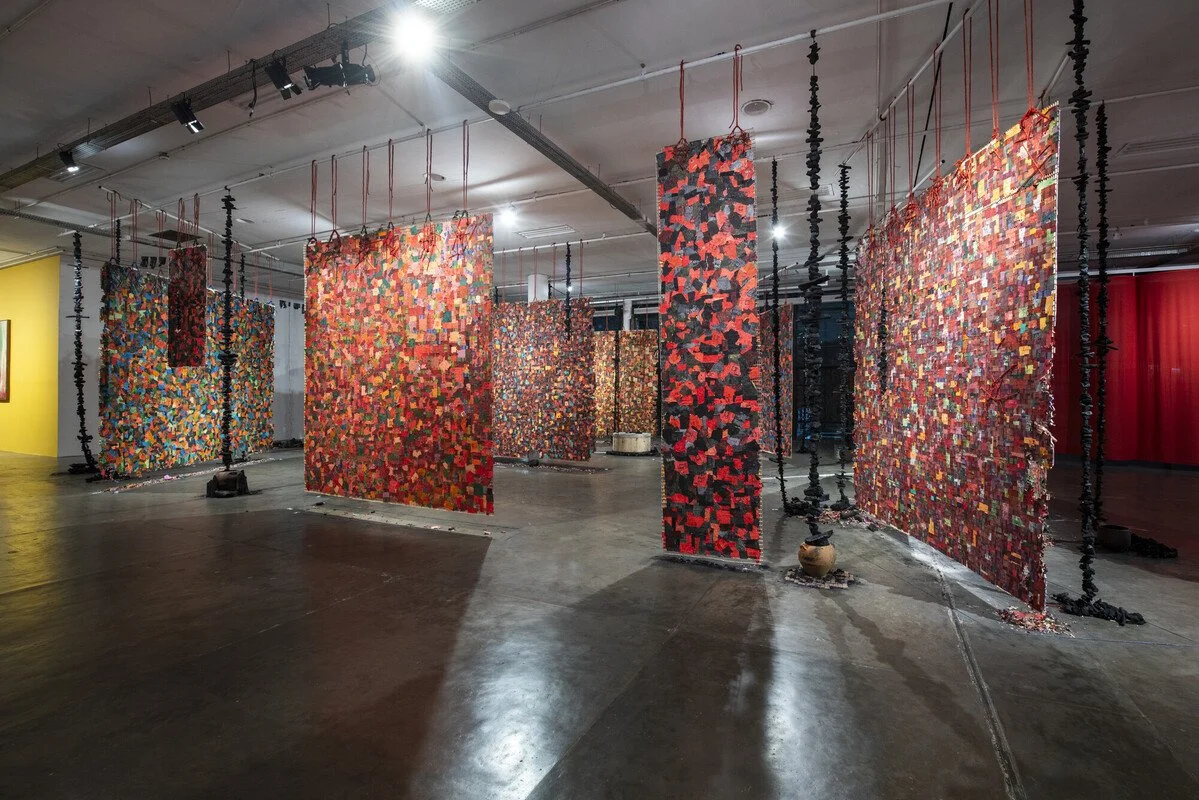
Installation view of catástrofe orquestra #1 (Ato I), by Antonio Társis, during the 36th Bienal de São Paulo © Levi Fanan / Fundação Bienal de São Paulo
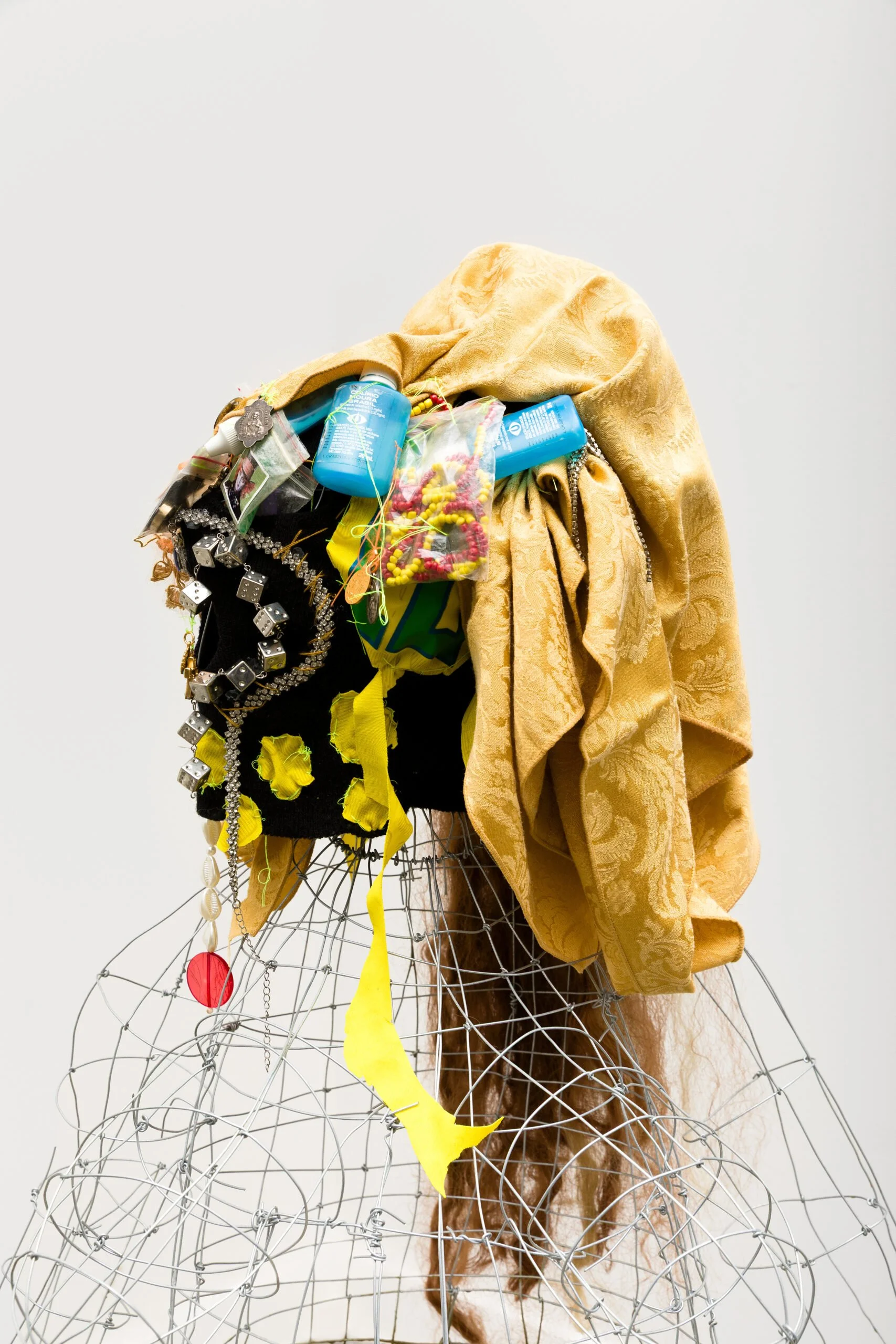
Manauara Clandestina, Untitled, 2024. Courtesy of the artist
While the sounds fill the pavilion, the best way to experience the exhibition is to see these sounds overlap with the communal aspect of the Biennial. When the sounds begin to form the communities within the space, the image of the estuary becomes clearly visible.
During the opening days, it is easy to notice the migration patterns. People moving up and down the ramps, performances attracting crowds, re-mapping the spatial dynamics of the exhibition. There is a fashion show, activating the work of Manauara Clandestina. With the live band playing, the models appropriate Niemeyer’s ramps as a runway. The space becomes theatrical, when people attracted by the music start gathering along the improvised balconies.
On the other side of the pavilion, the crowd is surrounding the work of Myriam Omar Awadi, where the performers are dressing in the gowns that before were hanging from the microphone stands. It is hard to imagine the installation without the presence of the performers. As if without human interaction, the work would feel incomplete.
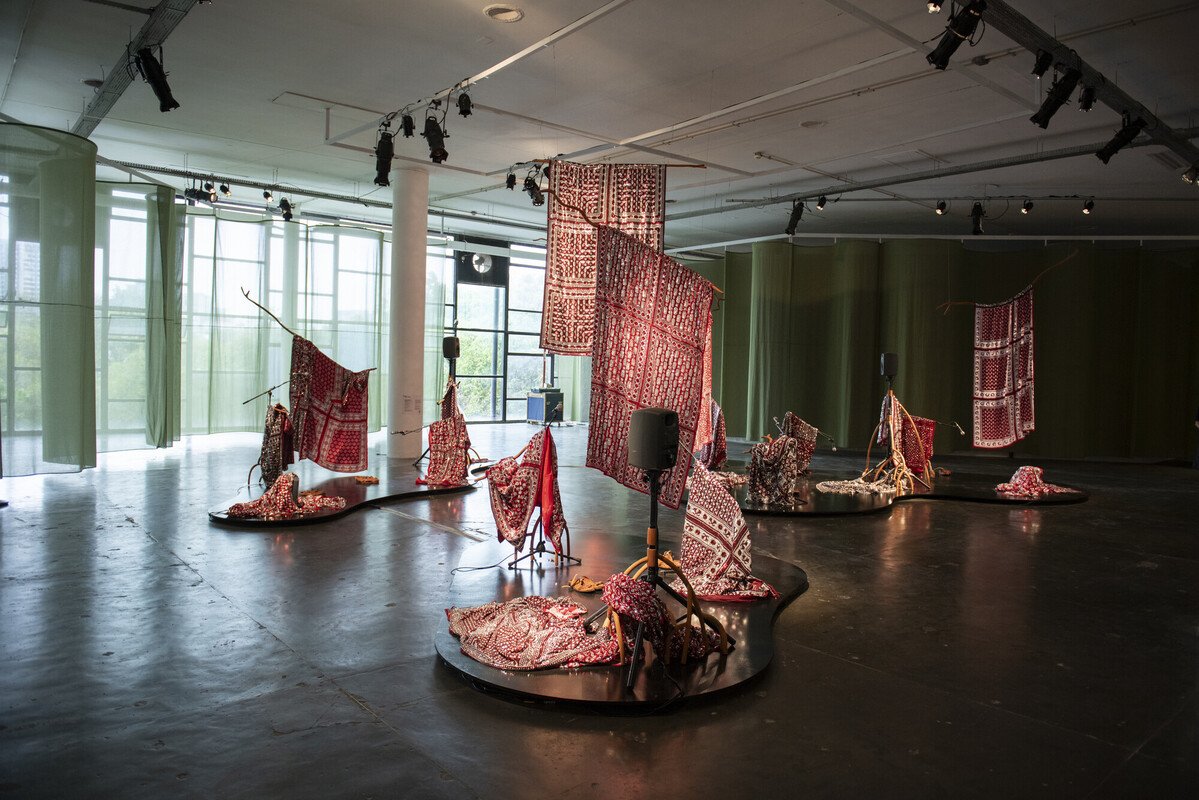
Installation view of L’odeur de la terre après le feu
Et la promesse des souffles:
Pour l’obsession d’une résonance,
étendre nos peaux,
Nos corps
O, à la chaleur encore incandescente
des cendres, by Myriam Omar Awadi, during the 36th Bienal de São Paulo © Levi Fanan / Fundação Bienal de São Paulo
The temporality of the activations, overall, becomes the main challenge of the Biennial. Without the constant activation, the pavilion, with its vast open spaces between the clusters of works, feels almost too empty. When the emptiness is not filled by the sonic landscapes, especially ones performed live, one starts to feel like they are walking from point a to point b, instead of joining the flow of the communal experience. To maintain the consistency of the live presence in the space is to preserve the organic essence of the curatorial proposal. I suppose experiencing this in the pavilion is also a part of being a traveler that walks the roads of humanity as practice.
Ekaterina Mastyukova is an art critic based in Rio de Janeiro
Double-click to edit...