

The Istanbul Biennal Adapts a Feline Strategy
Sara Rossling
Following a crisis in Istanbul's art scene that questioned the trust and agendas of leaders of top cultural institutions, including the Istanbul Biennial organizer İKSV and the Istanbul Modern, the curator of the 18th edition, Christine Thomé, launches The Three-Legged Cat as a robust program running from 2025 to 2027.
This cat sets off with all legs on the ground: generosity, love, and caring for infrastructures as well as local engagement constitute the curatorial recipe in response to a world, in the curator's words, "where life itself is under siege." Add to that a boiling stew of local grassroots demands for transparency and accountability within the biennial organization, a deepening precarious situation for artists and cultural workers in general, as well as a fatigued global biennial industry.
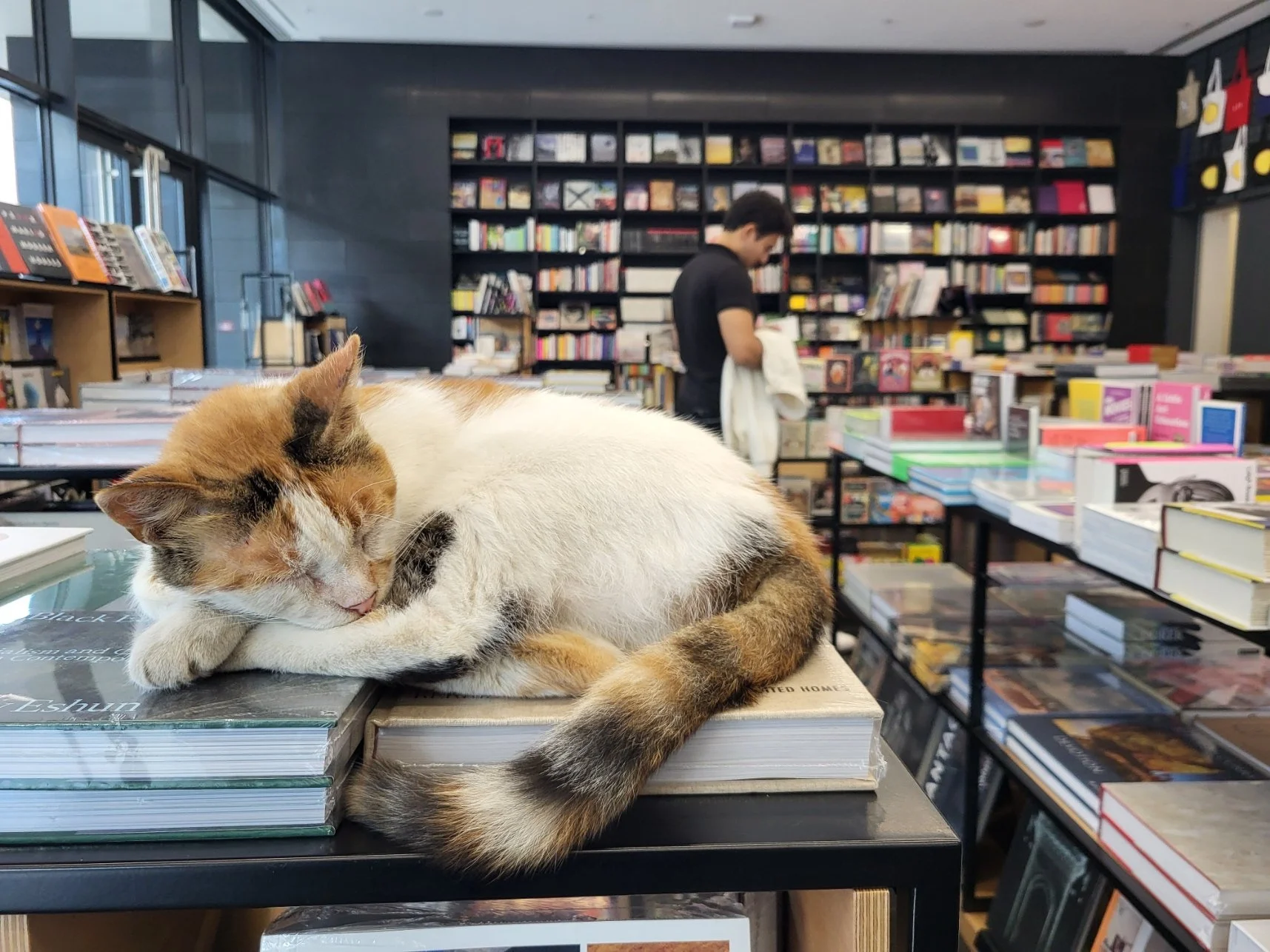
A cat at Arter museum shop, Istanbul. Photo: Power Ekroth
The first leg presents a biennial exhibition with 48 participating artists from various continents spread across eight venues in central Istanbul, along the Golden Horn. The second leg in 2026 will develop an academy in collaboration with local initiatives in a series of public programmes. In 2027, the cat rests on its third leg, bringing together what has been experienced and gathered along the way through a final round of exhibitions and workshops.
Cats are known for their independence and strong sense of integrity. Despite centuries of domestication, cats retain their wild instincts, shifting swiftly between play and fight, as well as between rest and sudden leaps. Their remarkable ability to survive dangerous situations—such as landing on their feet from great heights—enhances the perception that they are survivors.

Christine Thomé. Photo: Tanya Traboulsi
Award-winning curator Christine Thomé has spent decades building infrastructure and fostering community within the art scene in the Middle East and her hometown, Beirut, through the non-profit organization Ashkal Alwan, which she founded in 1993. She is well-versed in survival methods and creative strategies, often navigating scarcity and reallocating resources for fair and optimal use. For the Istanbul Biennale, Thomé allocated a portion of the budget to renovate a building located in a historic maritime area, which was converted into a contemporary waterfront development. The renovation is a gesture to remind us of Istanbul’s historic connection to the Eastern Mediterranean region and the city’s role in trade via the Bosphorus Strait, which links the Black Sea to the Mediterranean. Thomé has used similar strategic approaches to initiate synergy effects before, as when she curated Sharjah Biennial 13: Tamawuj in 2017. At that time, she redistributed some of the budget to support satellite projects in places as Haifa, Beirut, and Ramallah.
In her opening speech of the Istanbul Biennial, Thomé dedicates her work to all those who have passed in genocides in Gaza, Sudan, and Congo, and adds that she cannot mention all the places, for reasons. The notions of ‘“self-preservation” and “futurity,” central to the curatorial orientation of the biennial, affirm but also complicate this imperative, she states.
As a visitor, I encounter artworks that reflect pressing issues such as the right to exist, the right to land, and diversity, which are questions made visible in the biennial through historical connections. Each venue is thoughtfully curated, taking into account its spatial features and the site's historical context. Through openly formulated texts about the works and by eschewing categorizing sub-themes, pitfalls of short-sighted instrumentalization or didacticism are avoided. Often, the curating falls into the logic of “a room of one's own,” and most often the immersive and complex works require it. The carefully installed artworks showcase the time spent with each artist and the attention to every detail. This form of curating breathes generosity and love for art in such a way that it roots the artists’ works in the world.
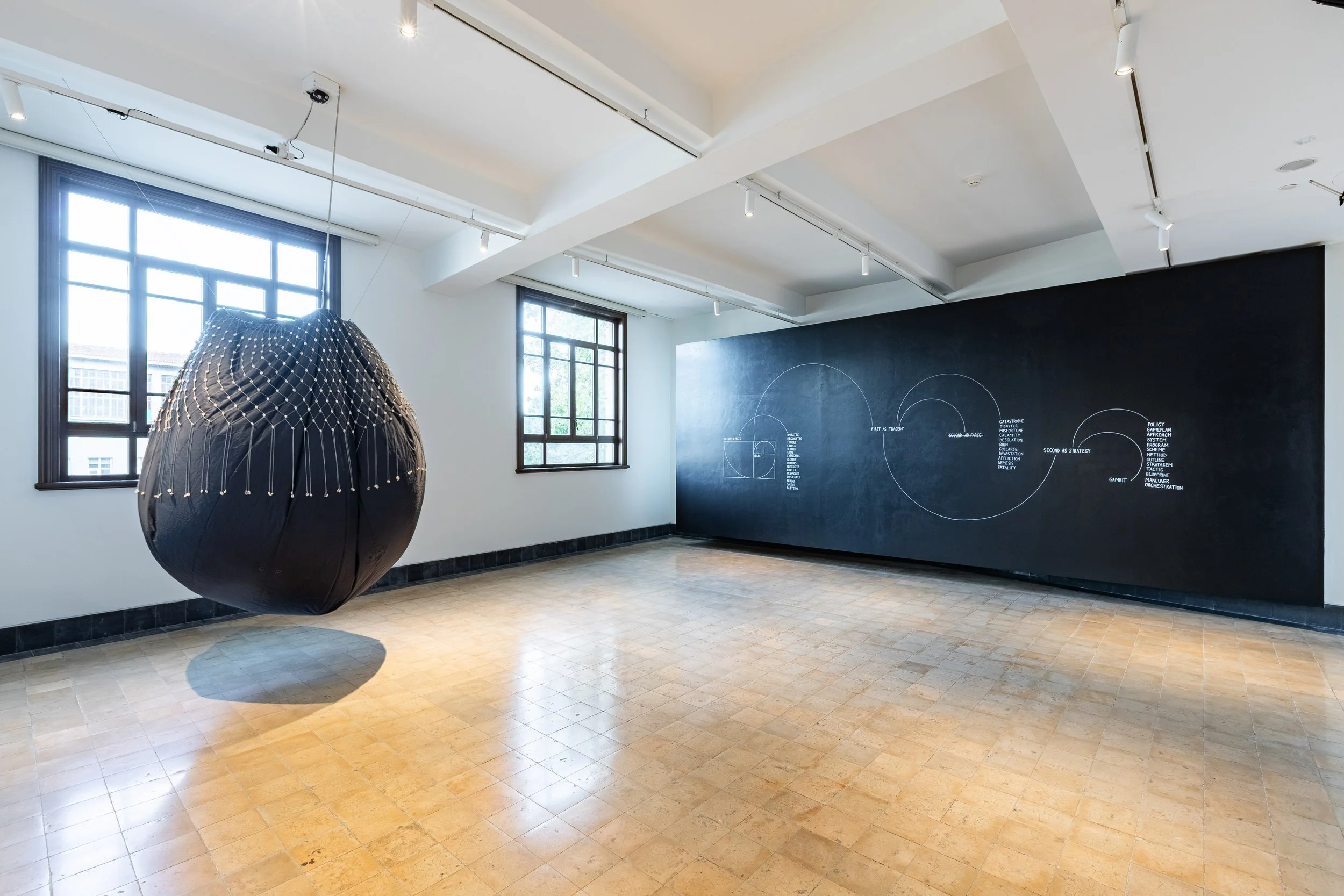
Nolan Oswald Dennis, installation view at Galata Greek School, 2025. Photo: Sahir Ugur Eren
Many noteworthy works are on view in the biennale, only some of which can be highlighted in this text. At the historic Galata Greek School, themes of persistence, resilience, and systems, along with greater structures, resonate with me. Nolan Oswald Dennis' sculptural works and wall drawings on black cosmography, and Merve Mepa’s installation of data flows and cloud technologies, influenced by hacktivism and open-source movements, remind us how humans systematize the world as well as hidden structures. In contrast, Simone Fattal’s captivating ceramic sculptures embody the impact that such systems can have on us as individuals.

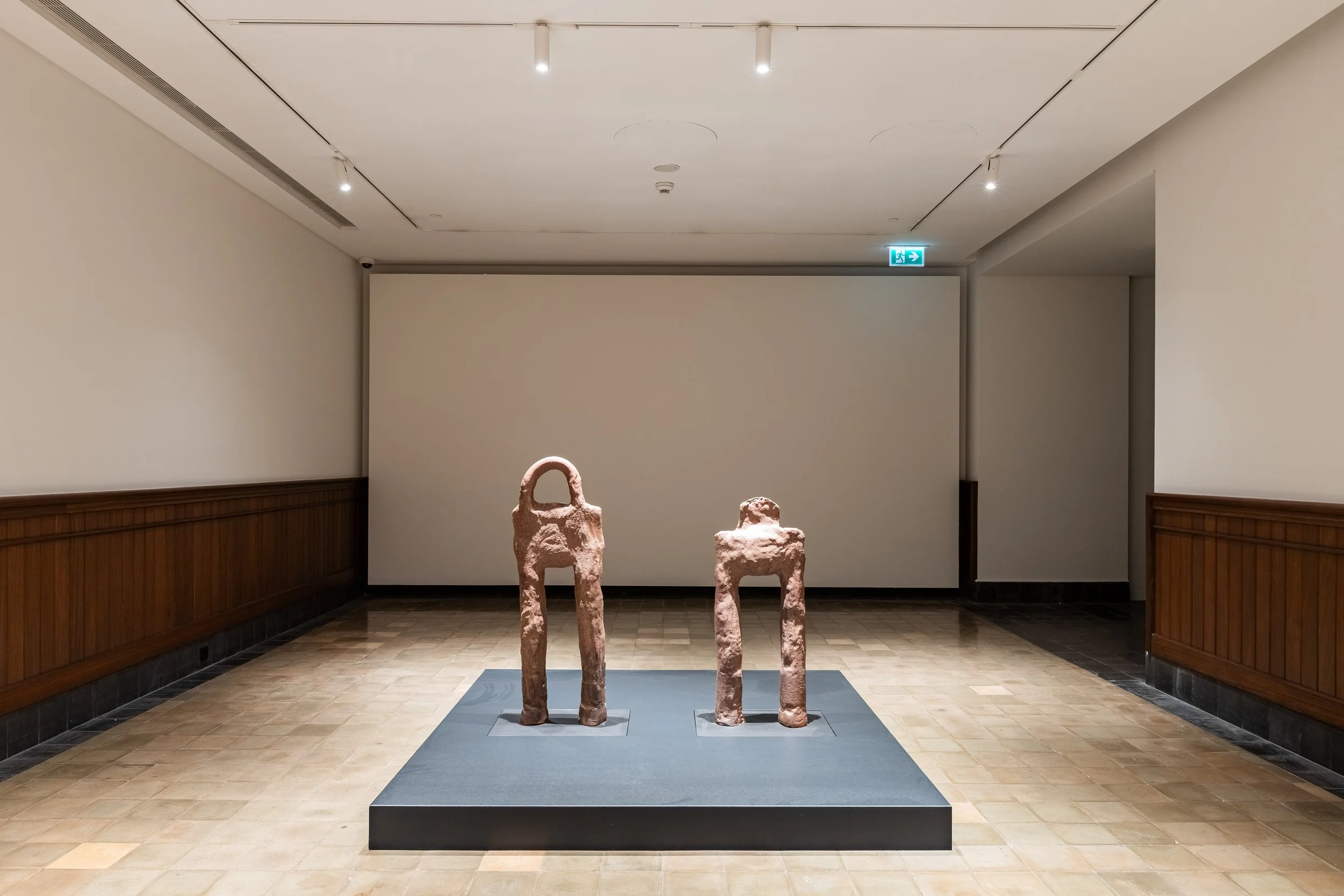
Images of installations by Merve Mepa to the left and Simone Fattal on the right on the Galata Greek School, 2025. Photo by Sahir Ugur Eren
Kongkee’s animated film, Dragon’s Delusion (2017), merges an ancient story of the legendary poet Qu Yuan from the Warring States Period (c. 481-221 BCE), a transformative era in Chinese history, with a futuristic, sci-fi world, depicting Qu Yuan as a cyborg. The film explores existential and philosophical issues through the dilemma of whether machines possess emotions or merely function as tools. The work conveys a tragic tale of suicide and creates a new ending to this story.
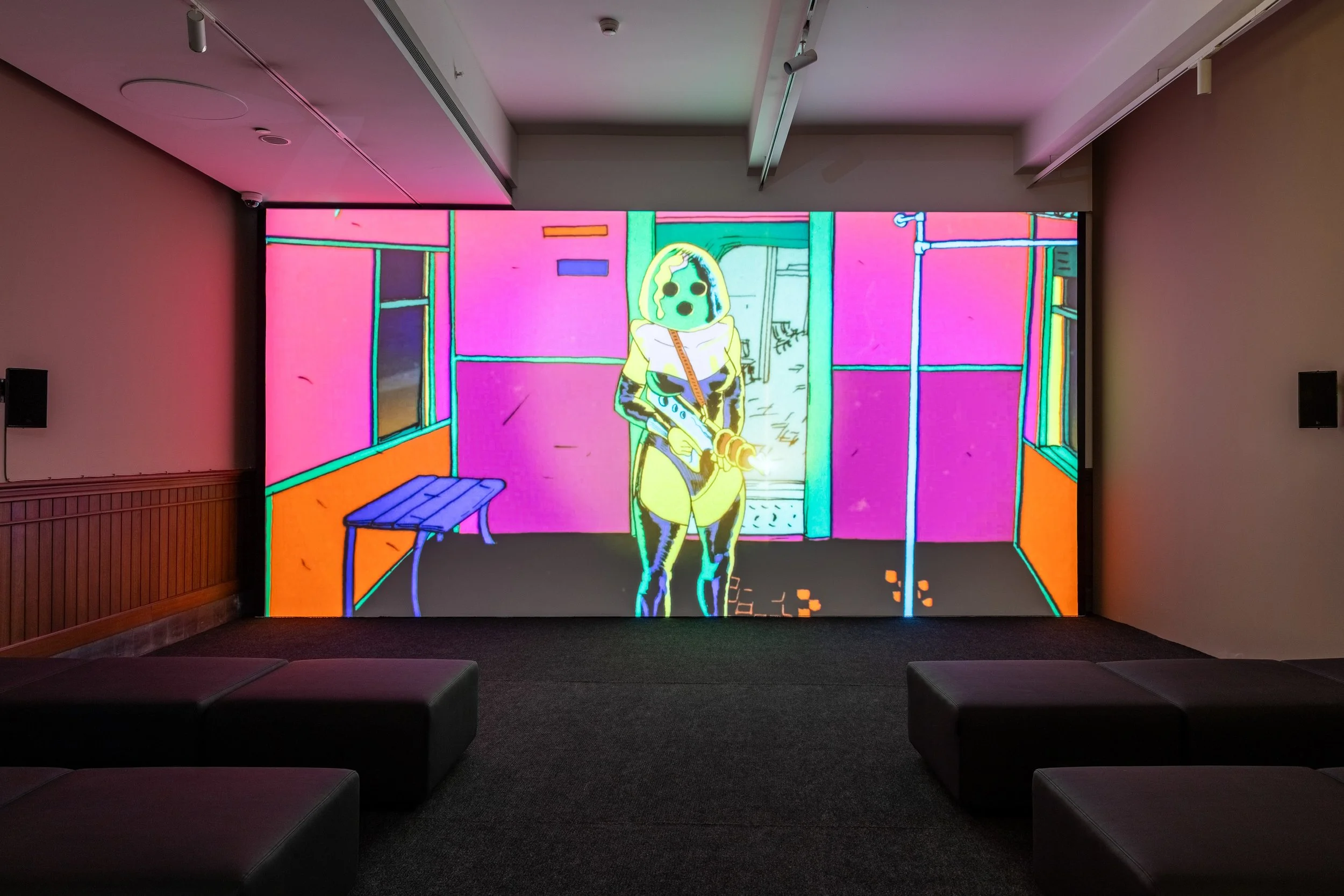
Installation view, Kongkee, Dragon’s Delusion, 2017 at Galata Greek School, 2025. Photo: Sahir Ugur Eren
In two mirrored side rooms, Akram Zaatari shows a series of small-format acrylic paintings of wrestlers struggling in different positions, created during the pandemic and lockdowns. On the same floor, in another room, Seta Manoukian presents a series of paintings that reflect on how the Lebanese civil war, which has profoundly shaped her life and artistic practice, for a long time permeated all parts of society. Rather than depicting tangible and direct violence of war, these paintings uncannily allude to the psychological after-effects of the conflict.
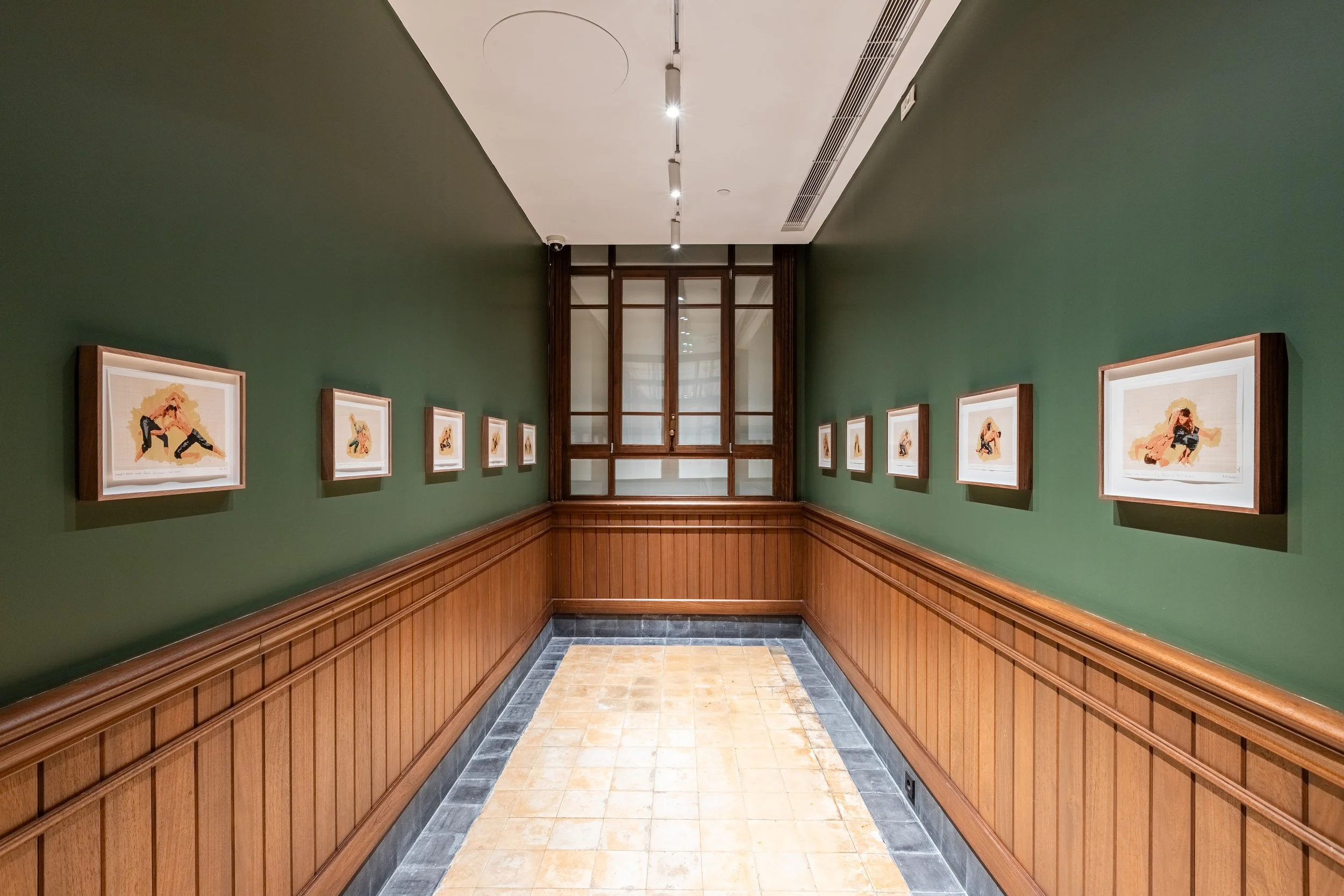
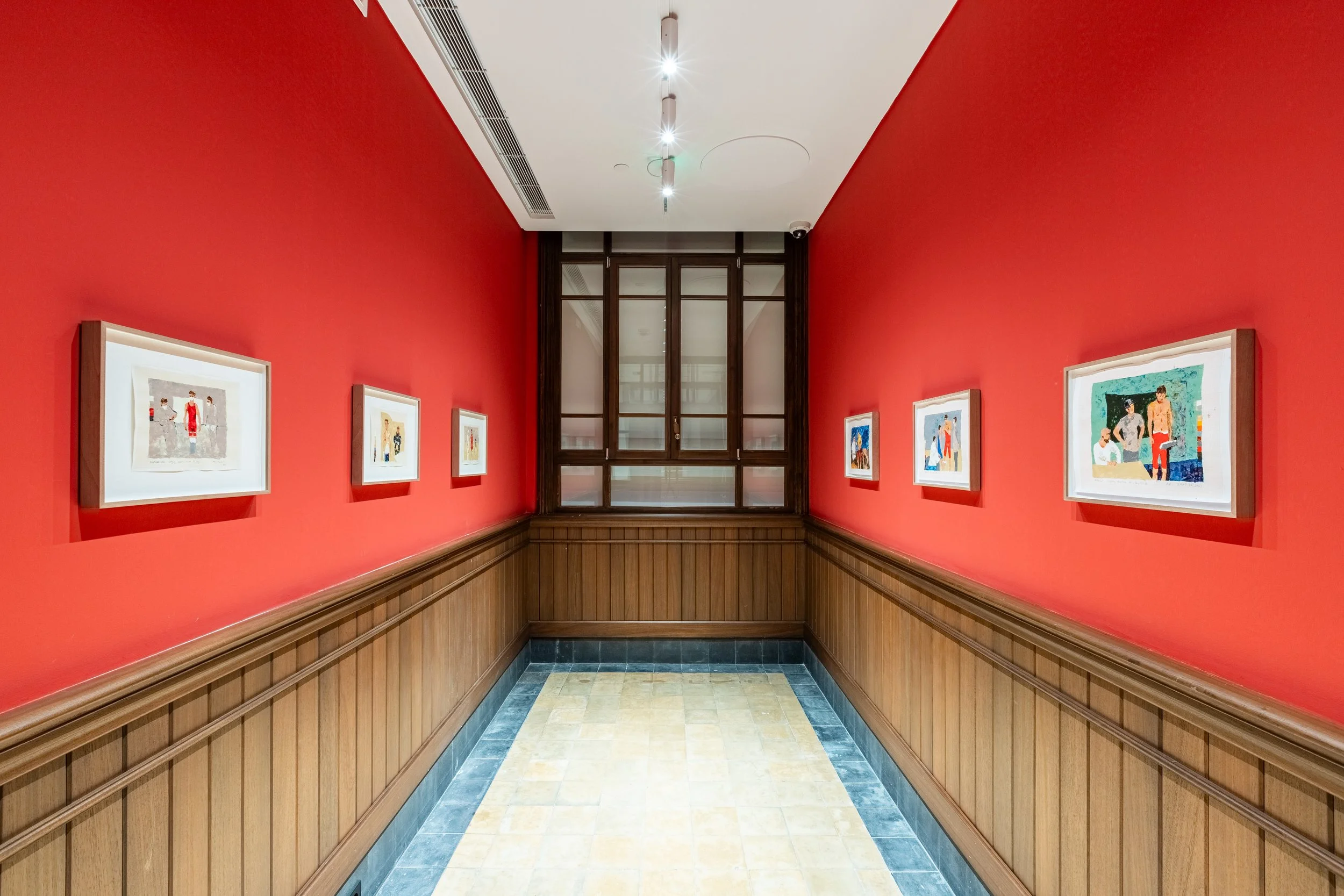
Installation images from Akram Zaatari’s two rooms, Galata Greek School, 2025. Photo: Sahir Ugur Eren
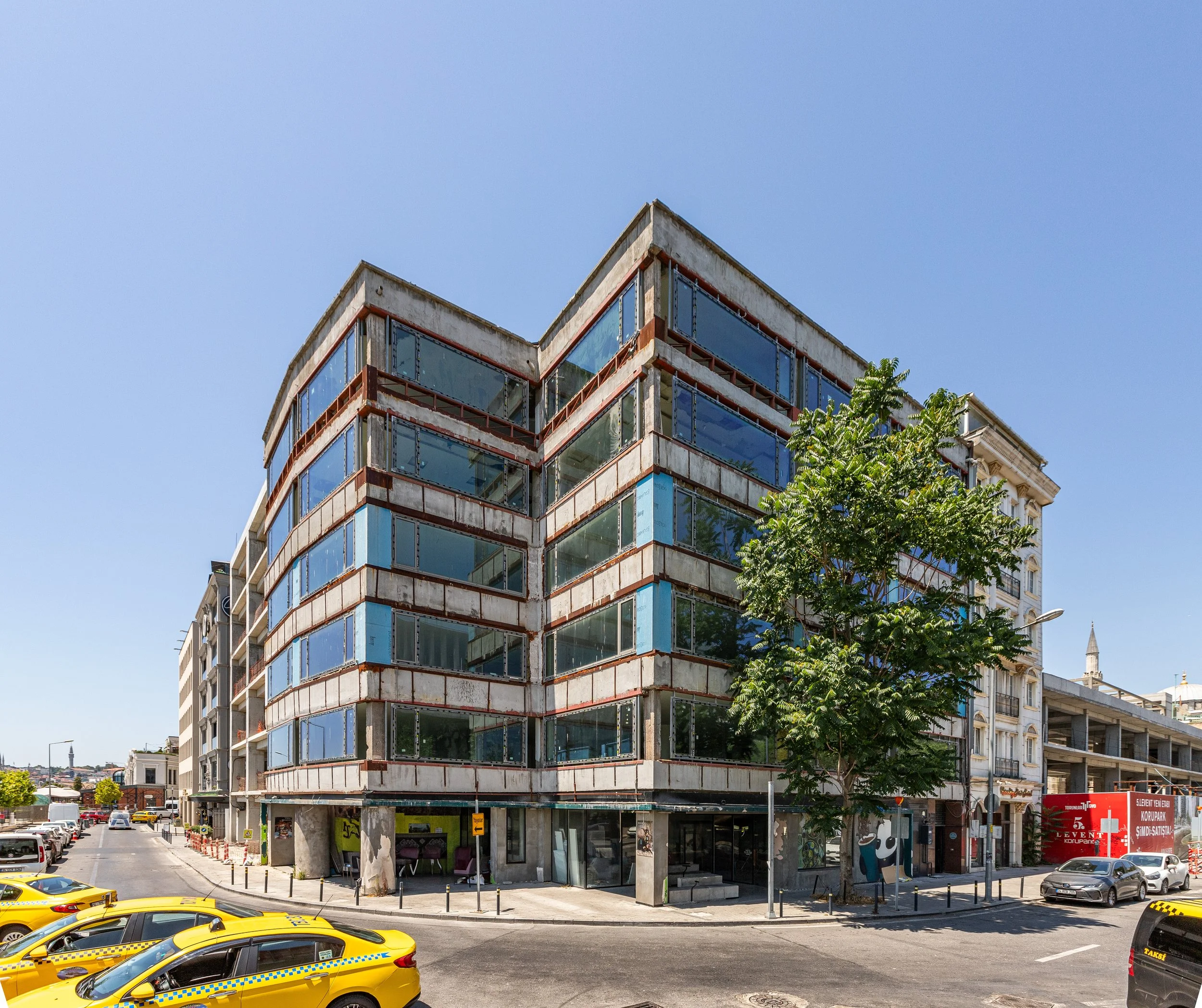
Zihni Han
Seventeen artists show their works in the newly renovated five-story building, Zihni Han. The hanging varies between airy installations and a proximity between a couple of artworks. The exchange between the artworks unfolds vertically too through the building, where the different floors sometimes interlock. From works that manifest and delve into physical labor and agency, the curatorial path leads to works that embody how ancient physical practice can be a portal to spiritual dimensions. At the top of the building, the exhibition shifts to evoking more existential thoughts, against the backdrop of our present.
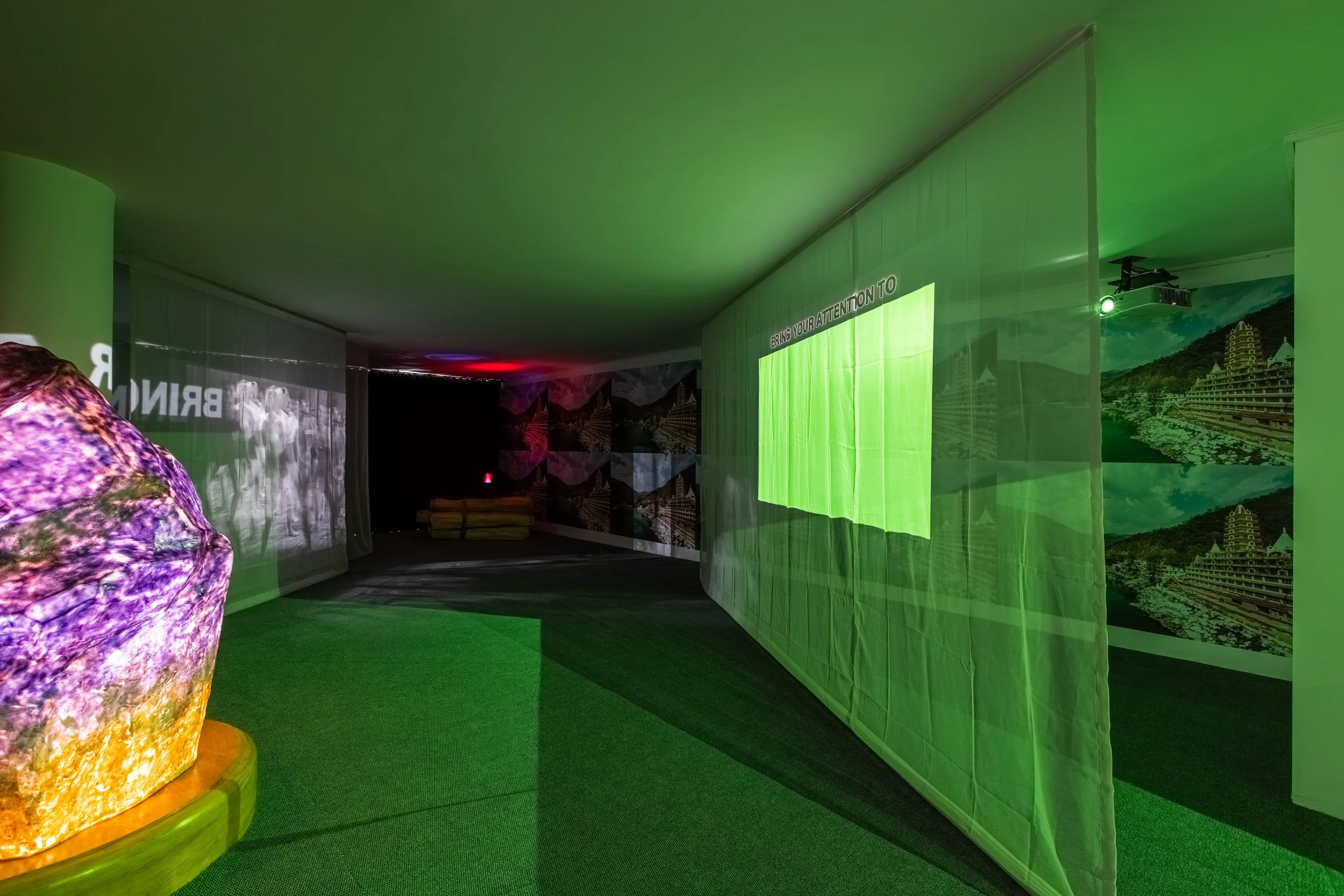
Installation image, Jasleen Kaur, My Body is a Temple of Gloom, 2021 at Zihni Han 2025. Photo: Sahir Ugur Eren
On one floor, Jasleen Kaur presents the video installation My Body is a Temple of Gloom (2021), which critiques the commercialization of Indigenous spiritual traditions. The work visualizes a global health culture of practices such as yoga and meditation, and how lifestyle marketing commodifies and appropriates ancient traditions for the middle and upper classes. In another room, the atmosphere is different. Rafik Greiss’s slow and mesmerizing triptych video installation from 2024 portrays the rituals of mawlid (“anniversary” in Arabic), such as birthday celebrations for historical, local Sufi saints, who serve as mediators to God. Within this spiritual practice, men move rhythmically, in a trance. With their eyes closed, the participants are guided by their inner experiences. They occasionally lose their footing but are embraced and supported by their fellow participants. For me, this evokes a moving sense of intimacy.
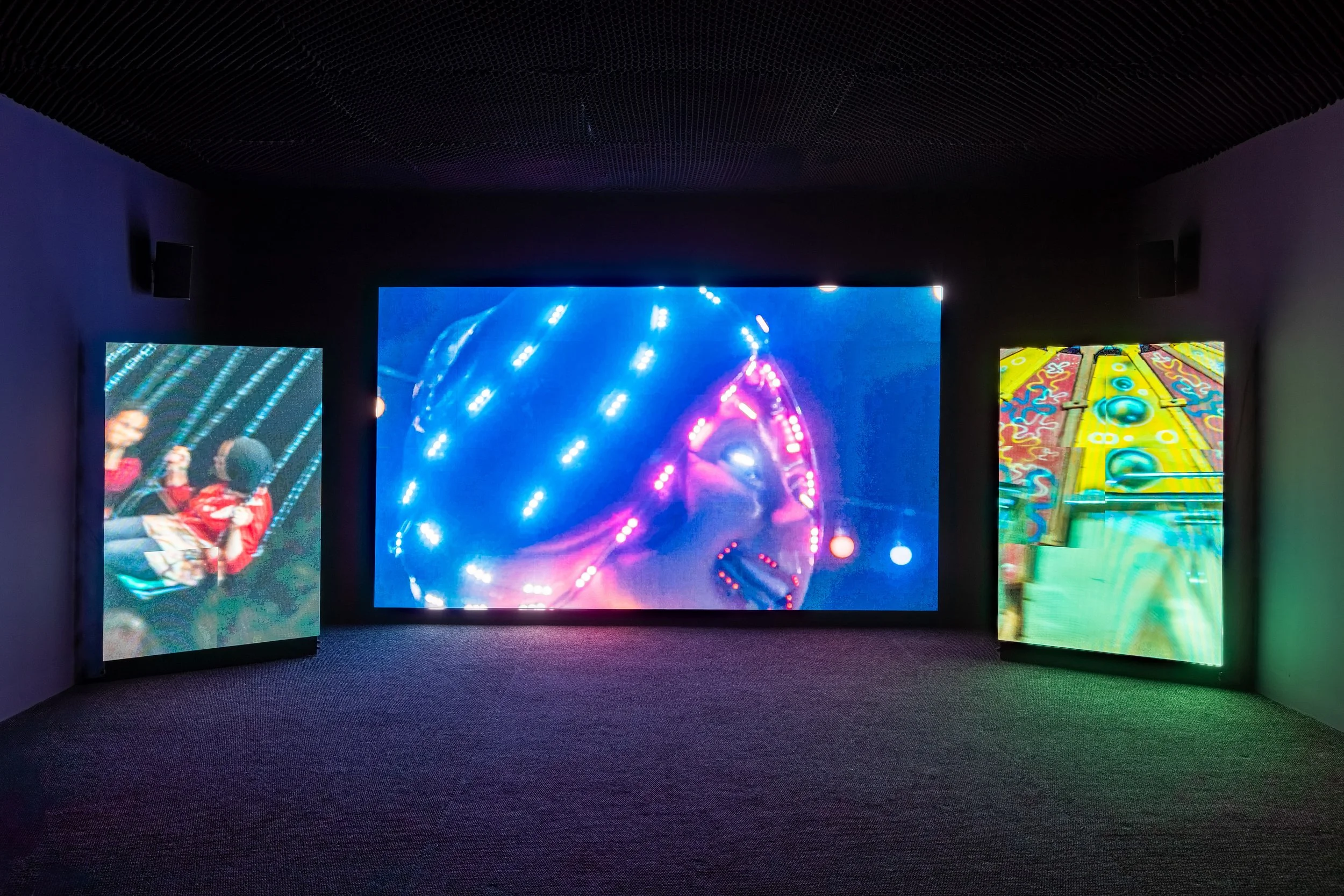
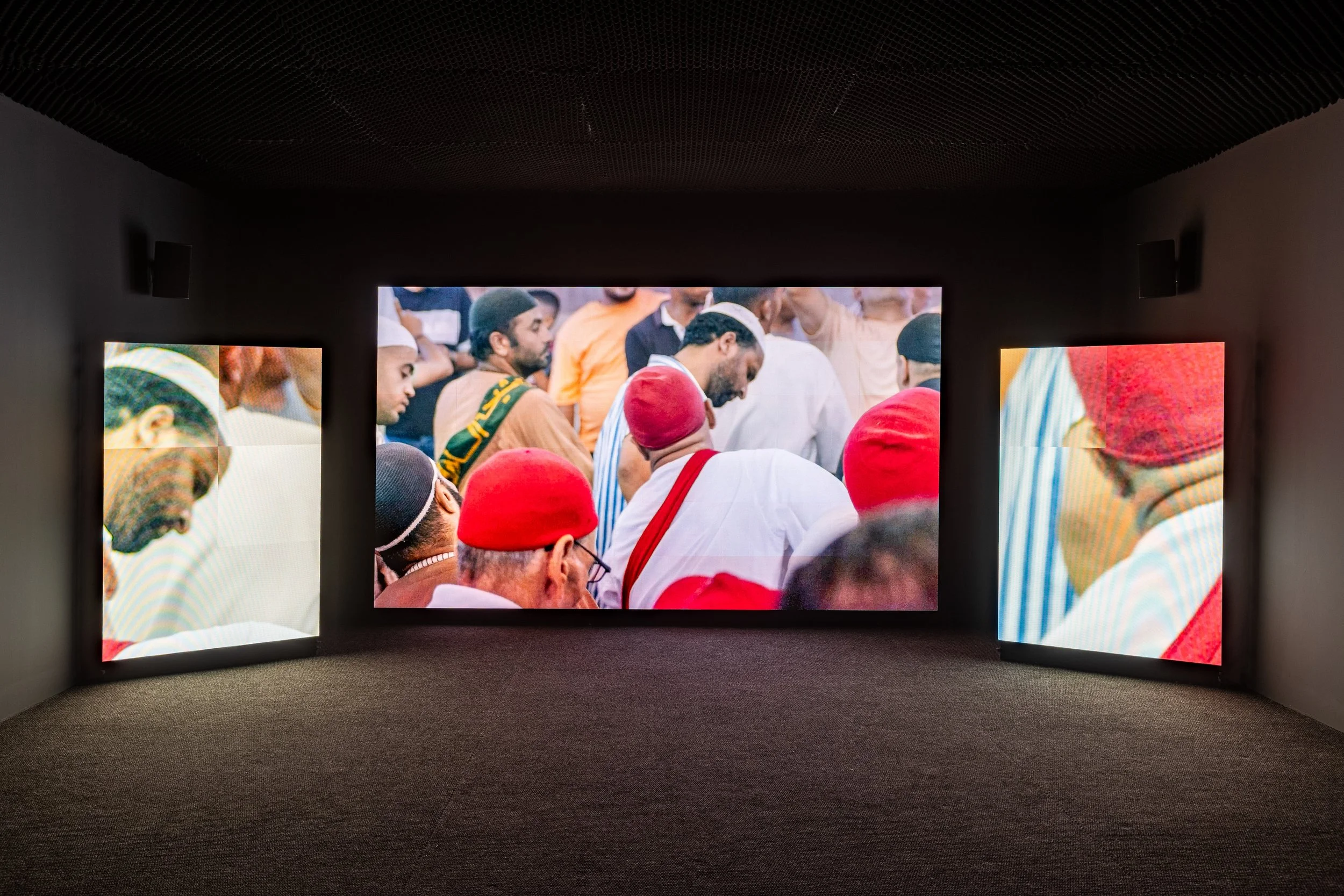
Rafik Greiss, installation shots of the tripthyk The Longest Sleep, 2024, installed at Zihni Han. Photo: Sahir Ugur Eren
On another floor, Selma Selman’s punk installation Motherboards (2025), accompanied by a performance during the opening, is on display. The installation features dismantled electronic waste spread across the floor of the room. A plinth featuring an 18-karat gold teaspoon, extracted from circuit boards in devices, similar to an alchemical process, clearly visualizes its value and addresses financial living conditions for socio-politically marginalized groups.
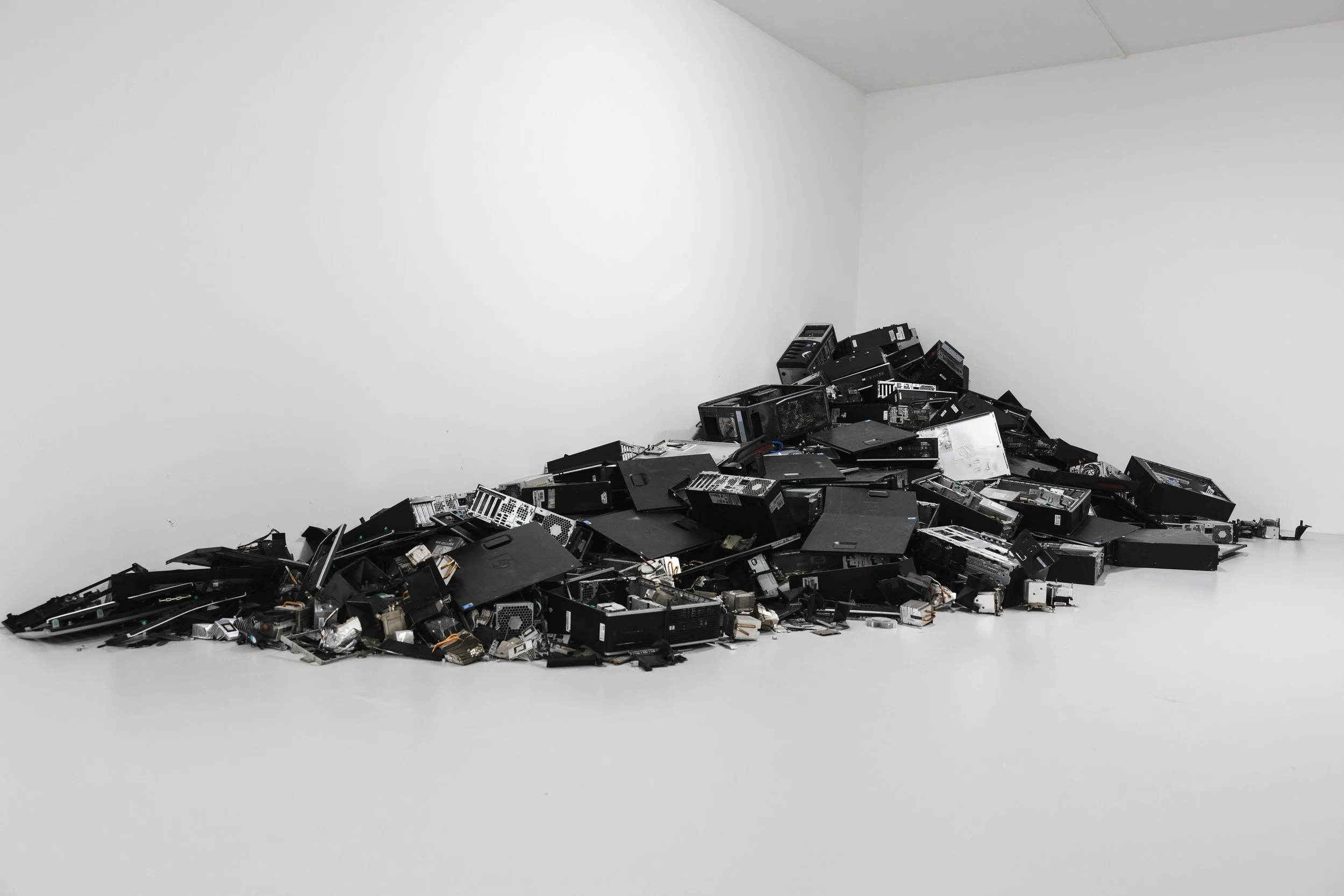

Selma Selman, Motherboards installed at Zihni Han. Photo Sahir Ugur Eren
In the floor at the top of the building, including the roof terrace, Marwan Rechmaoui presents an interactive installation, which takes shape as a playground. (see Studio Conversation with Rechmaoui here). Wooden sculptures form enlarged toys and colorful playground equipment occupy the entire floor space. Through a wide glass wall, the mile-long view of the city and the Bosphorus provides a contemplative backdrop to the work titled Chasing the Sun (2023-2025). The scale of the toys emphasizes their significance, and visitors may try the swing or the seesaw. In his practice, Rechmaoui explores layers of social and political histories of Lebanon and the broader Arab world. The work conceptualizes how toys and the urban fabric shape its citizens. The work label on the wall reminds me of the parallels between play and those of war, where every game produces winners and losers, and, symbolically, the “killing” of the latter.
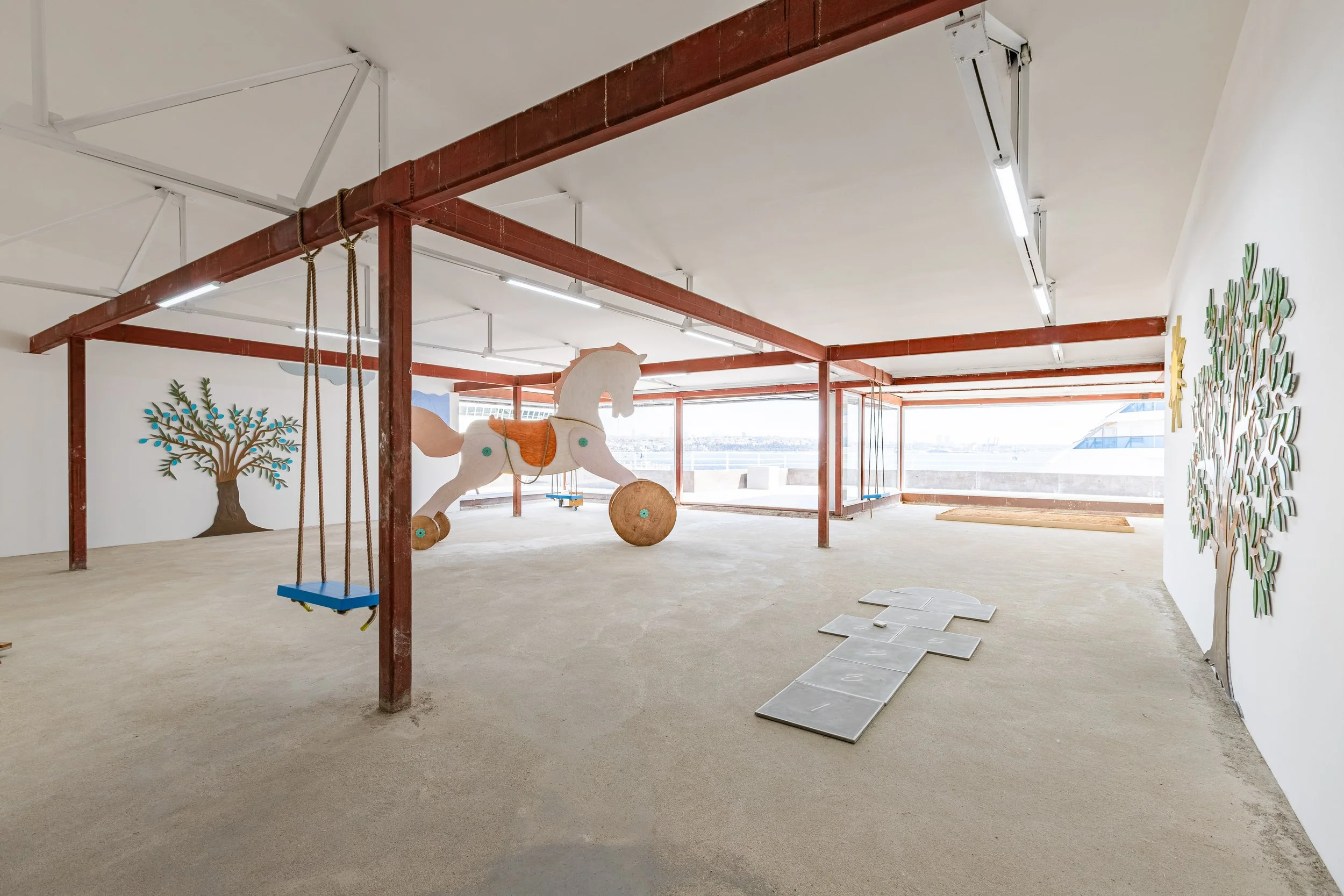
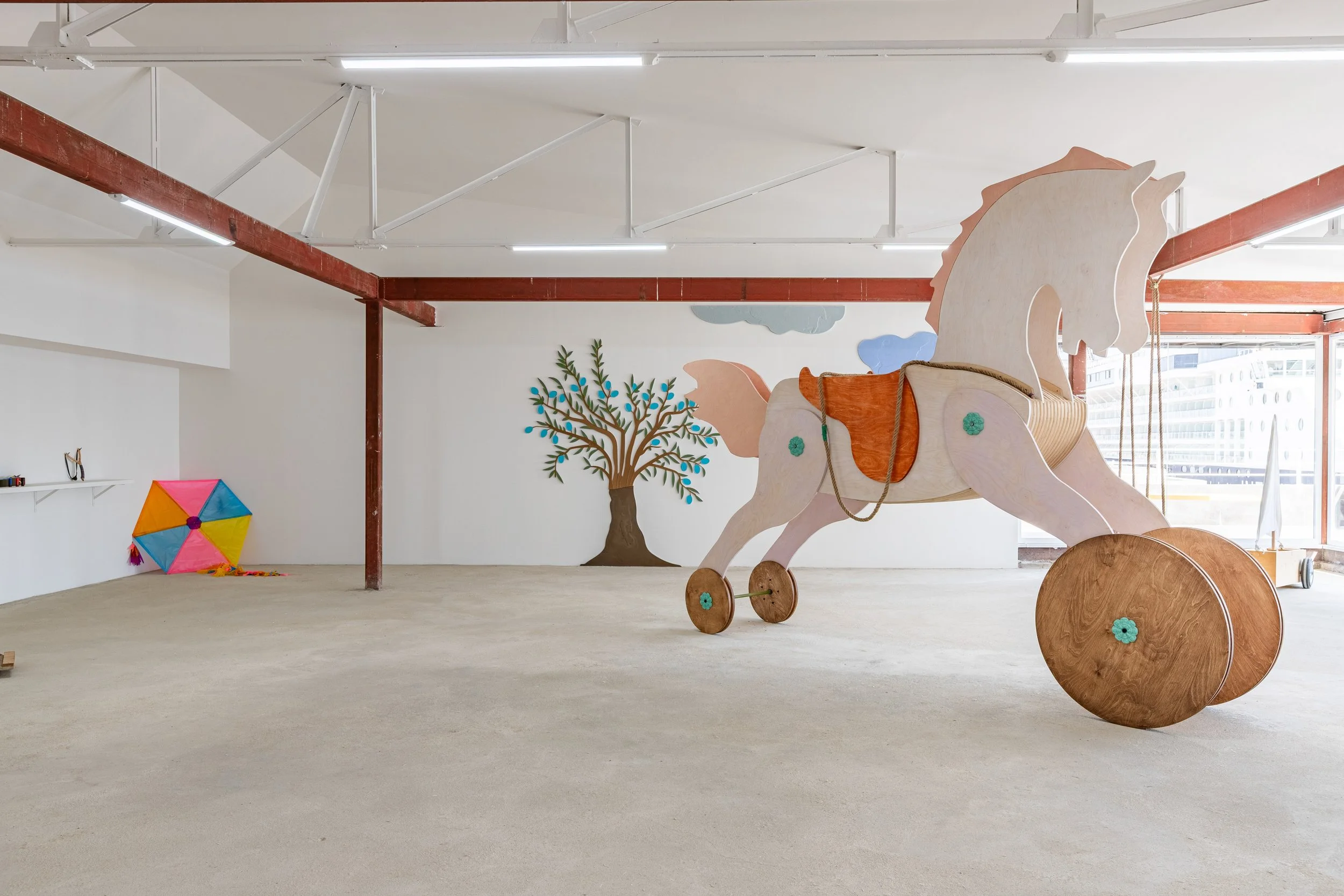
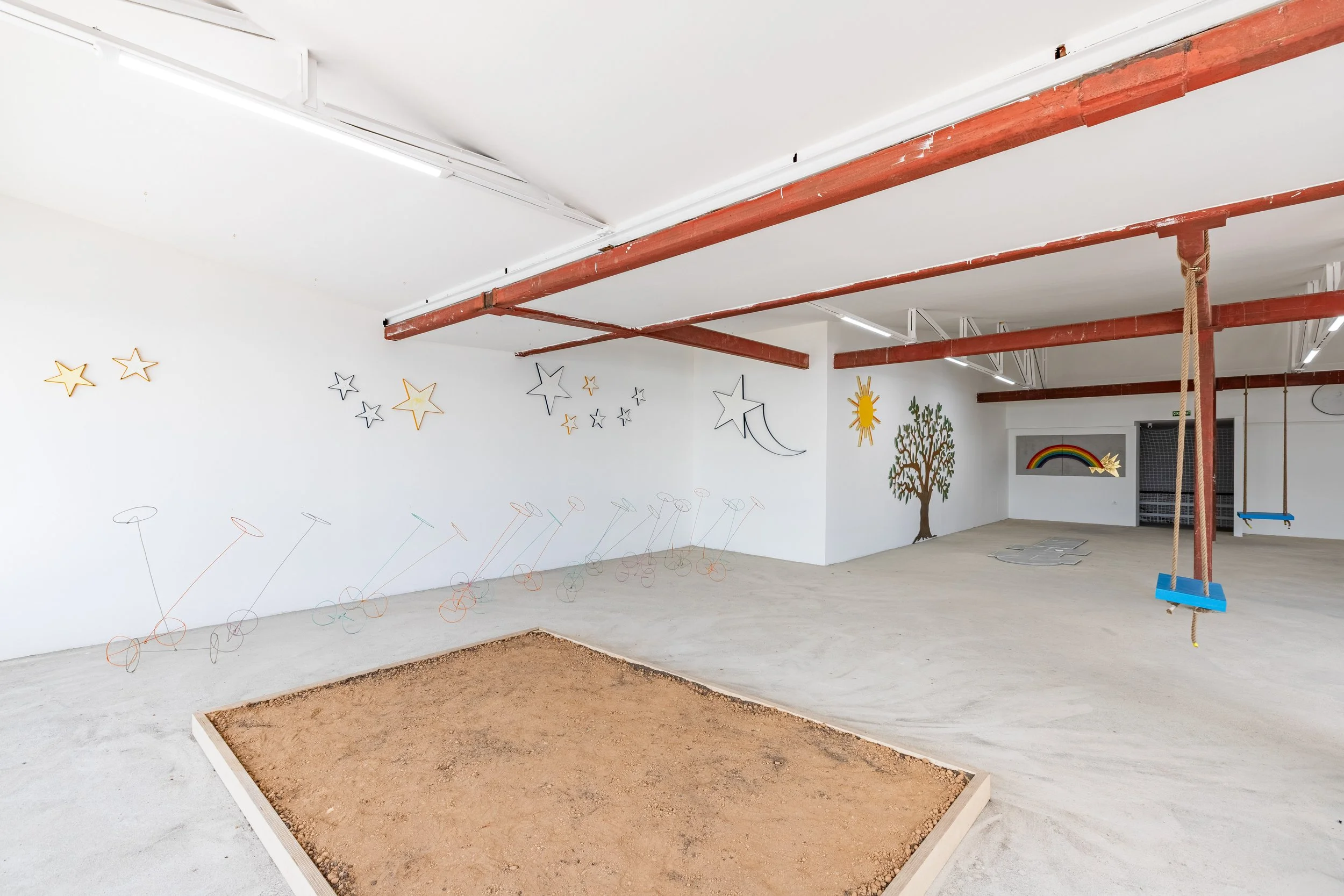
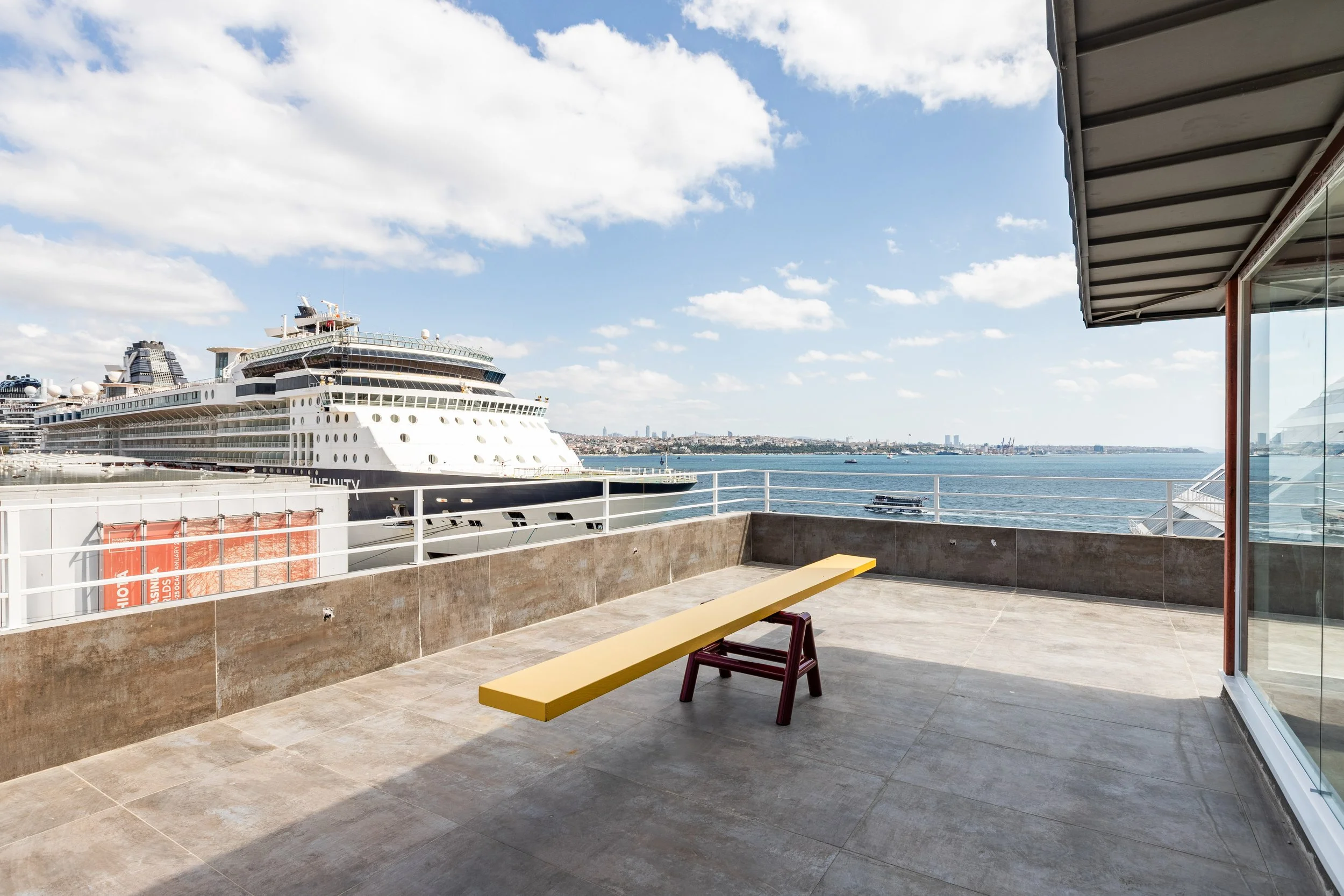
Installation views from Marwan Rechmaoui’s installation Chasing the Sun, 2021-2023 installed at Zihni Han 2025. Photo: Sahir Ugur Eren
Upon reviewing the biennial as a whole, which is no easy task, I realize that research-based practices that have been prominent in contemporary art in the Middle East since the 1990s, characterized by artists such as Lawrence Abu Hamdan, Walid Raad, and Marwa Arsanios, are not that present.
Through Thomé's curation, selection of artists and works, and decisions such as the renovation of Zihni Han, there is a gesture that historically underlines Istanbul's connection to the “East,” the region where the sun rises. The gesture wants to remind us of Constantinople’s history and cultural significance in trade and politics. Though like many other parts of the world, Turkey and Istanbul are different places today. Thomé is a clever curator. She doesn’t engage in dialogue with the prevailing political climate; instead, she thinks long-term and works towards her vision, among other things, by building alliances that foster togetherness.

Dorunta Kastrati, A Horn That Swallows Songs (2025) installed at Cone Factory 2025. Photo: Sahir Ugur Eren
Cone Factory, however, is making some noise through Doruntina Kastrati's video and sound installation created specifically for the biennial. Kastrati's work, A Horn That Swallows Songs (2025), examines the situation of invisible labor, especially among the women who work in endless shifts in Istanbul's Turkish Delight factories. In my view, criticism of the Turkish Delight industry within the biennial context serves as symbolic. Those responsible for the working conditions include private companies, individual producers, and exporters who seem out of reach here.
Generally, the 18th edition of the Istanbul Biennial serves as a tribute to the city and a gift to the public, especially at a time when art experiences are essential for navigating the challenging times we currently face. In the catalogue, Thomé emphasizes that “artmaking is engaged as a counterpoint to erasure - in summoning what has been buried, in generating surplus from loss, and in projecting possible worlds, it becomes a form of testimony and an index of persistence.” Reading these words deepens my understanding of her commitment to creating a biennial that spans time and reflects on the past while strategically preserving spaces for art in the future.
Sara Rossling is a curator at Lunds konsthall and a writer, living in Malmö.
Related content:
Power Ekroth: om Istanbul biennial and beyond (Swe/Eng)
Marwan Rechmaoui: Studio Conversation
Cevdet Erek: Studio Conversation
Mike Bode: Studio Conversation
Double-click to edit...