

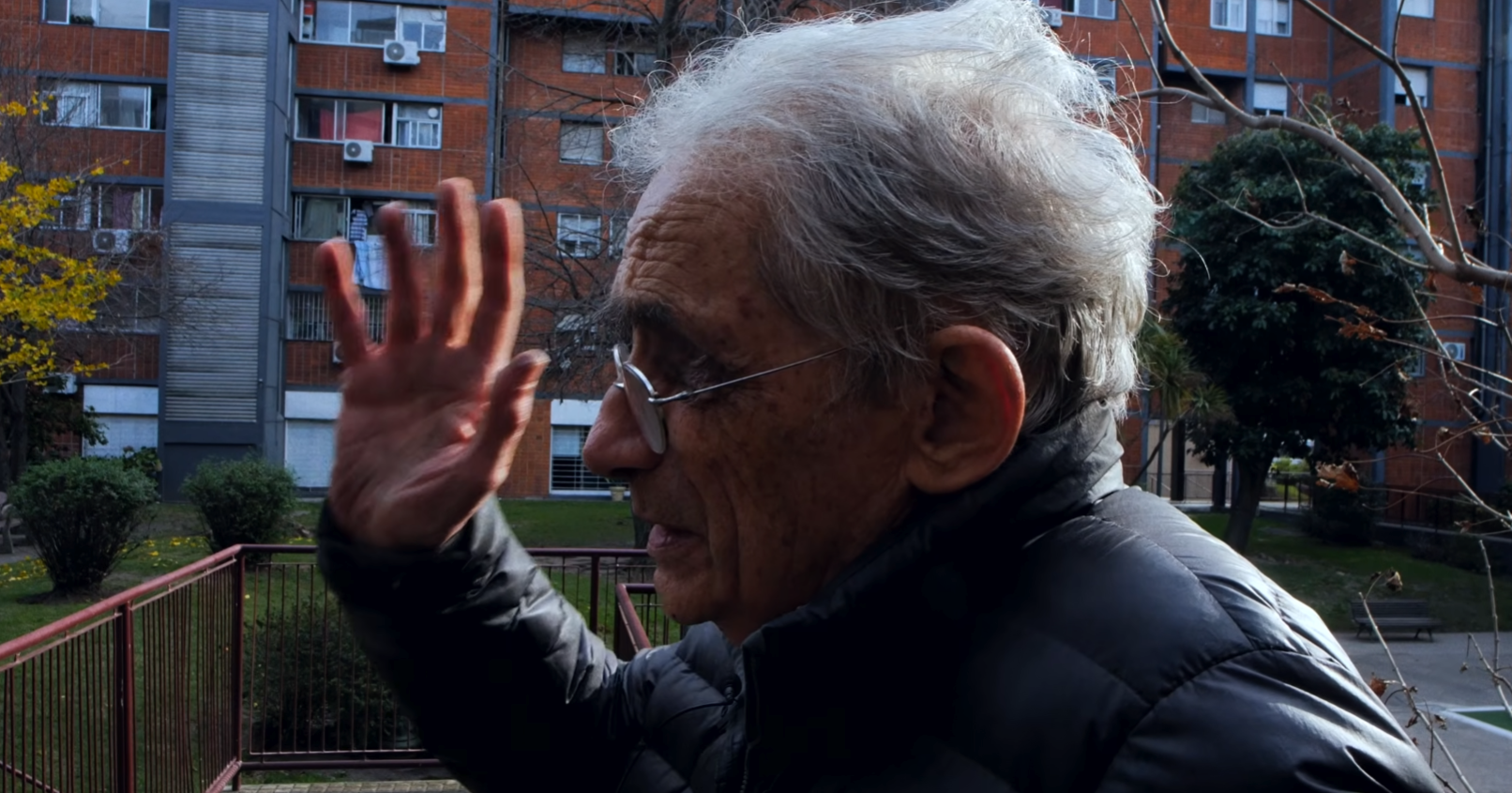
SITE Zones studio conversation / visita de estudio con Thomas Sprechmann y Pablo Fernandez: El Complejo Bulivar Artigas
Cámara y producción: Juan Pedro Fabra Guemberena
The Complejo Bulevar:
A Living Experiment in Community and Architecture
Matías Paparamborda
Notes from a lecture held at Bard College NY, 2024
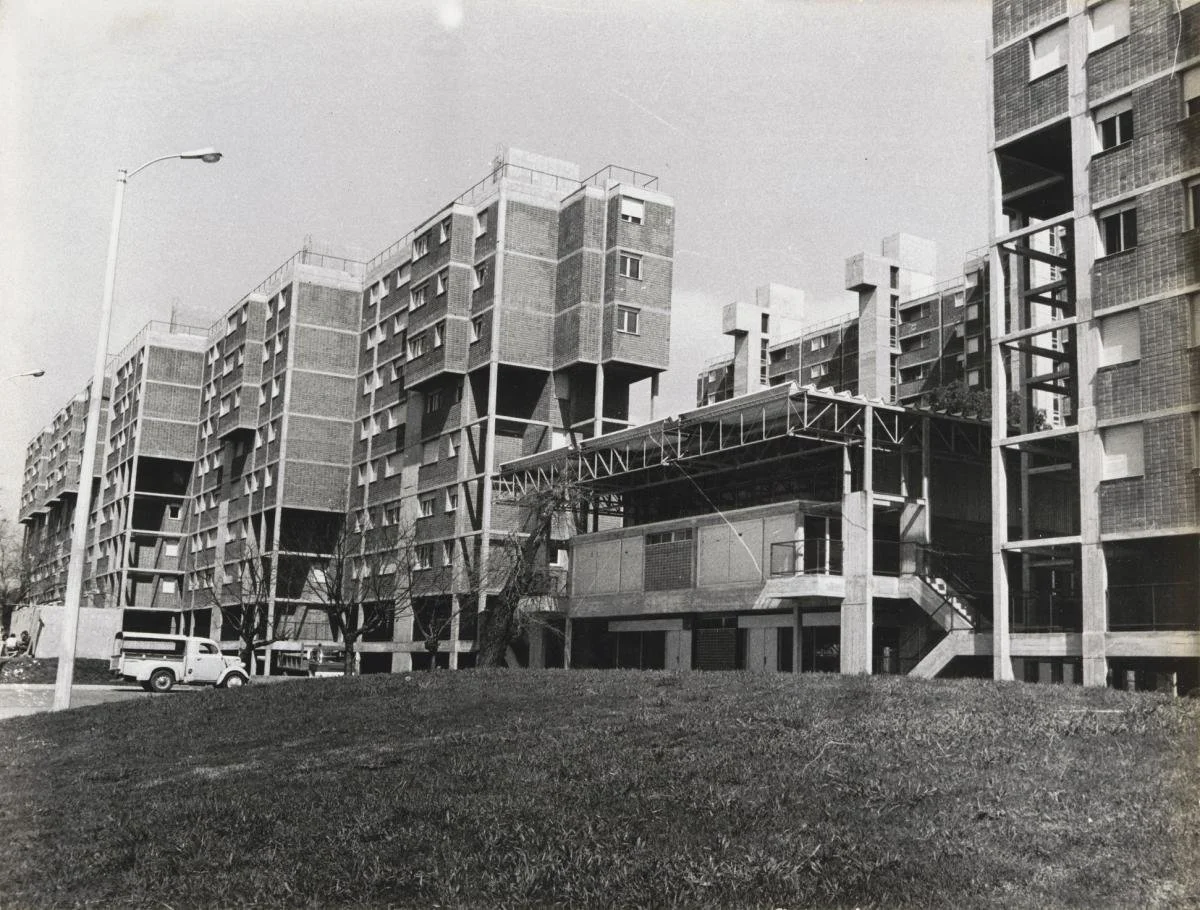
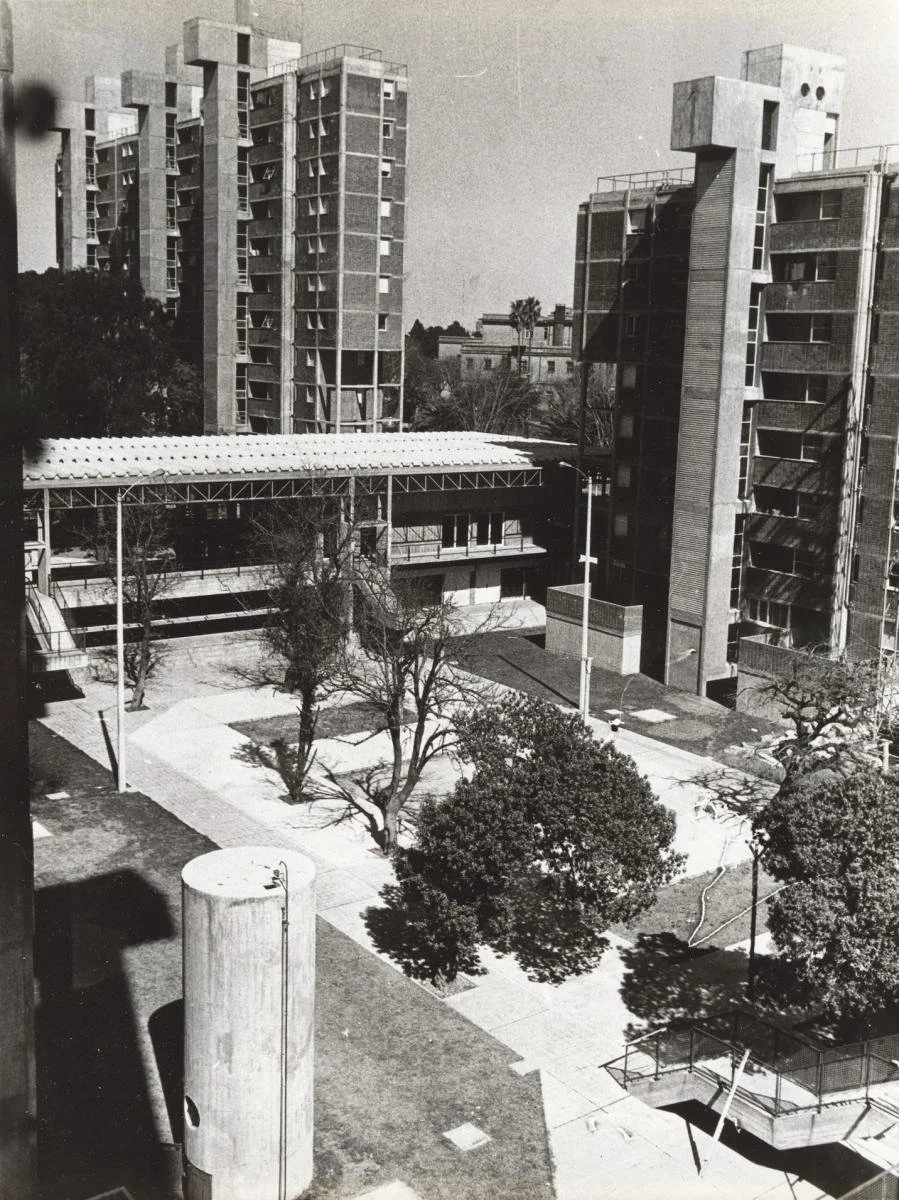
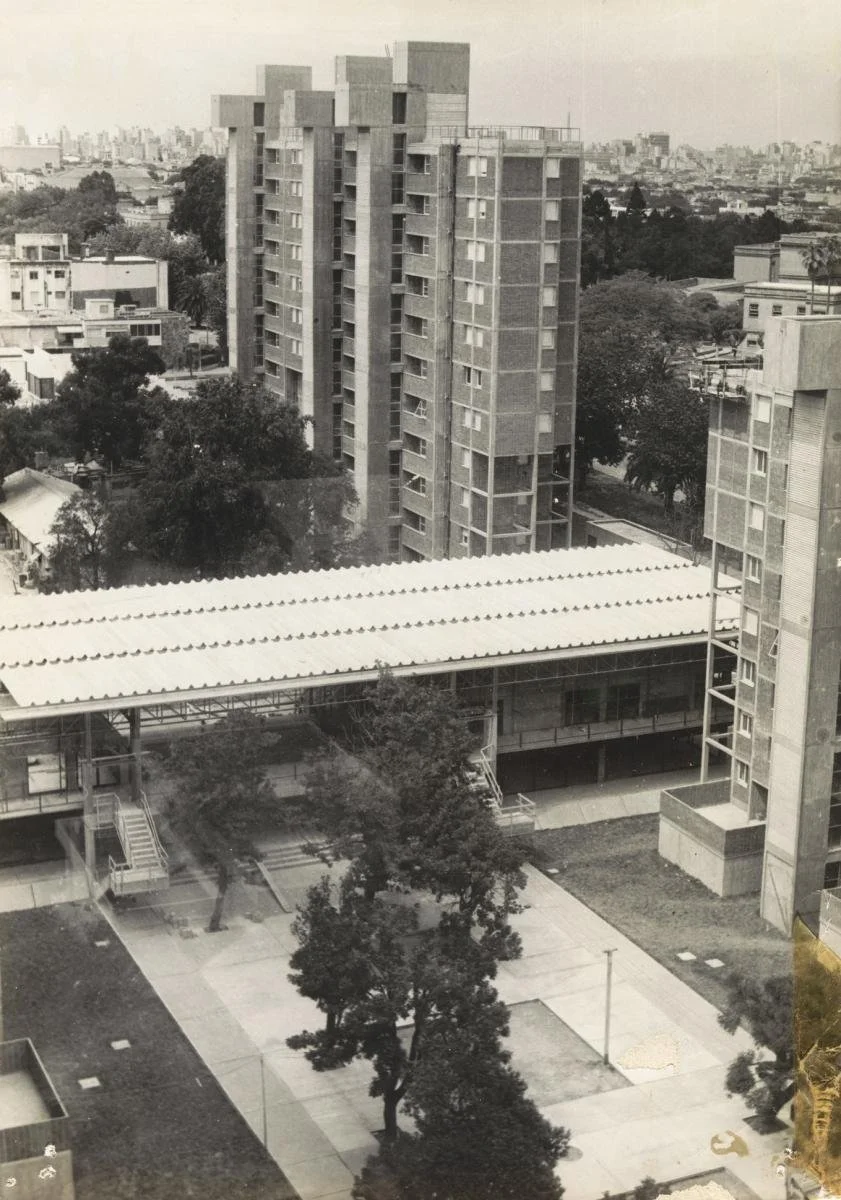
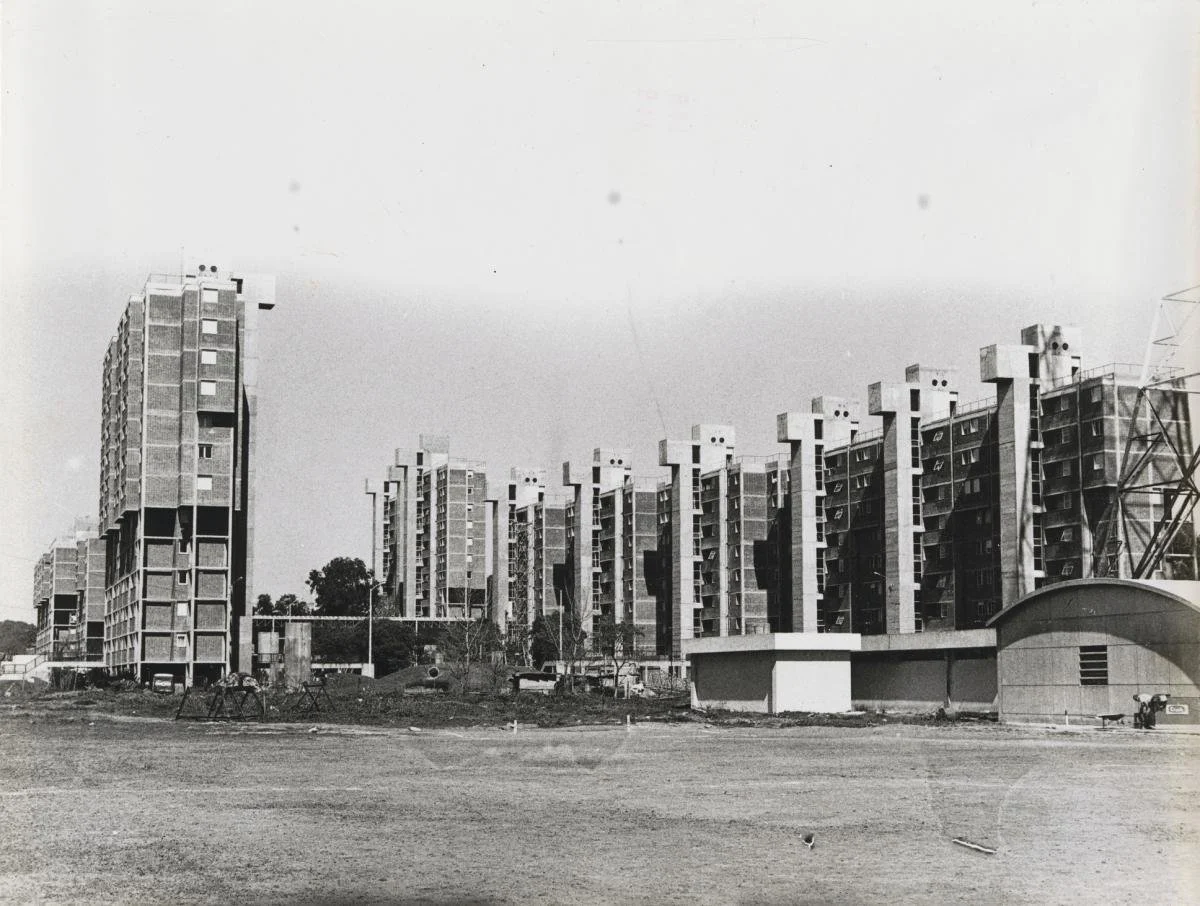
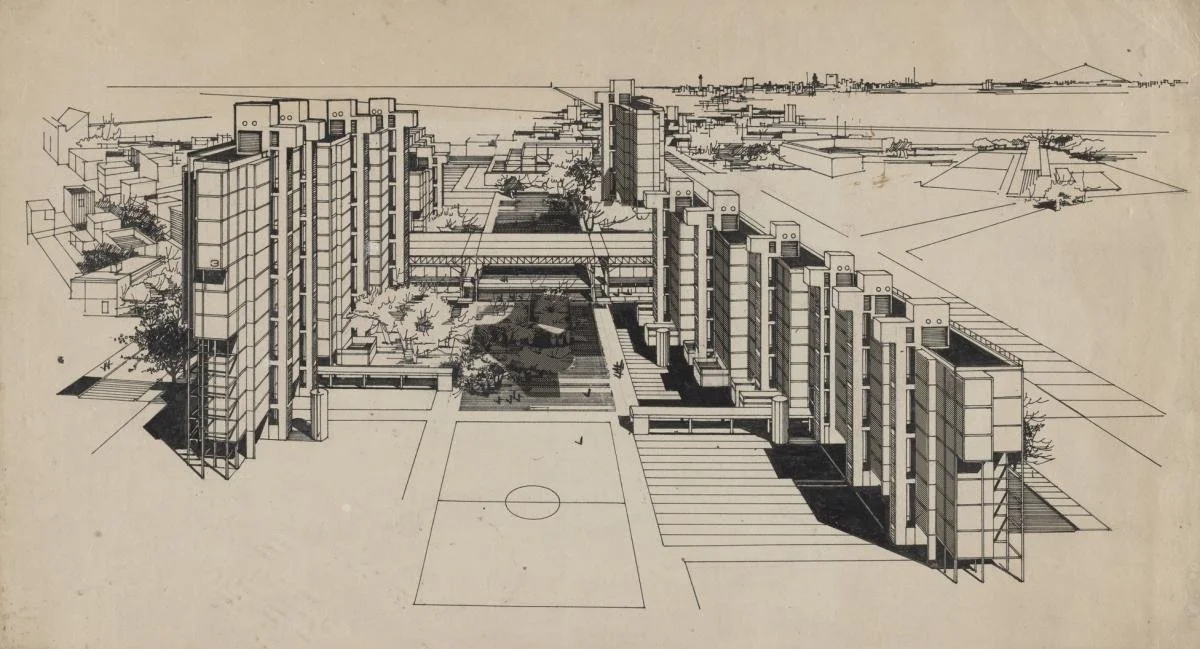
El Complejo Bulevar was designed in the 60s. It is a fairly big project, it comprises 332 units, and a diverse range of communal spaces, gardens, and shared facilities, so it took many years of designing, of discussions, etc., between the architects and the clients, so to speak. And it was finished at the beginning of the 70s. More precisely, the 24th of August 1974.
Why did I just say “clients, so to speak”?
That was because the project was designed and built, and this is not a coincidence, not exactly by clients but by, on one hand, a group of young enthusiasts – my parents among them –, people who had, in many cases, strong ideals, people who dreamt about a better society, a product of their time, the 60s.
But not only dreamers, they were people determined enough to actually try to build those dreams, to act them out, to make them true.
That proved to be really important at the time. Not only dreaming but actually doing.
On the other hand, there was a group of three architects who were also young, and therefore really receptive (young people are often more open to new ideas), but also excellent, even brilliant. Some, if not all of them, became really relevant over time. But that’s another story, which you can find out for yourselves.
*
The Complejo Bulevar project was among the first cases of cooperative projects built under the cooperative law of housing approved by the Uruguayan government in 1968. It was not the only one, but certainly one of the most successful, in my opinion, most probably because it’s a wise combination of three fundamental things:
1) Excellent architecture
2) A strong sense of community
and
3) Integration with nature
So, my intention today is to briefly discuss two of these three fundamental aspects: the pursuit of this sense of community, and the pursuit of beauty, in this particular case, through architecture, but not only.
So, let’s begin. Ok, this was a cooperative housing project but what does that exactly mean?
What was the purpose of building this particular cooperative housing project?
If I have to define it, the most important idea behind this particular project was not only to build excellent architecture but to build it for low-income families.
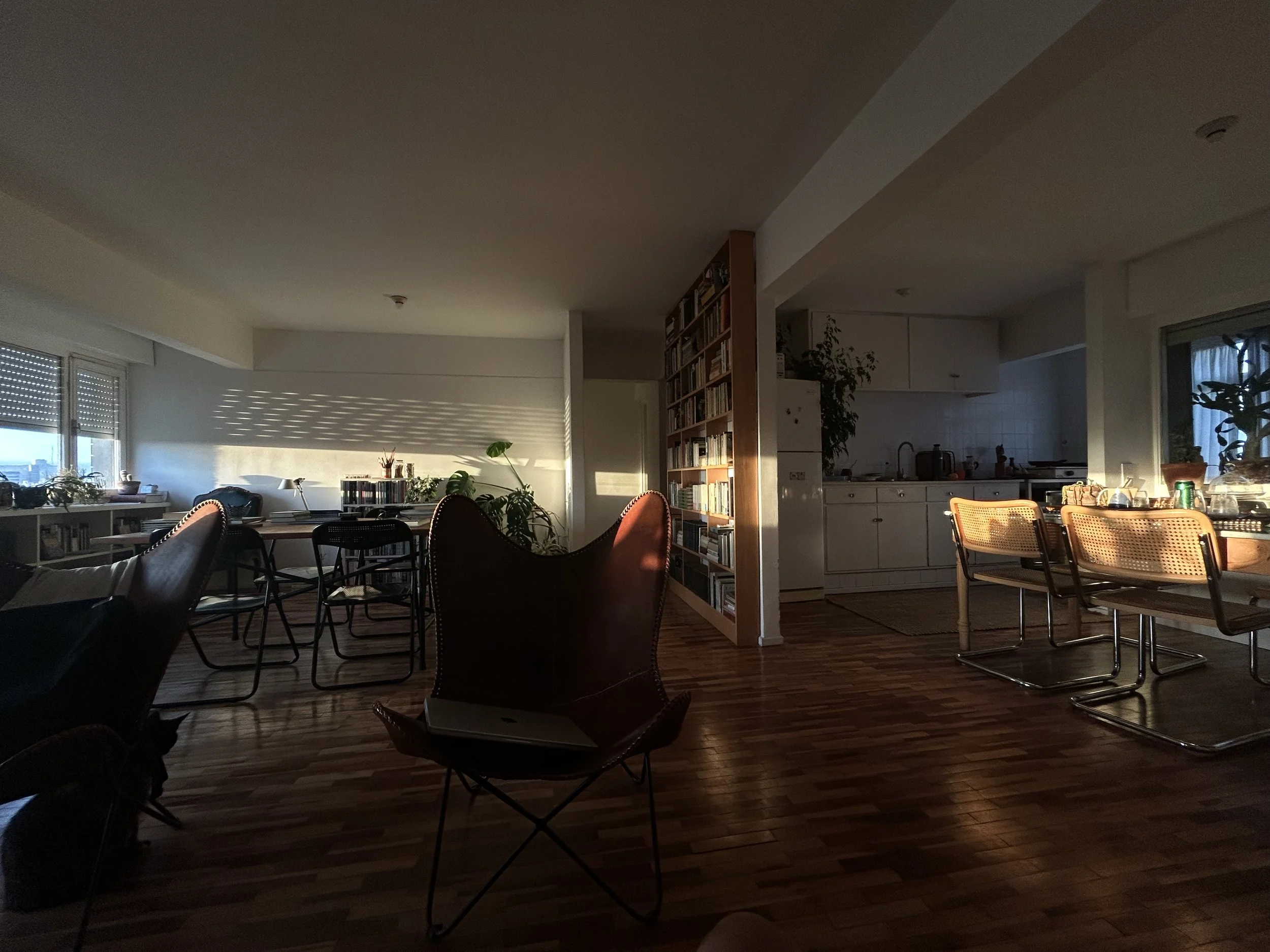
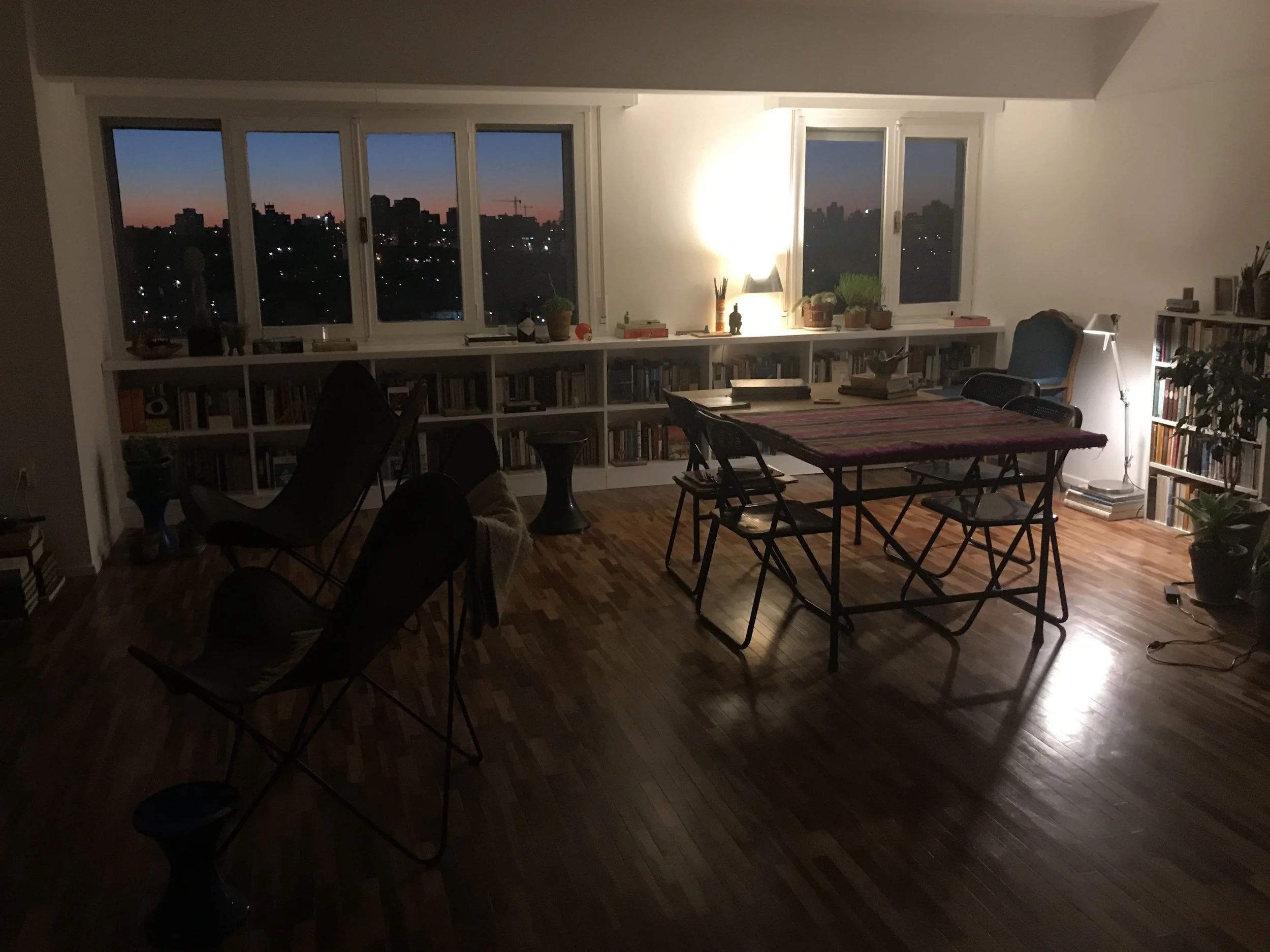
Apart from this, since the objective was not to build a set of individual apartments but a community, something quite rare happened from the very beginning: the project had a very unusual proportion of communal spaces in its original design, which remain more or less intact to this day, and already in the original design those communal spaces were open to the rest of the city, and are freely accessible. That semi-public condition of the project has also remained intact to this day, fifty years later, even in a context that has shifted towards gated and secured properties, in which bars are all over the city, virtually in every house, believe it or not. In that context, El Complejo Bulevar remains proudly open, without any bars, and – this is super important – having, against all the odds, no relevant records of violence or crime.
I think this fact somehow invites us to rethink how much a strong community, who actually use the space, helps in preventing criminality. And how we tend to constantly overlook it.
Somehow, when the community decreases the criminality increases.
*
This percentage of open spaces that appeared big 50 years ago, would today be virtually impossible.
Nowadays, at least here in Uruguay, there is almost no room for shared spaces in real estate, because the market value of those shared spaces is low and you cannot eventually sell them. The paradox is: they are yours, but you don’t own them, at least not as a commodity. And commodities are the only thing that matters in capitalism.
Today, in the best-case scenario, there are the so-called “amenities,” places where you can go alone and practice sports or work or whatever, but this concept of building spaces intended for people to meet each other very rarely has any place in the private building sector.
So, among other important things, this project was, from its very beginning, an experiment that shows what can happen with housing, with real estate, if you put the focus on community instead of placing it on profit.
But there is more.
Let me tell you this: If we were to build el Complejo Bulevar today I’m pretty sure many people would advise against it.
One of the most interesting aspects of this project is that it actually worked. So, El Complejo Bulevar serves as living proof that you can successfully do something radically different from what the market dictates.
Let’s explore this claim.
This “cooperative law” from 1968 established a set of rules, which in capitalistic terms simply sound like a terrible deal. Like something you shouldn’t do with your money.
Let’s look at two of them:
You cannot fix the price of your unit.
And
You cannot rent it out.
Who would advise you to invest your money in a property you cannot sell at a better price and that you cannot rent out? Probably nobody in the present situation.
But something fantastic happened precisely because of that.
The idea behind all this is, of course, to avoid real estate speculation.
This place is meant for people to live in, not to profit from.
Since you cannot rent the units and everybody owns his or her apartment, people tend to love and to care about the place once they are living in it, and since people develop this strong sense of ownership, they naturally tend to remain in the place, so now you have neighbors you have known for forty-plus years, people who, in a context in which you have a communal garden to meet, you see on a daily basis, and you care for them.
Those were some of the unexpected benefits of placing the focus on community instead of placing it on profit.
And the truth is, if you let me put it in the beautiful words of Vinicius de Moraes, the famous Brazilian poet:
“Life is the art of meeting, although there is so much mismeeting along the way.”
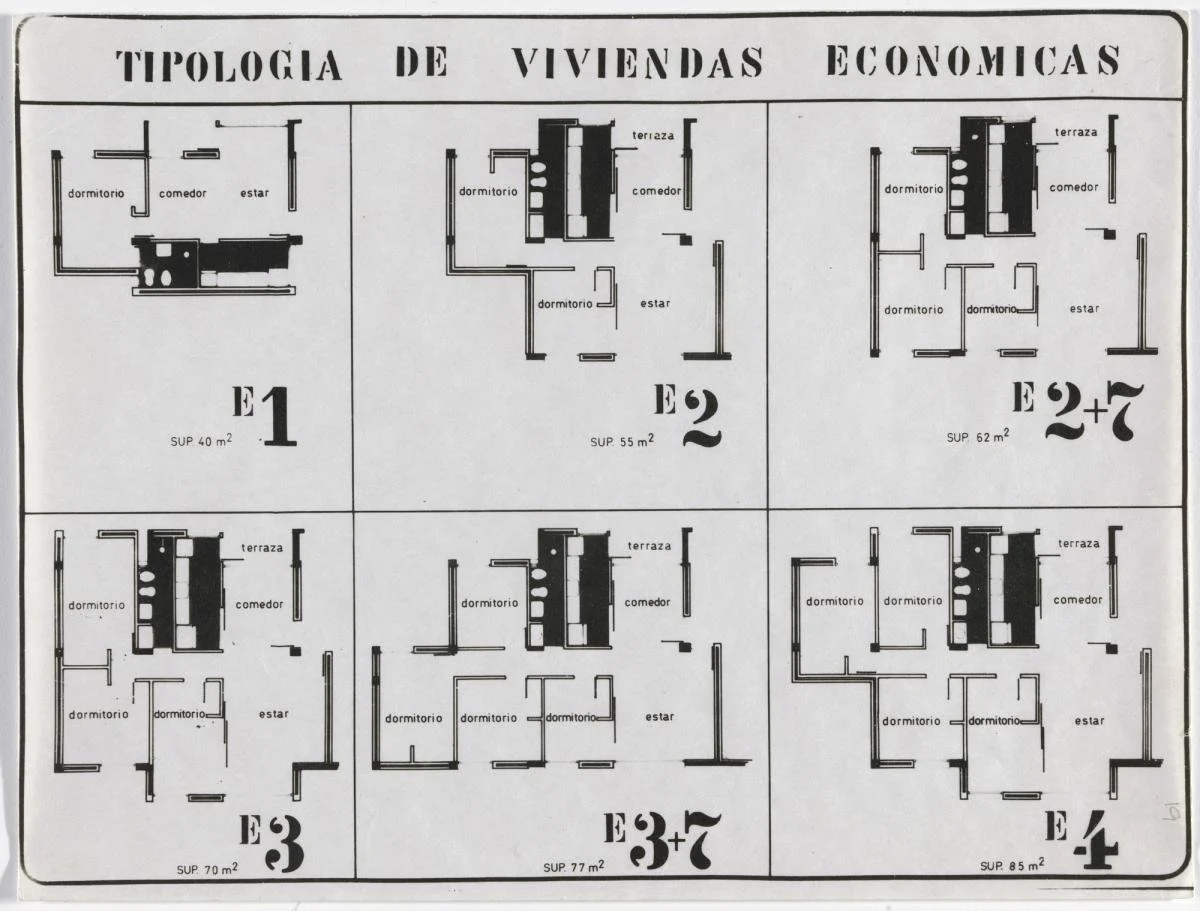
Allow me to give you another example of the value of togetherness.
In many cases, and this is still said sometimes when people discuss cooperative housing projects, people argue that the intention of the cooperative initiatives is merely to make it possible for low-income families to acquire their first property. This means that the sole purpose would be to fill the gap for those who couldn’t afford a first property, again, just to solve the economic aspect of the problem, which is, of course, a part of it, but not all.
The idea behind that claim is: if eventually you get wealthier, then you can sell your unit – of course at a price you don’t fix, but you sell it and you get your initial investment back – so you can go and buy a new, “better” property now that you are no longer poor and therefore, you can now at last be an active, proper member of capitalism.
But that is not at all what in fact happened here.
Oddly enough, as I have already pointed out, people tended not to leave the place for fifty long years. The rate of people who don’t leave El Complejo – I would love to have the figures here; regretfully, they don’t exist yet – is, let me tell you, super high: this place is full of people who lived here for fifty years straight, I know plenty of them.
And that happened of course even in cases of people who with time became considerably wealthier, and therefore, in fact could afford another, costlier, property.
They don’t go away simply because they do not want to.
And not only that, but there is also an astounding amount of children of the original founders, like me, who decided to come back to the place and raise their own families here. Not because the price can be competitive in market terms, but because it is good.
This phenomenon is in fact something worth studying, I think, in social sciences, because out of a total of 332 units there are no less than 40 or maybe even 50 families in my same situation. We are talking here about 12 to 15 percent of the total population. It’s too much to be a coincidence.
Let me give you an example of what that exactly means in terms of community. I have a son now, Amadeo, who is three and a half years old. Since not only my parents but also my grandparents lived in this community before us, and since people tend to live here for decades, there are no less than maybe 30 or 40 adults, way older than me, people in their seventies, who know my son very well, not only for himself, but because they also know perfectly well who the parents of my son are, and the parents of the parents of my son; and they were also friends with, and knew perfectly well, the great-grandparents of my son.
Something like this, I don’t have to explain it to you who live in a city like New York, is extremely unusual in our contemporary cities.
*
Allow me now to briefly speak about the second aspect of the project I want to explore.
The importance of beauty, so to speak, if you allow me to make such a big claim. I humbly say it.
I remember, as a kid, the impression that discovering the symmetry, the rhythm, and the proportions implicit in the structures of these buildings left on me.
I didn’t think of it in those terms then, but this somehow meant at least two things to me, as I ended up realizing:
1) That there can be a logic behind things, or at least behind some things, and that this logic can be discovered.
2) That everything can be thought about and taken care of.
Also, another really important thing happened:
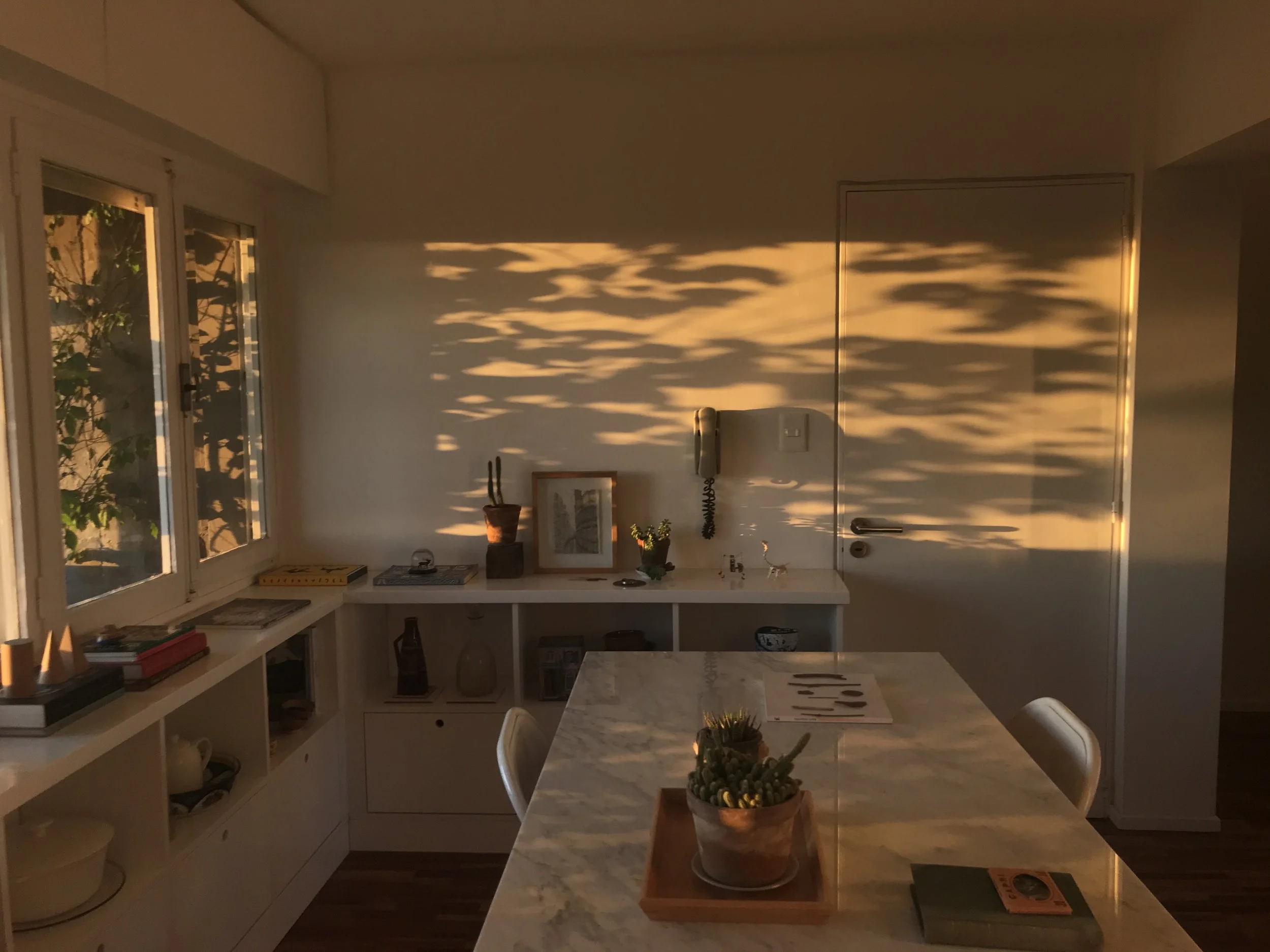
When you grow up surrounded by a certain amount of good architecture and good design, if you are lucky you somehow develop the notion that things can be done, that life is yours to explore, that there’s something more than simply living.
This is especially relevant in countries like ours, where more or less all the important objects we own are imported. Since almost always in our Latin-American countries, we did not build the car we ride or the computer we use, we tend to grow up, I’m afraid, with the implicit notion that everything that matters was built somewhere else.
Since I was lucky enough to be born in this place, at a very young age I began to suspect that beauty was not sumptuous at all; on the contrary, I gradually learnt that it played a fundamental, profound role that could transform our lives.
Because human life is about expanding and broadening our experience, living in a place where it is inherently understood that our home is not merely the container of our existence but a space that fosters communion and cultivates beauty plays a vital role in helping us understand that. The sooner the better.
In a world where beauty is often viewed as a luxury for the wealthy, the Complejo Bulevar demonstrates that architecture and design can enrich the human experience regardless of socioeconomic status.
I think one of the project’s most remarkable aspects is its redefinition of beauty as an essential part of life, accessible to all.
So, to conclude this, let me share some
Final Thoughts
The Complejo Bulevar serves as living proof that it’s possible to prioritize community and quality of life over market dictates. It challenges conventional notions of property ownership, profitability, and urban design, offering valuable lessons for future housing initiatives.
I hope that some of those future initiatives are being born right now, right here.
So, thank you very much for your kind attention.
Double-click to edit...